Part 8 of 10Western Australia, 2017

Cape Leeuwin, Where Two Oceans Meet

A tall white lighthouse, granite, surf and a vast ocean at the south-western tip of Australia, and still one of my strongest memories of Western Australia.

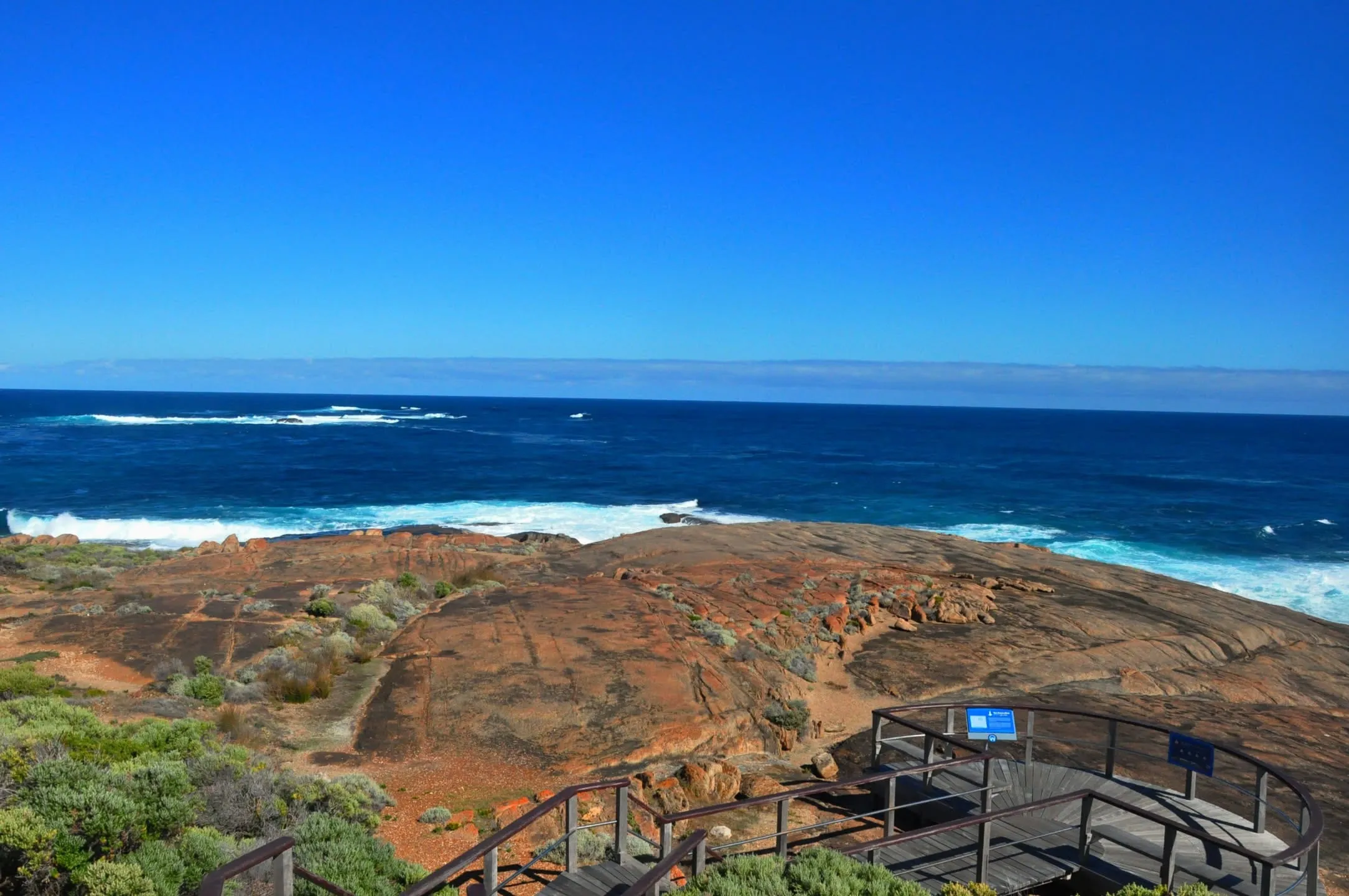
A wide sweep of orange granite with a timber viewing platform in the foreground, white surf breaking along the rocks and a deep blue ocean stretching to the horizon.
Granite, surf and ocean at Cape Leeuwin.

On the afternoon of 9 April, we drove out to Cape Leeuwin, at the south-western tip of Australia.
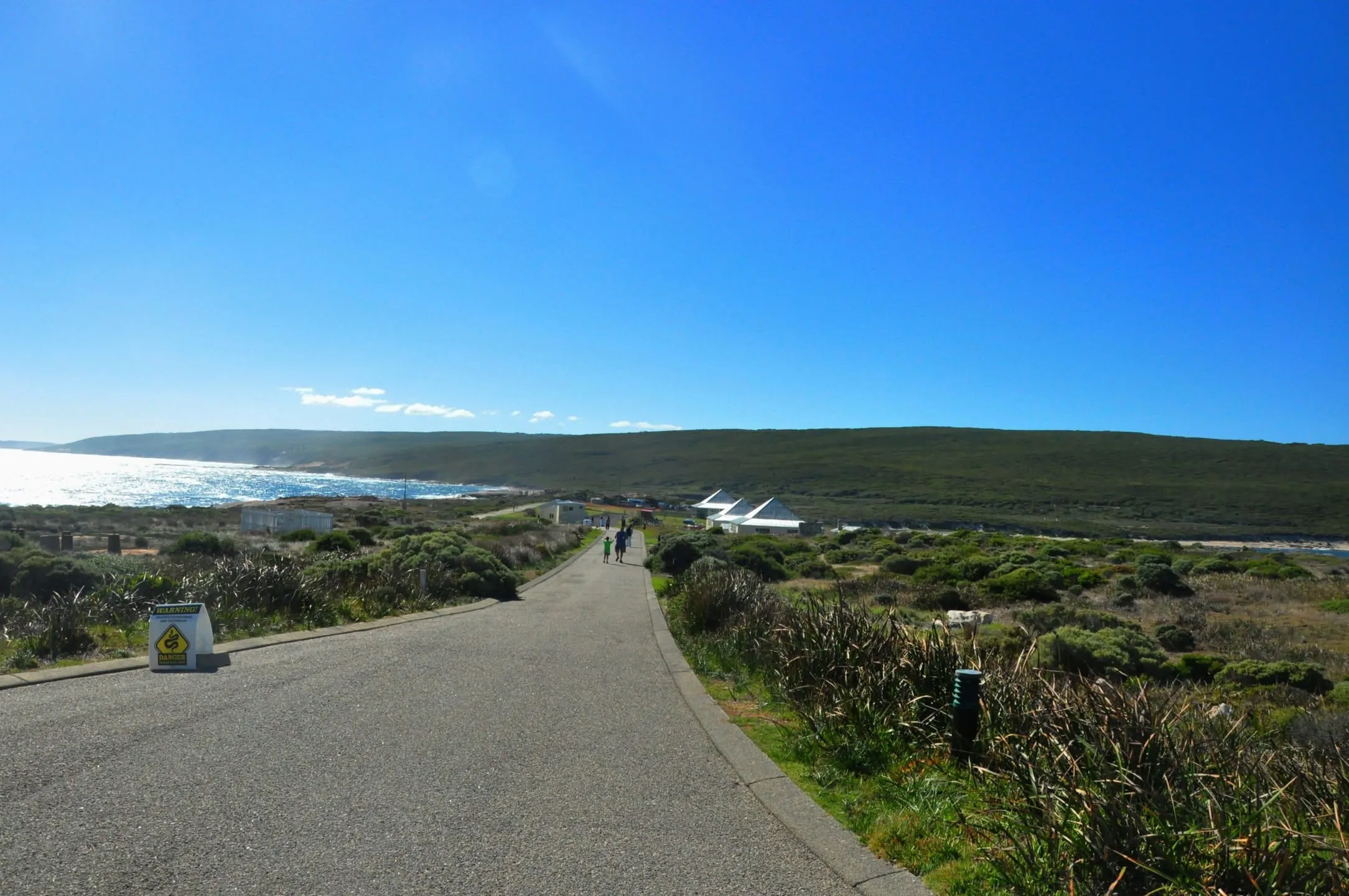
A road running through low coastal heath towards white lighthouse buildings, with a long green headland and a shining sea beyond.
The road out to the cape.
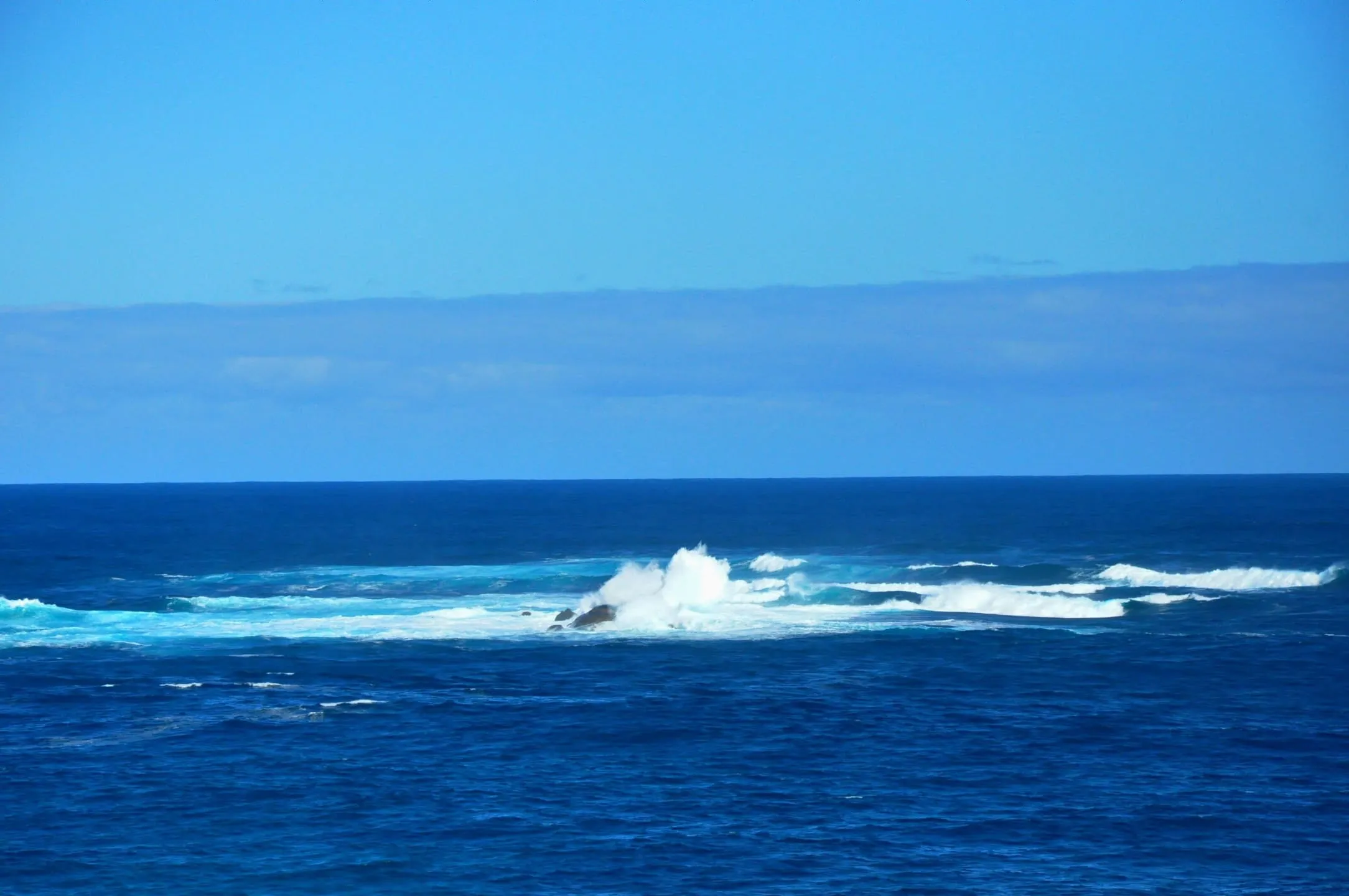
Deep blue ocean with white surf breaking over a hidden reef, under a pale band of cloud on the horizon.
Surf off the cape.

The lighthouse

The lighthouse wasn’t open for climbing when we visited, so we explored the grounds and the viewpoints around it instead.
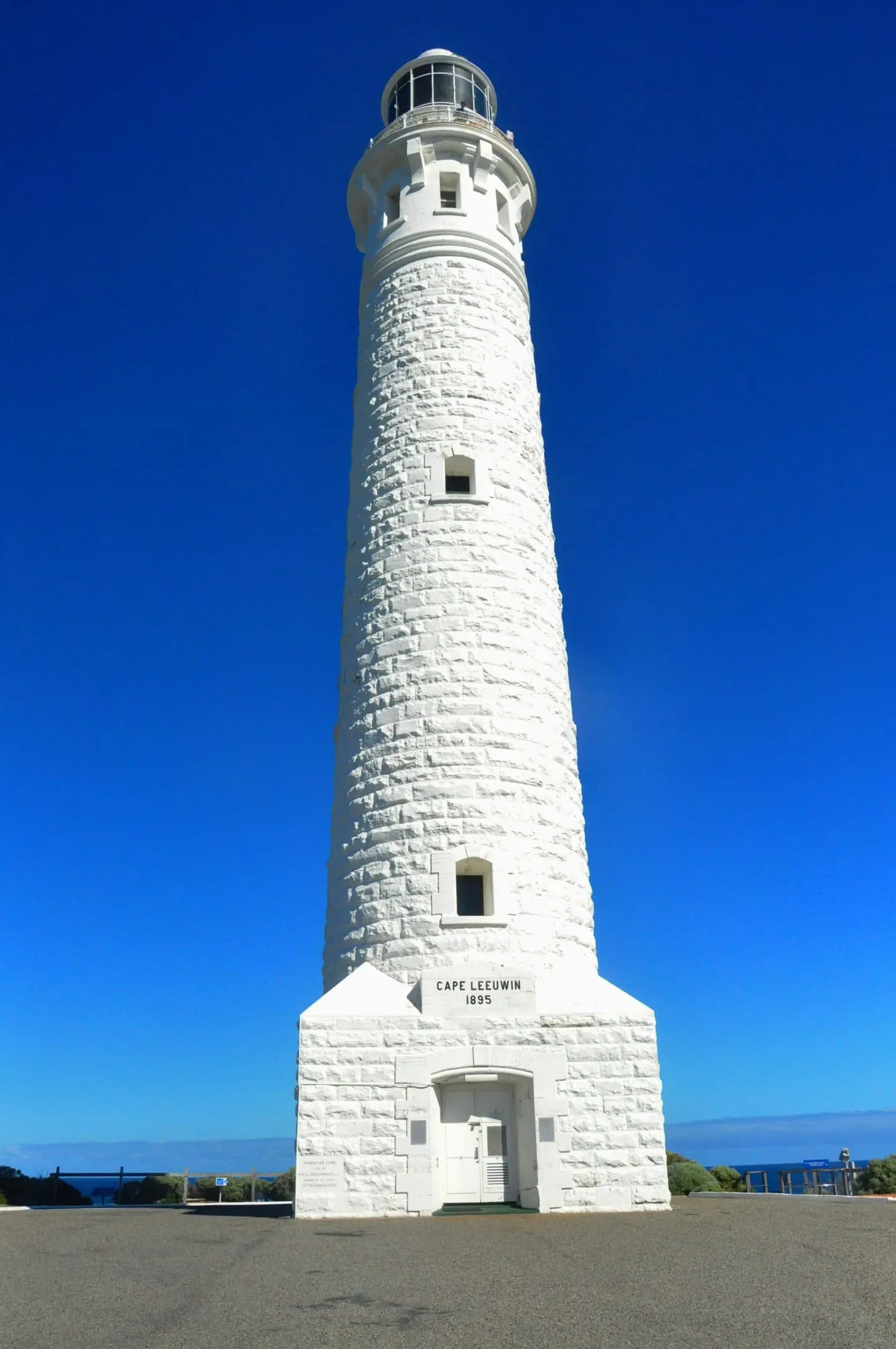
A tall white stone lighthouse rising against a deep blue sky, with “Cape Leeuwin 1895” above the door at its base.
Cape Leeuwin Lighthouse.
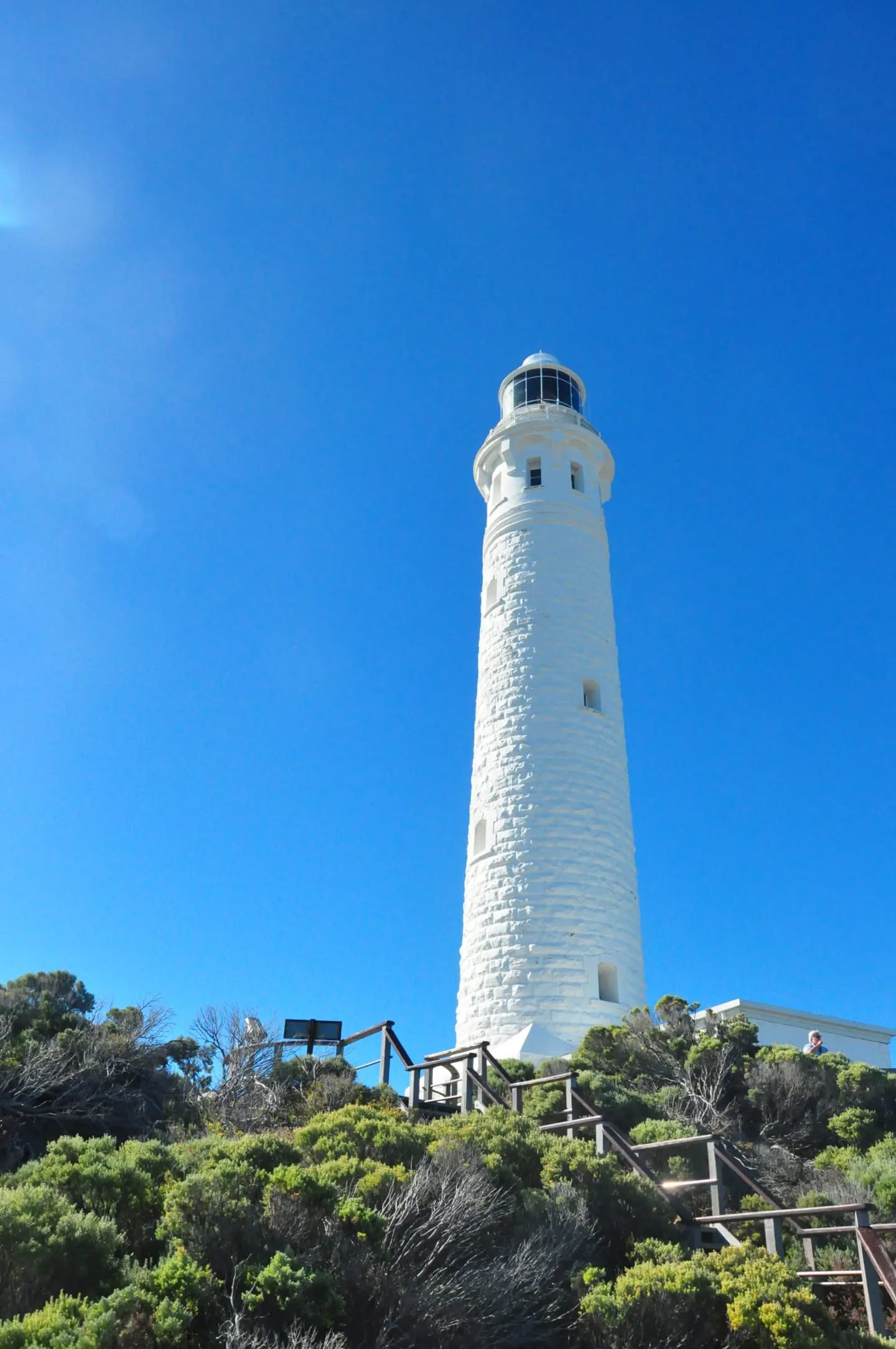
The white lighthouse seen from below, above green coastal shrubs and a flight of timber steps.
The lighthouse from the path below.
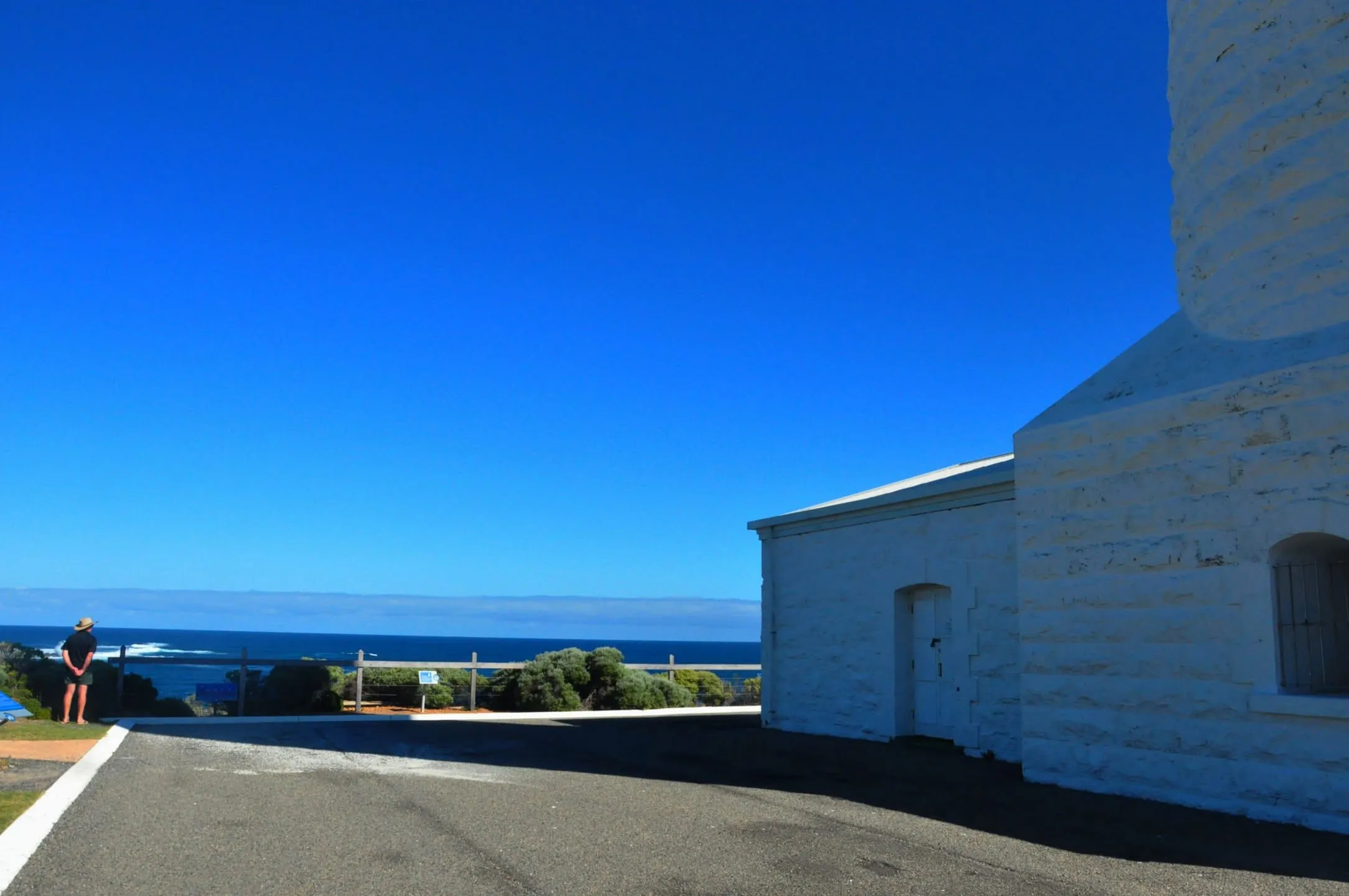
The white stone base of the lighthouse beside a paved area, with a visitor in a hat looking out over the fence towards the sea.
Beside the lighthouse.
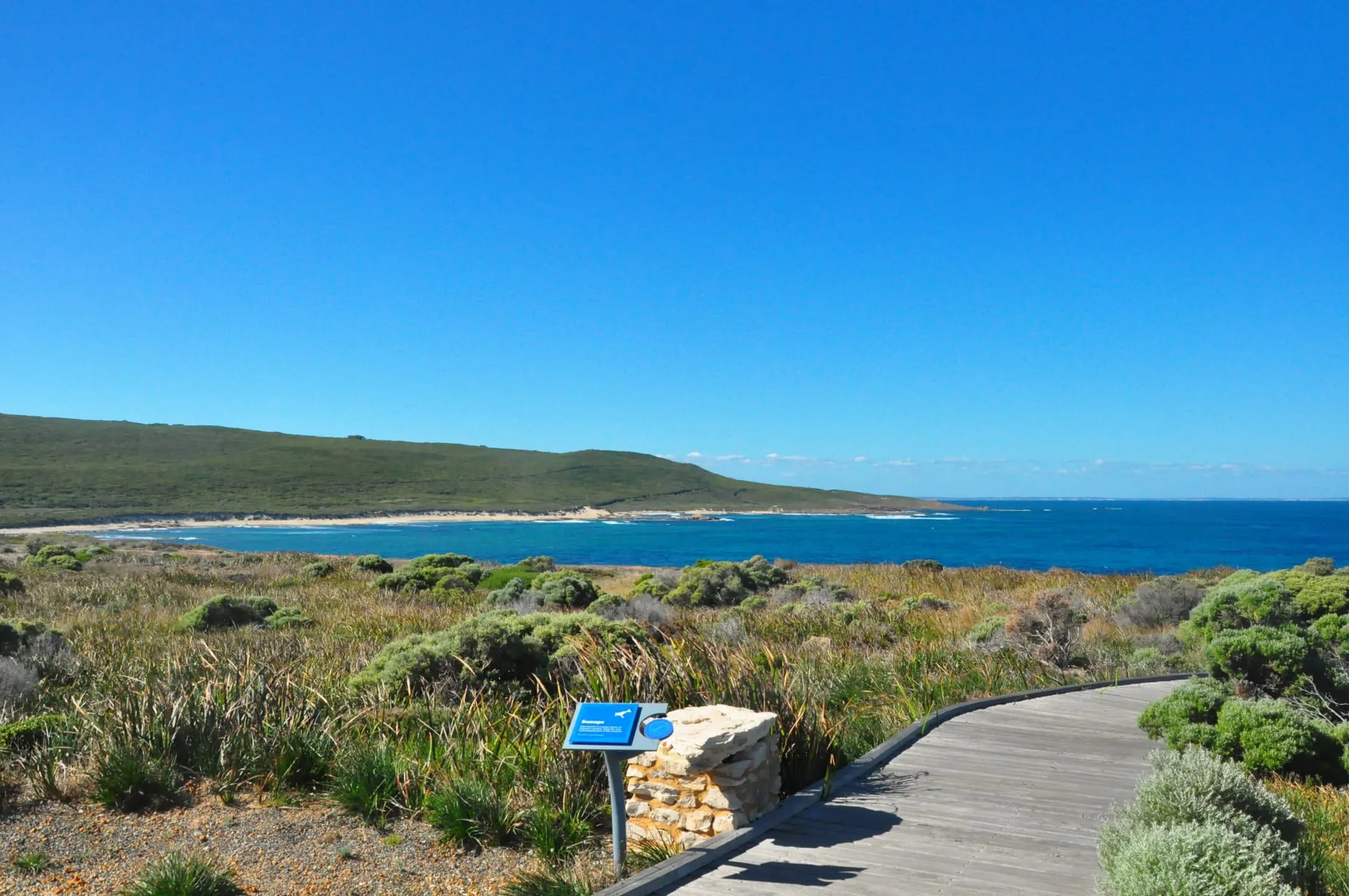
A timber boardwalk winding through coastal heath past a stone marker and a blue sign, towards a curving bay and a long green headland.
The boardwalk.
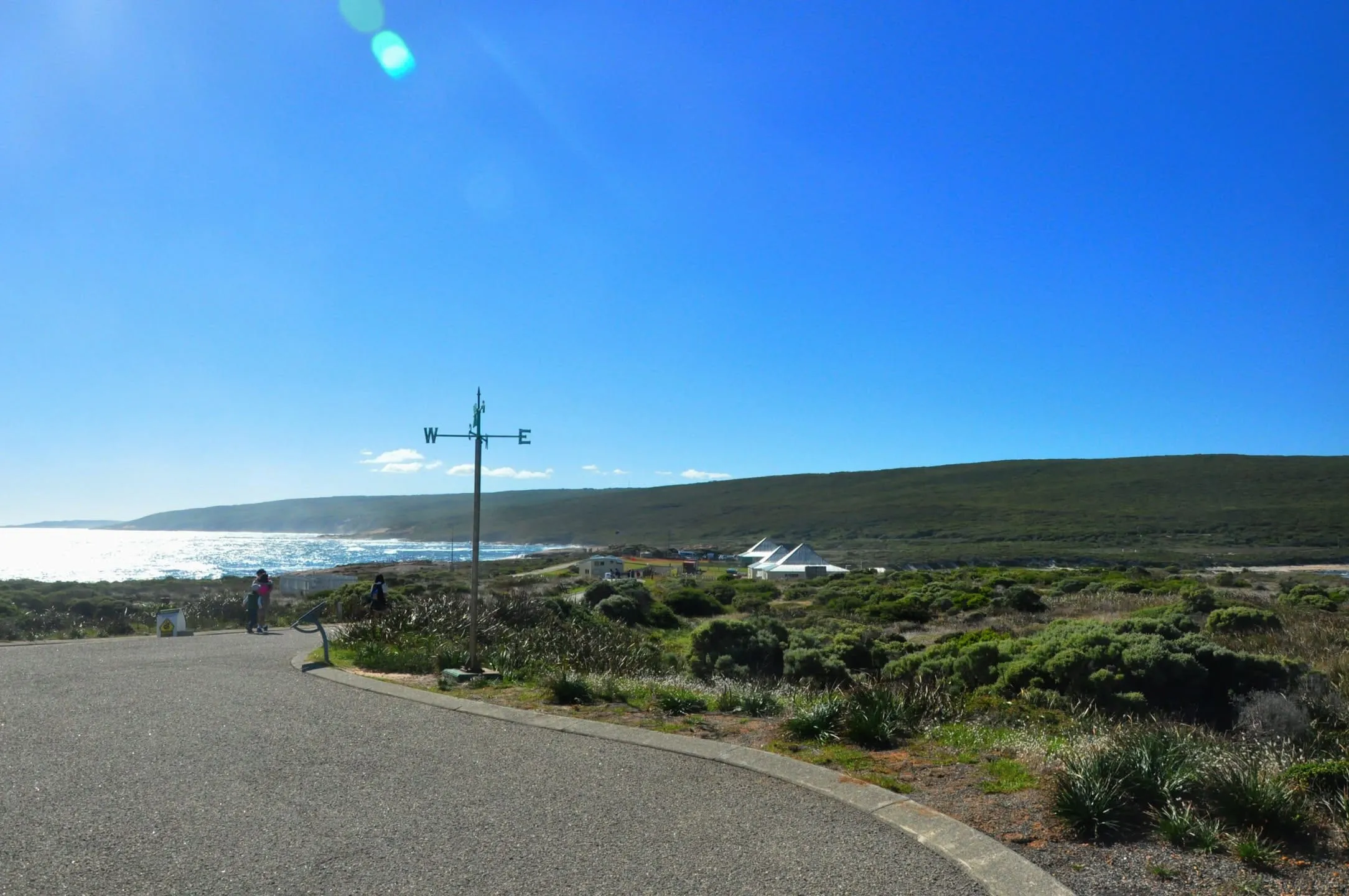
A tall weather vane beside a path through low heath, with visitors looking out over the shining sea and a long headland beyond.
The weather vane above the coast.

Not everything was quite so peaceful. A sign beside the path warned that the snakes there were venomous.
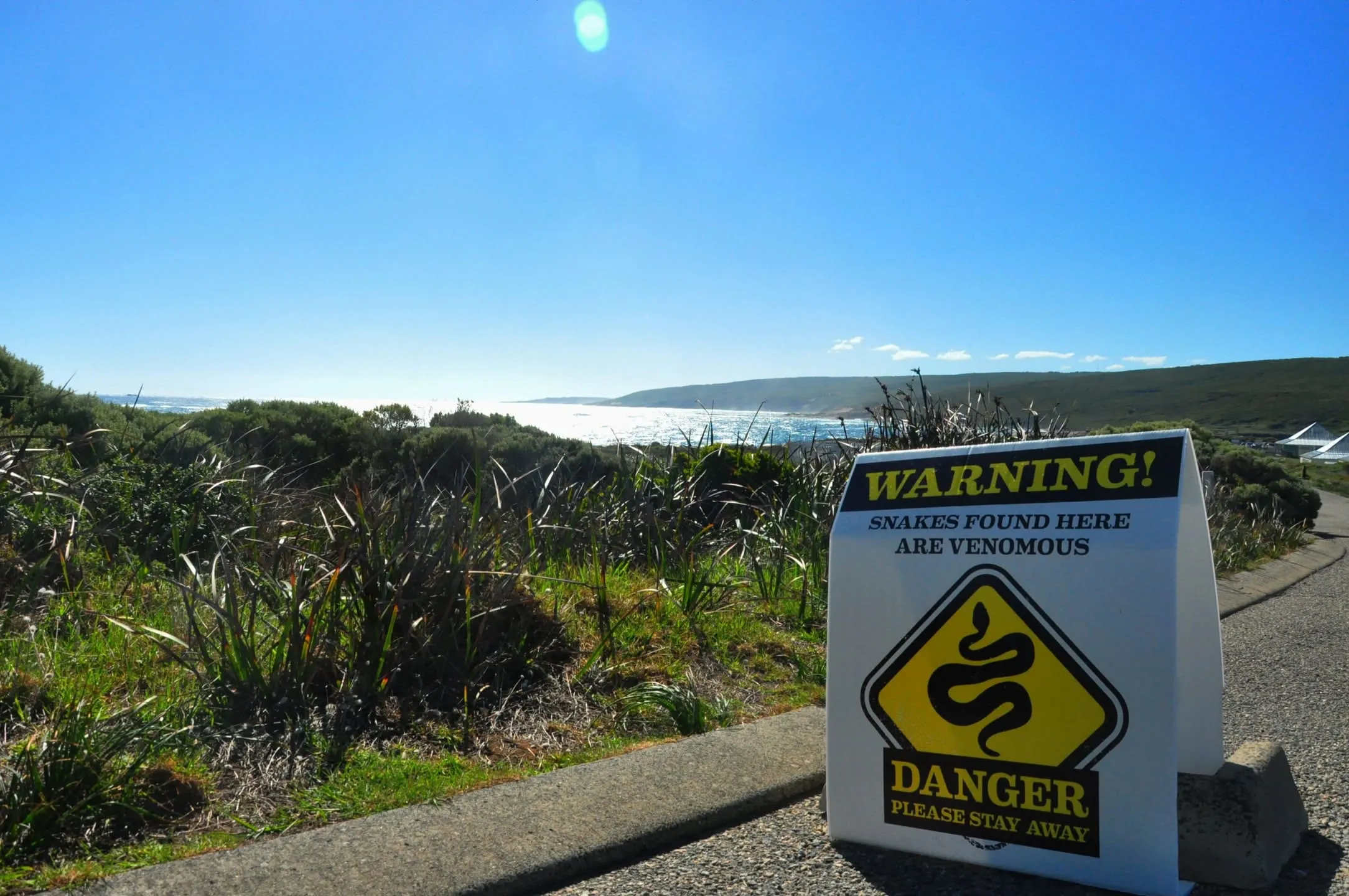
A white warning sign by a path reading “Warning! Snakes found here are venomous. Danger, please stay away”, with heath and the sea beyond.
A warning about snakes.

Where two oceans meet

Cape Leeuwin is where the Indian Ocean meets the Southern Ocean.

I was mesmerised by the vastness of the ocean there.
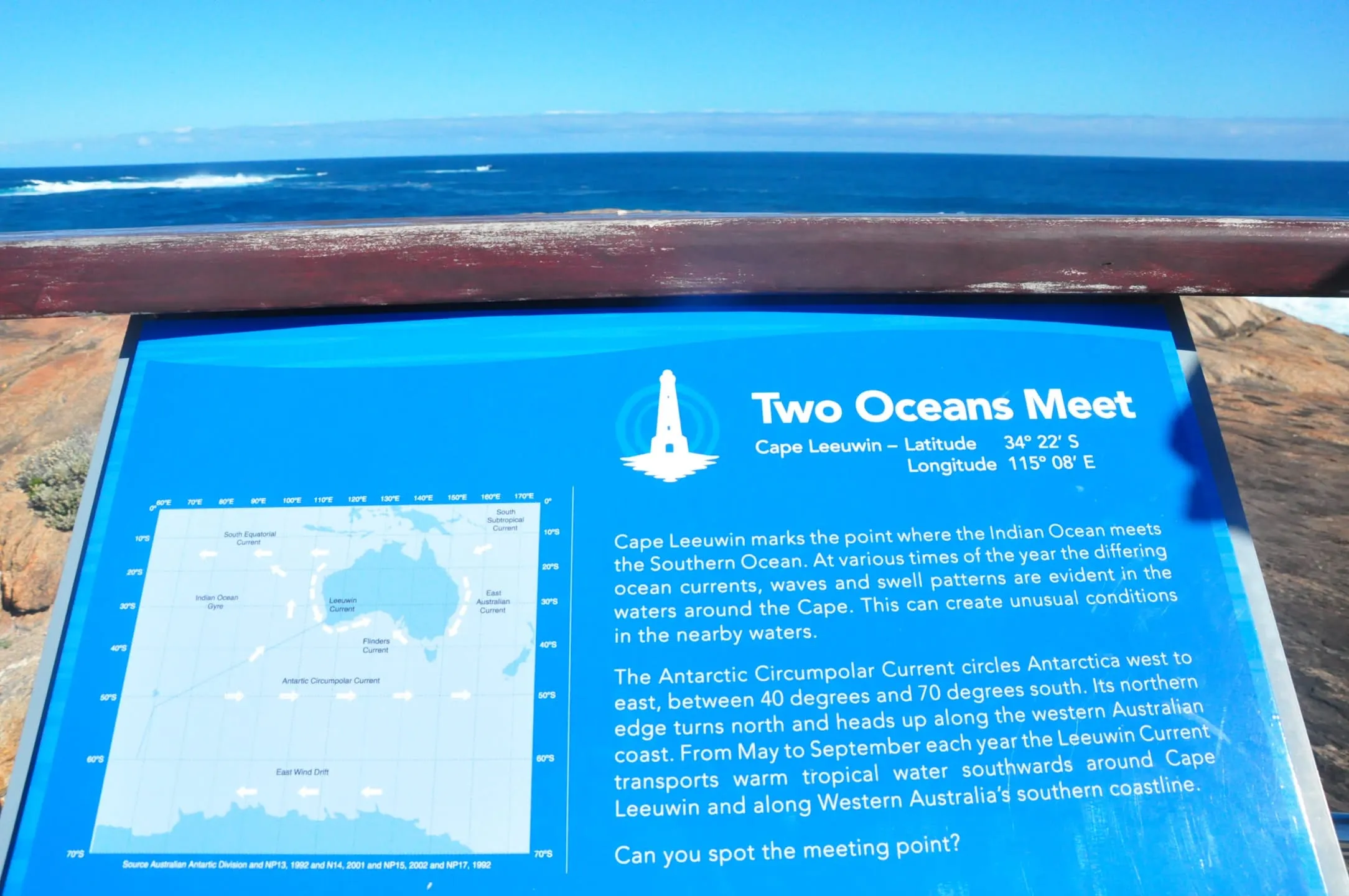
A blue interpretive panel titled “Two Oceans Meet”, with a map of Australia’s ocean currents and text about the Indian and Southern Oceans, in front of a railing and the open sea.
The Two Oceans Meet panel.

The panel at the lookout asked, “Can you spot the meeting point?”

I tried. I stood looking out, trying to work out where the Indian Ocean ended and the Southern Ocean began by looking for differences in the colour of the water. Of course, there isn’t really a line you can see. But I still remember trying.
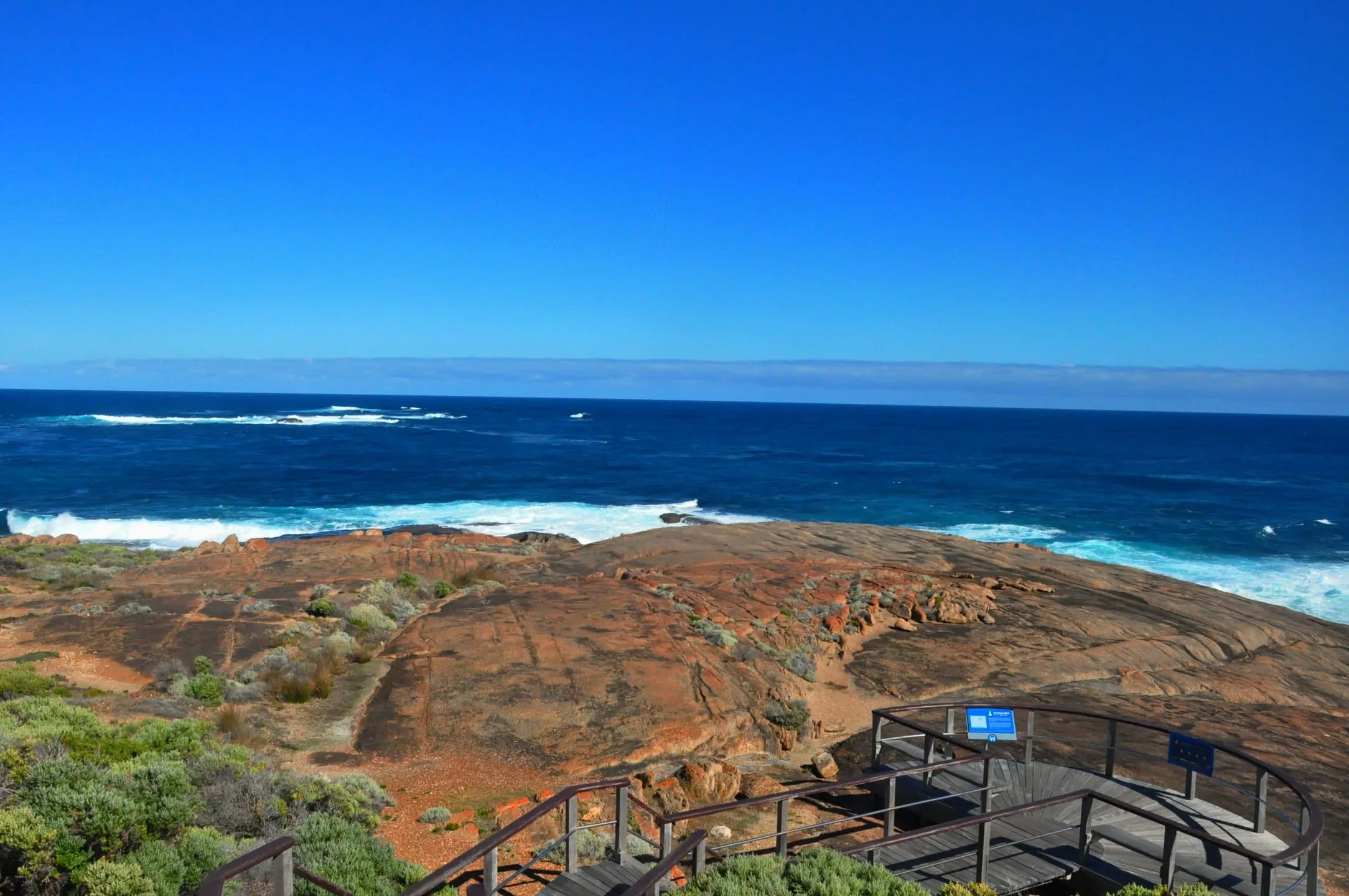
A wide sweep of orange granite with a timber viewing platform in the foreground, white surf breaking along the rocks and a deep blue ocean stretching to the horizon.
Granite, surf and ocean.
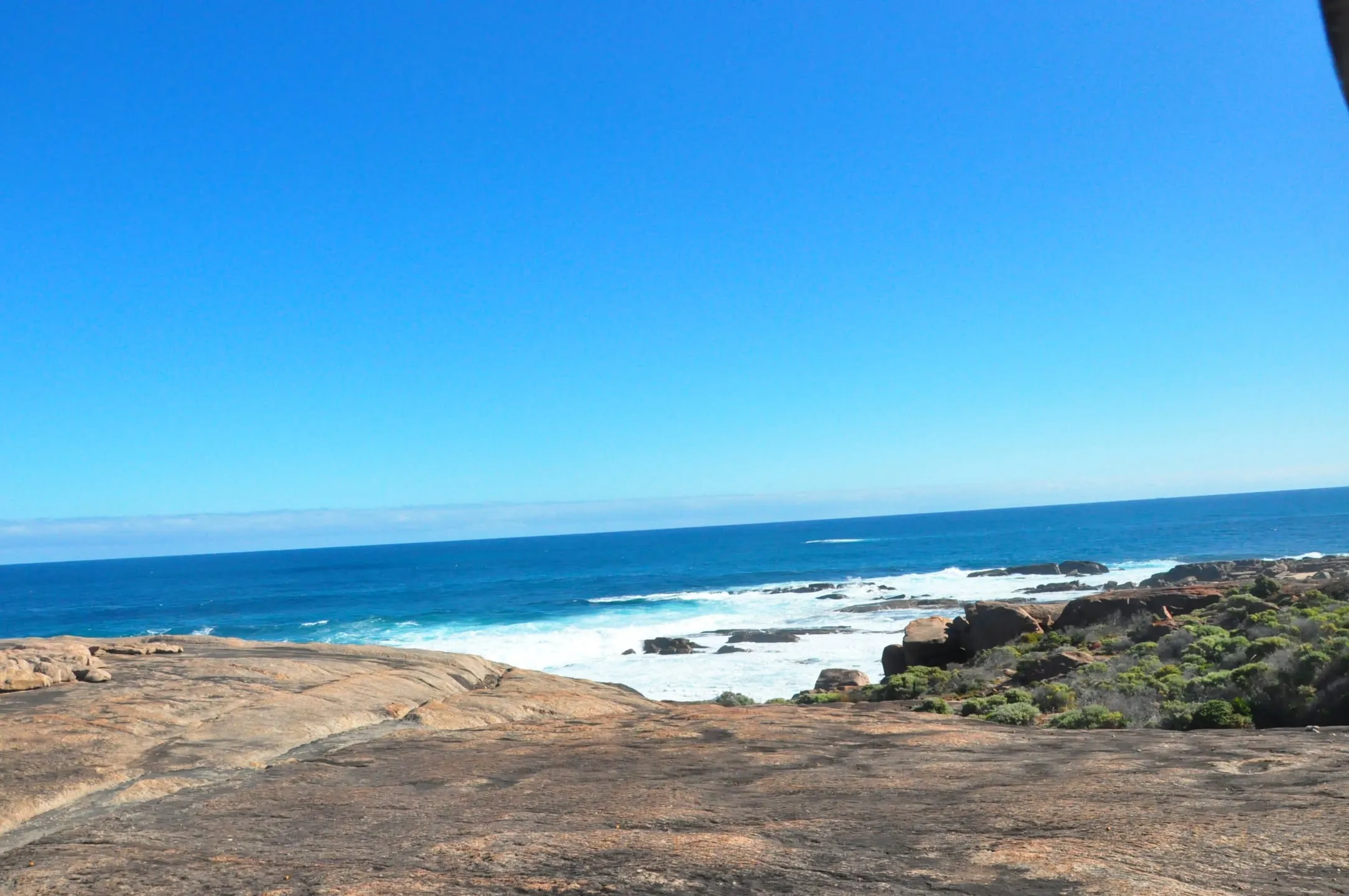
Smooth orange granite in the foreground sloping down to a rocky shore where white surf breaks, with a deep blue ocean stretching to the horizon under a clear sky.
Looking out to sea from the granite.
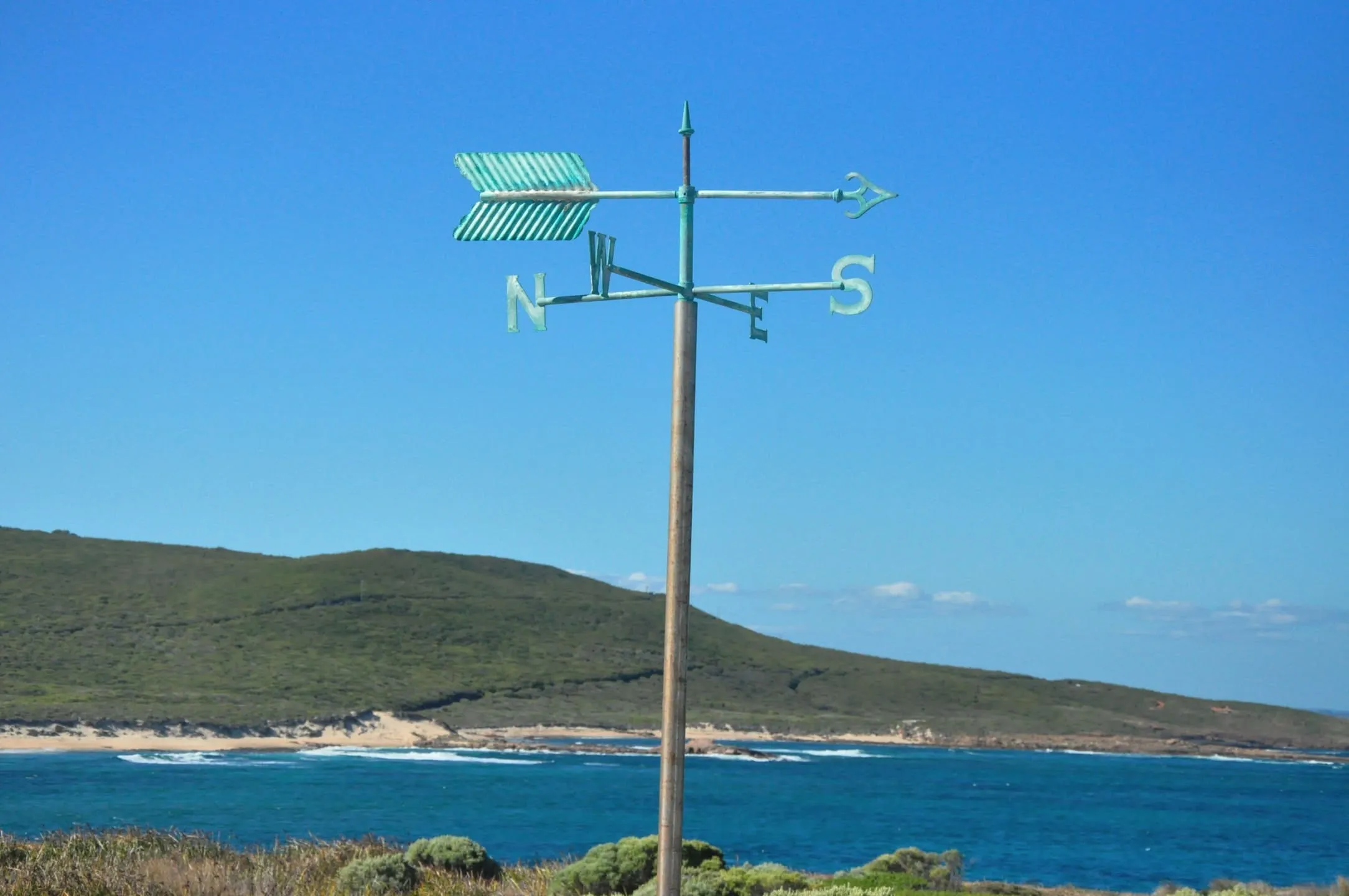
A green copper weather vane with N, S, E and W markers against a blue sky, above a bay and a long green headland.
The weather vane.
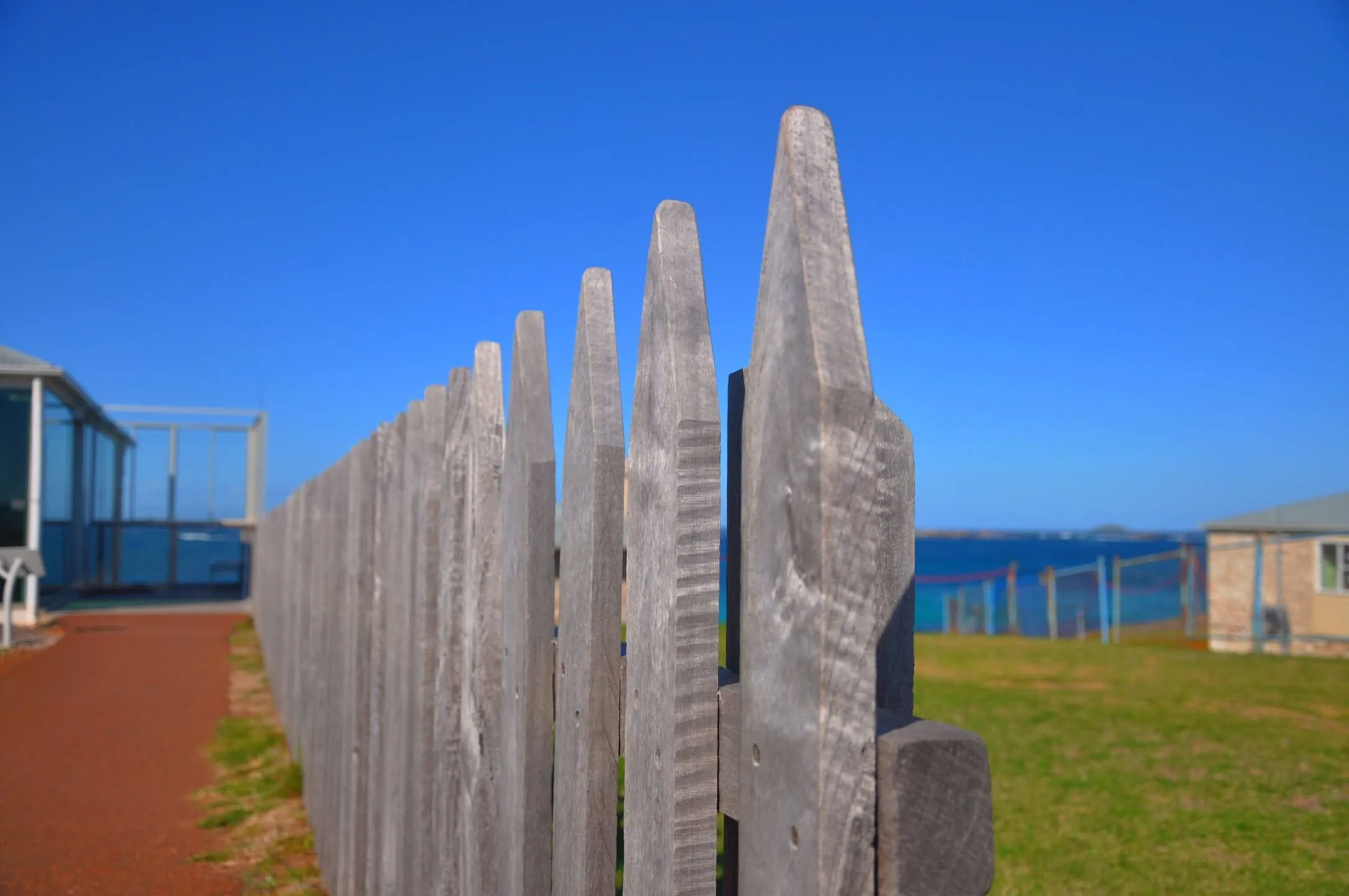
A weathered grey picket fence in sharp focus, with a stone cottage, a lawn and a glimpse of blue sea behind.
A picket fence near the cottages.

On the way back

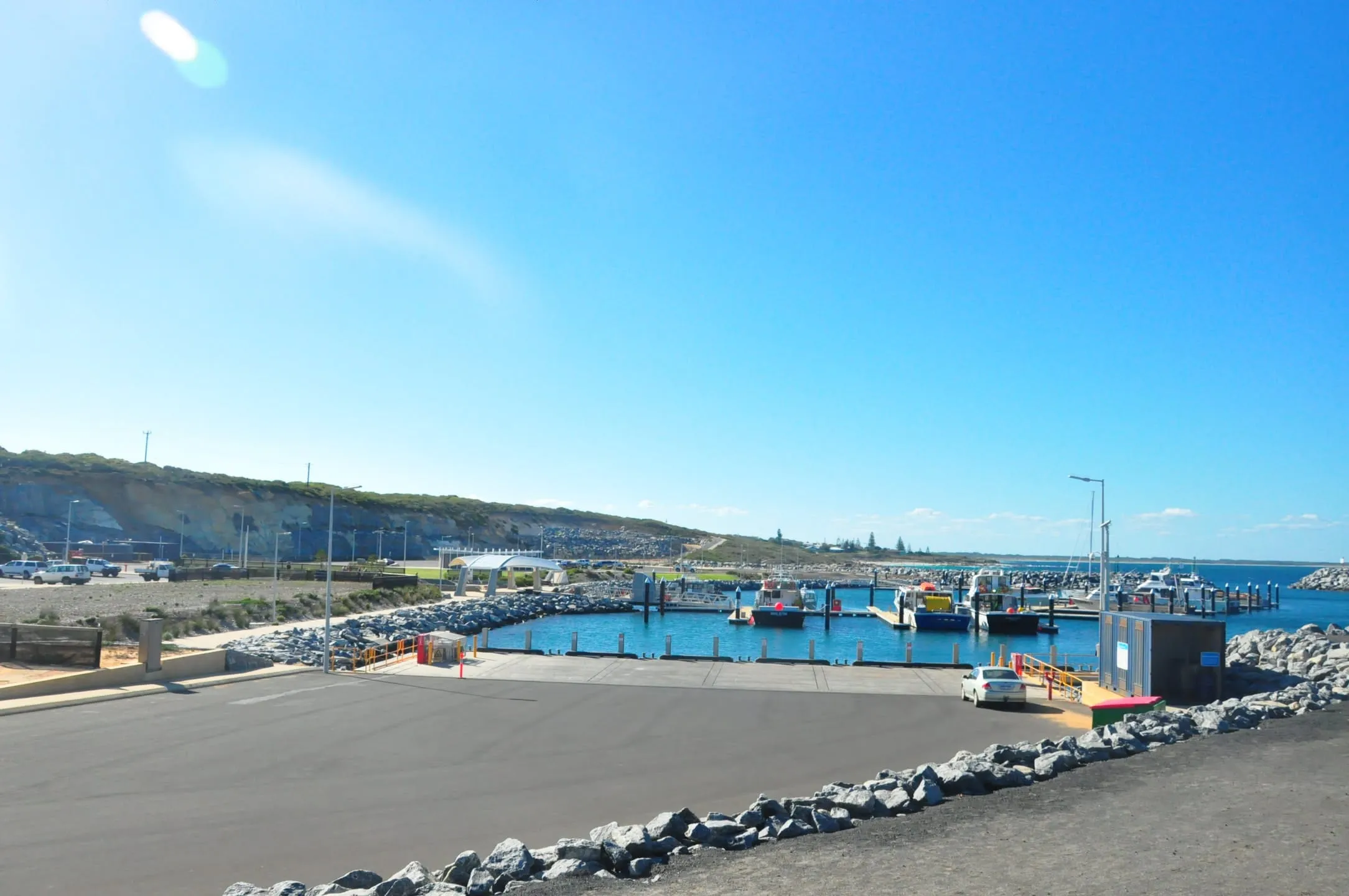
On the way back, we stopped at a harbour where small boats were tied up behind a rock breakwater. I think it was the boat harbour near Augusta, but I’m not certain.
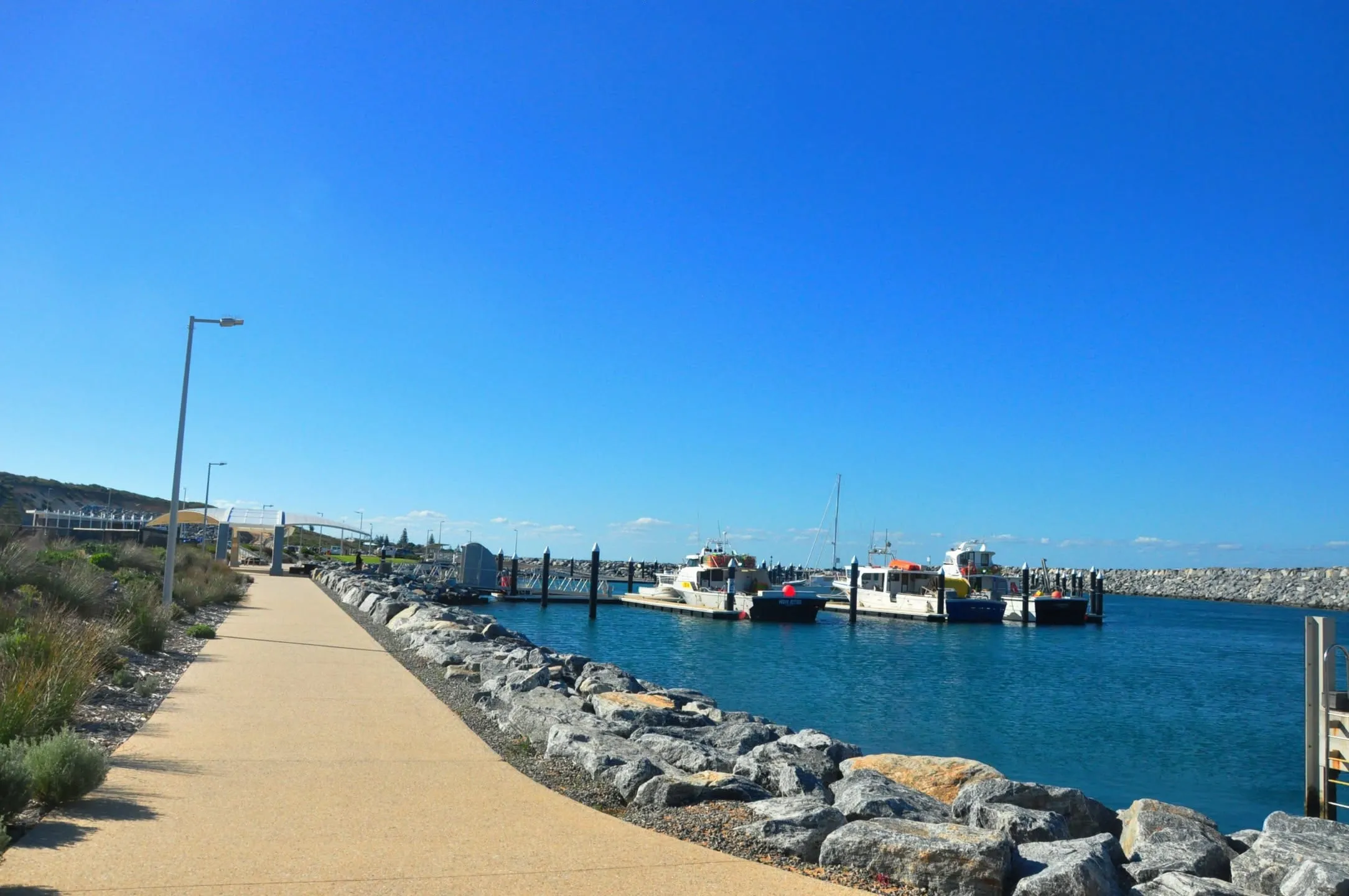
A paved path along a rock wall beside a small marina with moored fishing boats and a breakwater.
A small boat harbour.
A boat ramp and car park beside a sheltered marina, with low cliffs and a breakwater beyond.
The harbour and its breakwater.

Later in the afternoon, I photographed a view over the forest towards the sea.
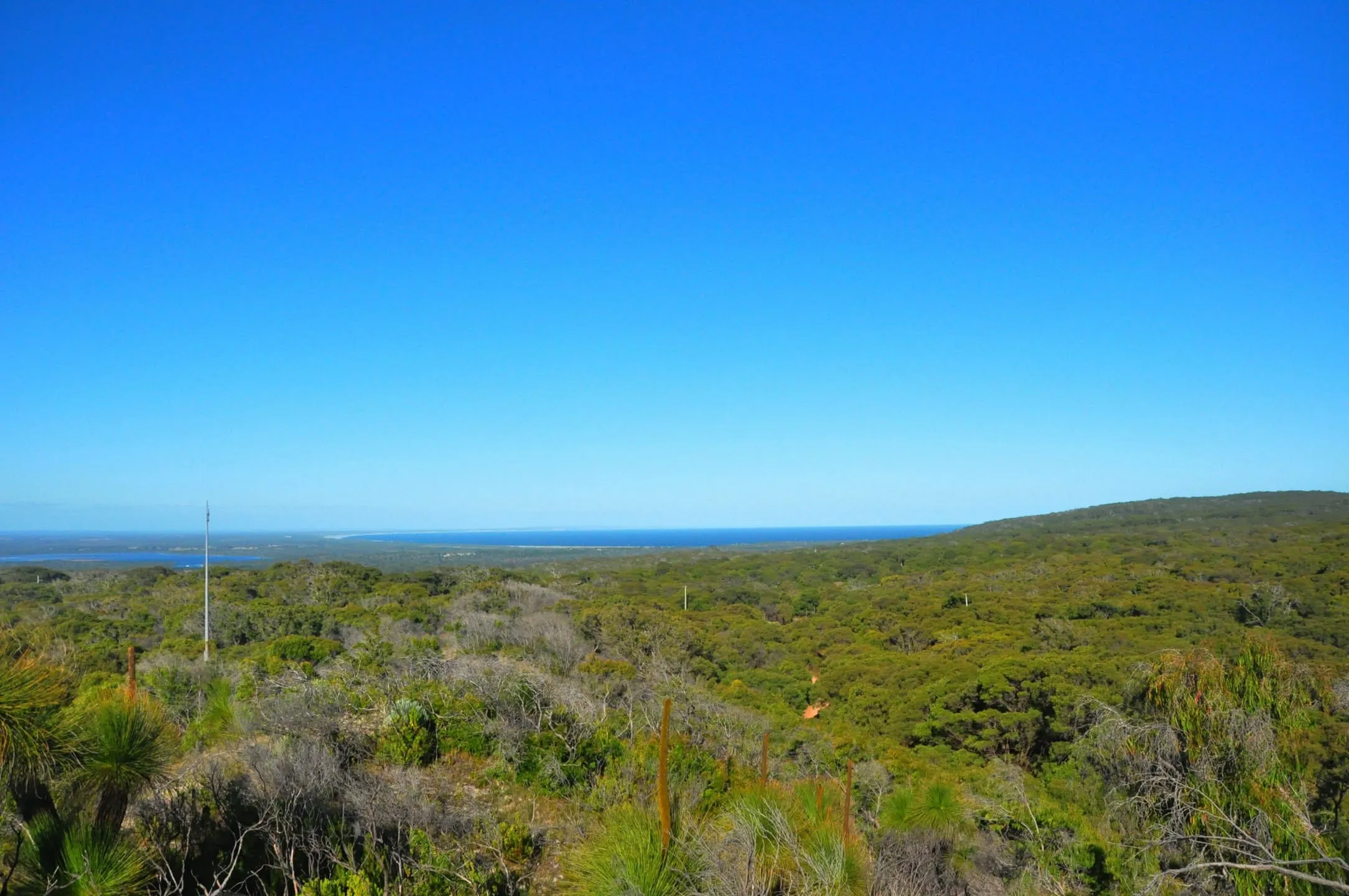
A wide view over dense green forest and bush stretching towards a strip of blue sea on the horizon, under a clear sky.
Forest stretching to the sea.

Cape Leeuwin and the landscape around it remain among my strongest memories of Western Australia. Of all the places we visited on this trip, it stands out most.