I had wanted to get to Italy on this trip. Part of it was simply the satisfaction of adding another country to the ones I had visited. Tirano, just across the border at the end of the Bernina line, was the place I had in mind.
The day before, I had been in Lugano, not far from the border, but the seasonal bus from Lugano to Tirano had not been running, and I had not found a practical way to get there that day. So on Thursday, 1 February, I tried again, this time on the Bernina Express.
I had booked the train from Chur to Tirano, leaving at 08:32 and arriving at 12:49, and the return train leaving Tirano at 14:25 and reaching Chur at 18:20. As I understood it, the winter Bernina Express left Chur only once a day, so I had to get from Basel to Chur in time to catch it. Luck was on my side, and I made the connection. Chur itself was a long way from Basel. Counting the trains to and from Chur and the waiting in between, I remember the whole day taking more than sixteen hours.
Chur in the morning
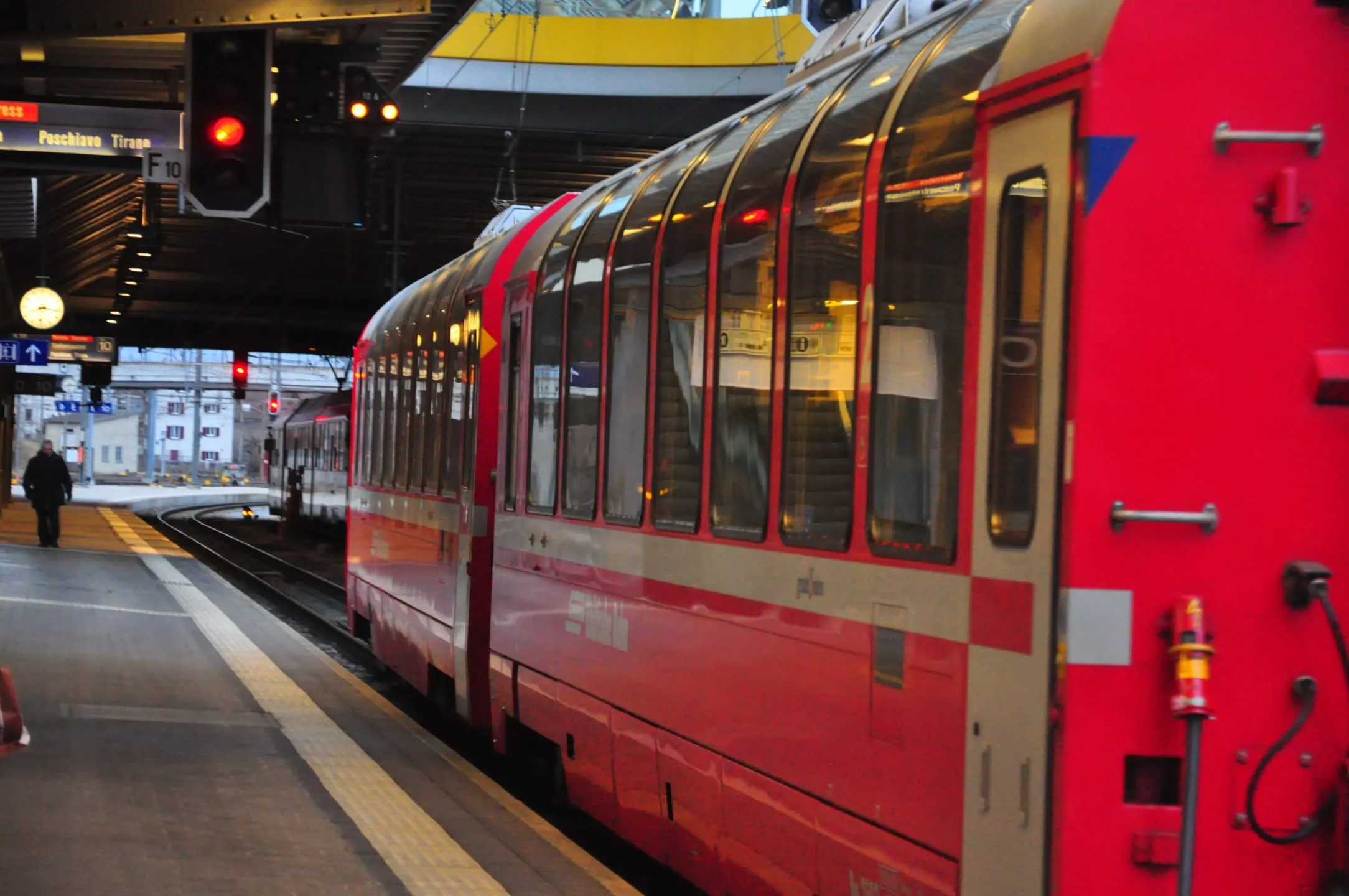
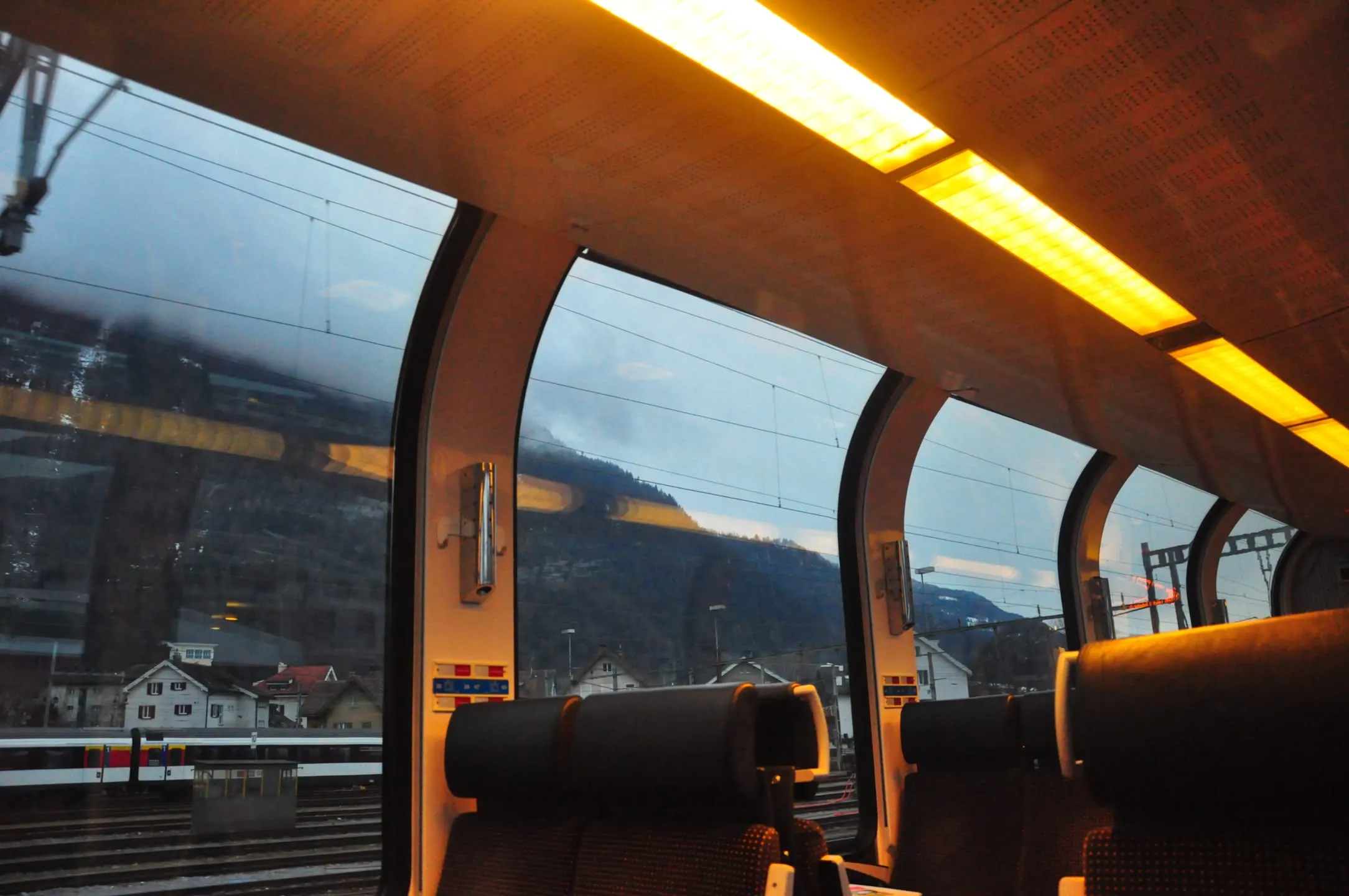
By a little after eight, I was on the platform at Chur. The red trains of the Rhaetian Railway were waiting, and the Bernina Express had panoramic carriages, with windows curving up into the roof.
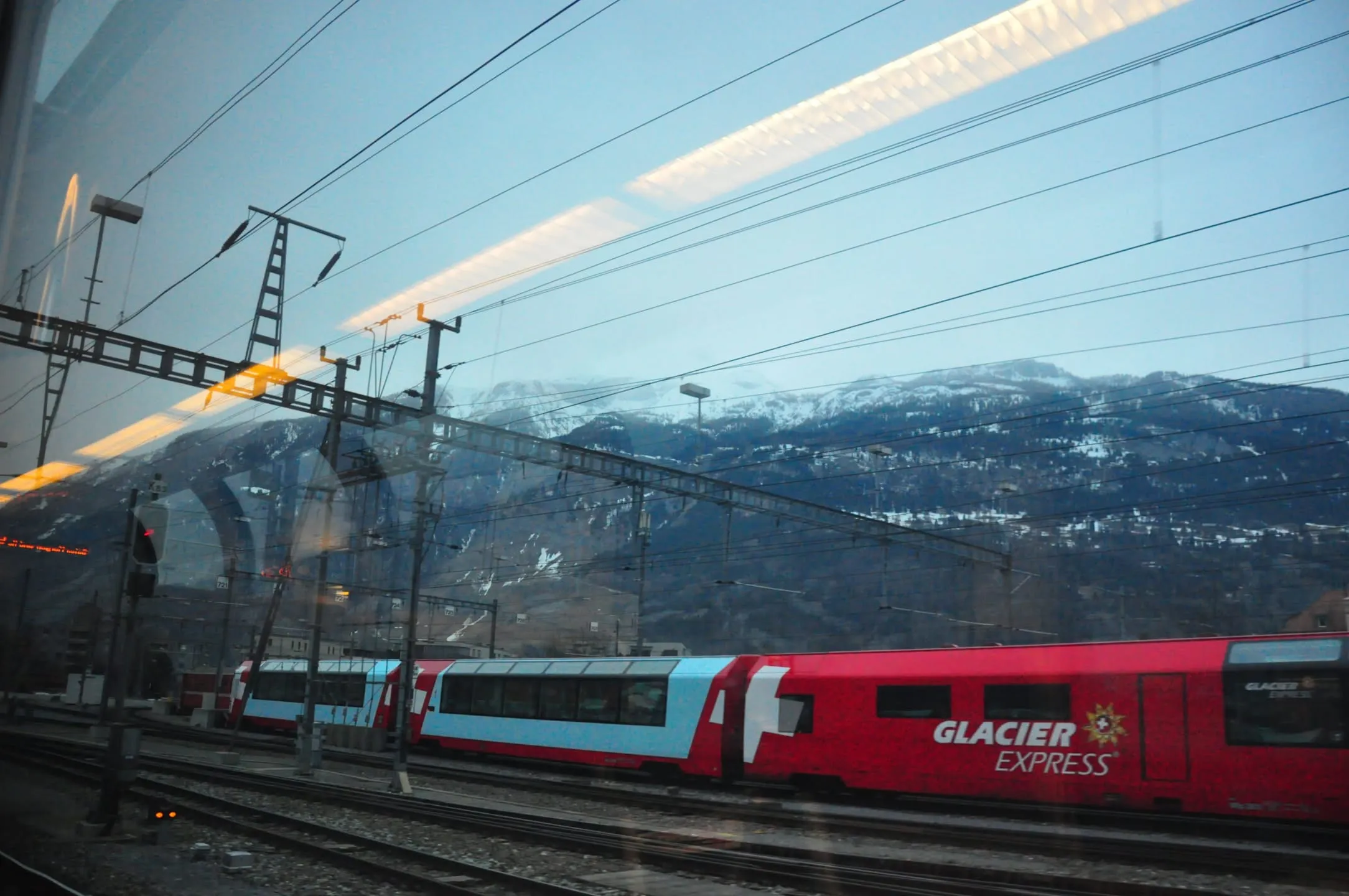
Across the tracks stood the Glacier Express, another of the famous trains, in its own red and white livery.
There were empty seats around me when we left.
Up the Albula line
For the first hour, the train followed the valleys, past rivers, villages and fields with patches of snow. Then it began to climb, and the snow got deeper.
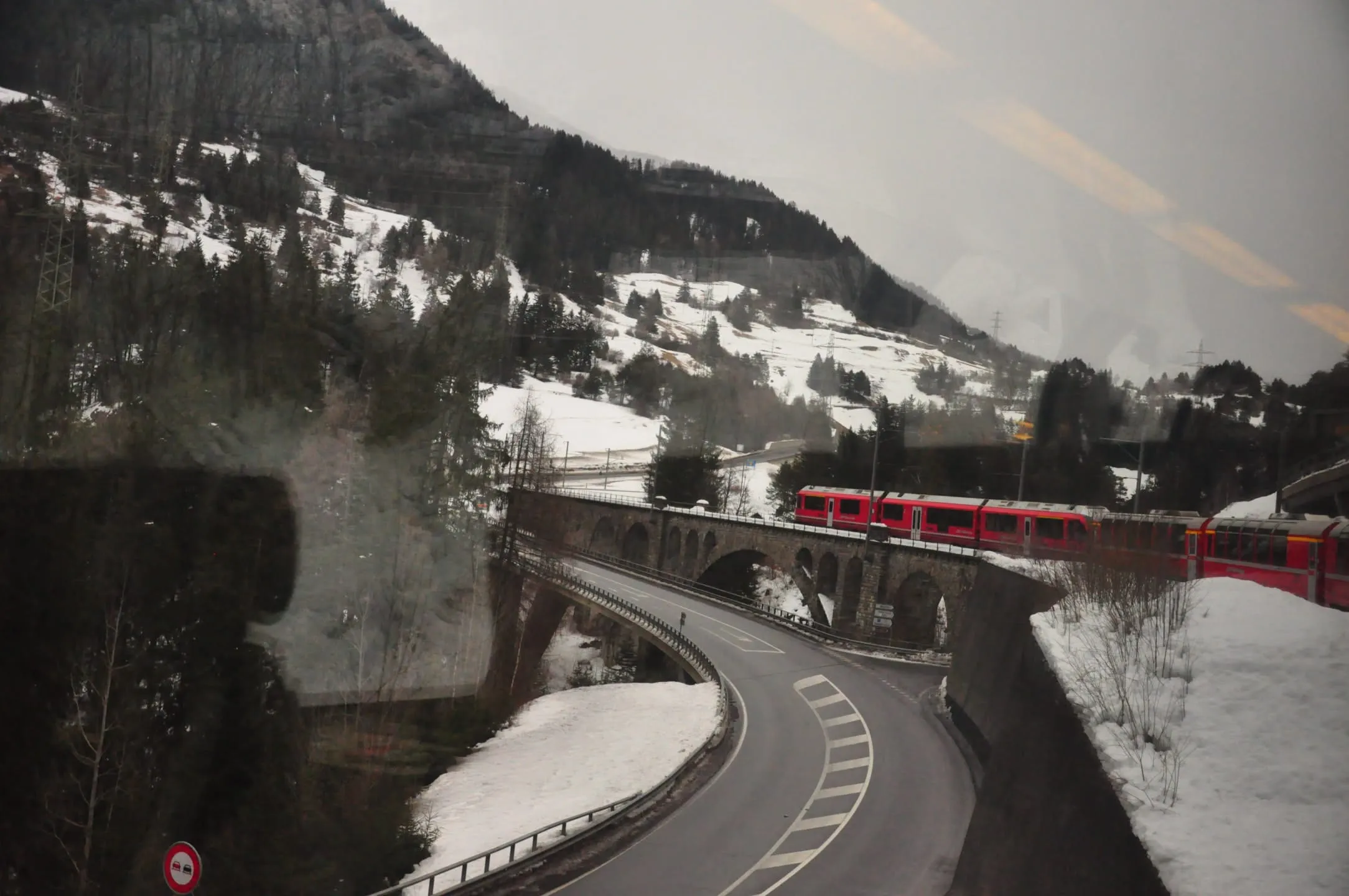
On some of the curves, I could see the front of our own train ahead of me, crossing bridges over the valley.
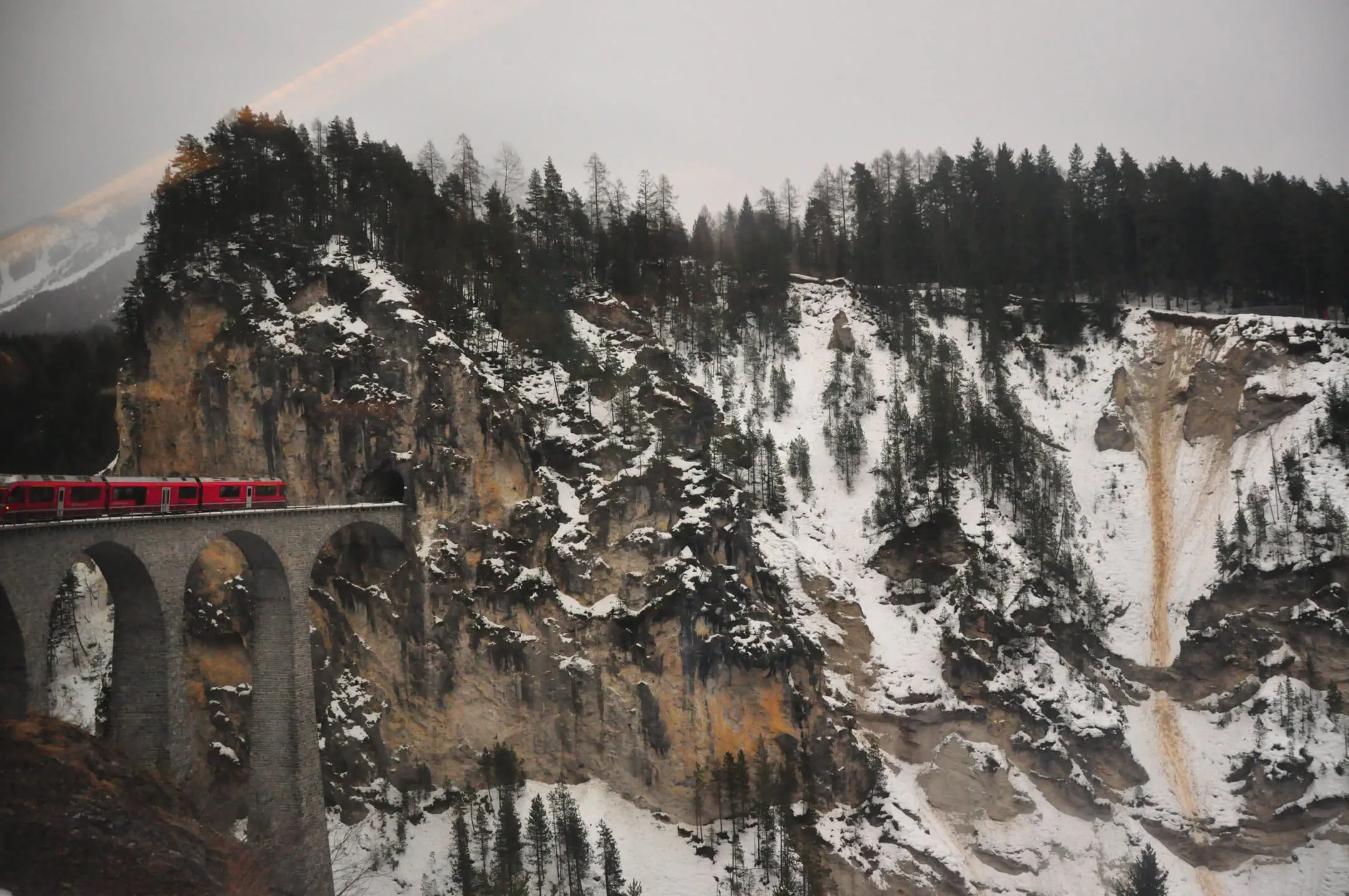
At about half past nine, the train crossed the Landwasser Viaduct, the tall curved stone bridge that runs straight into a tunnel in the cliff. From the window, I could see the front carriages already disappearing into the rock.
The pass in a whiteout
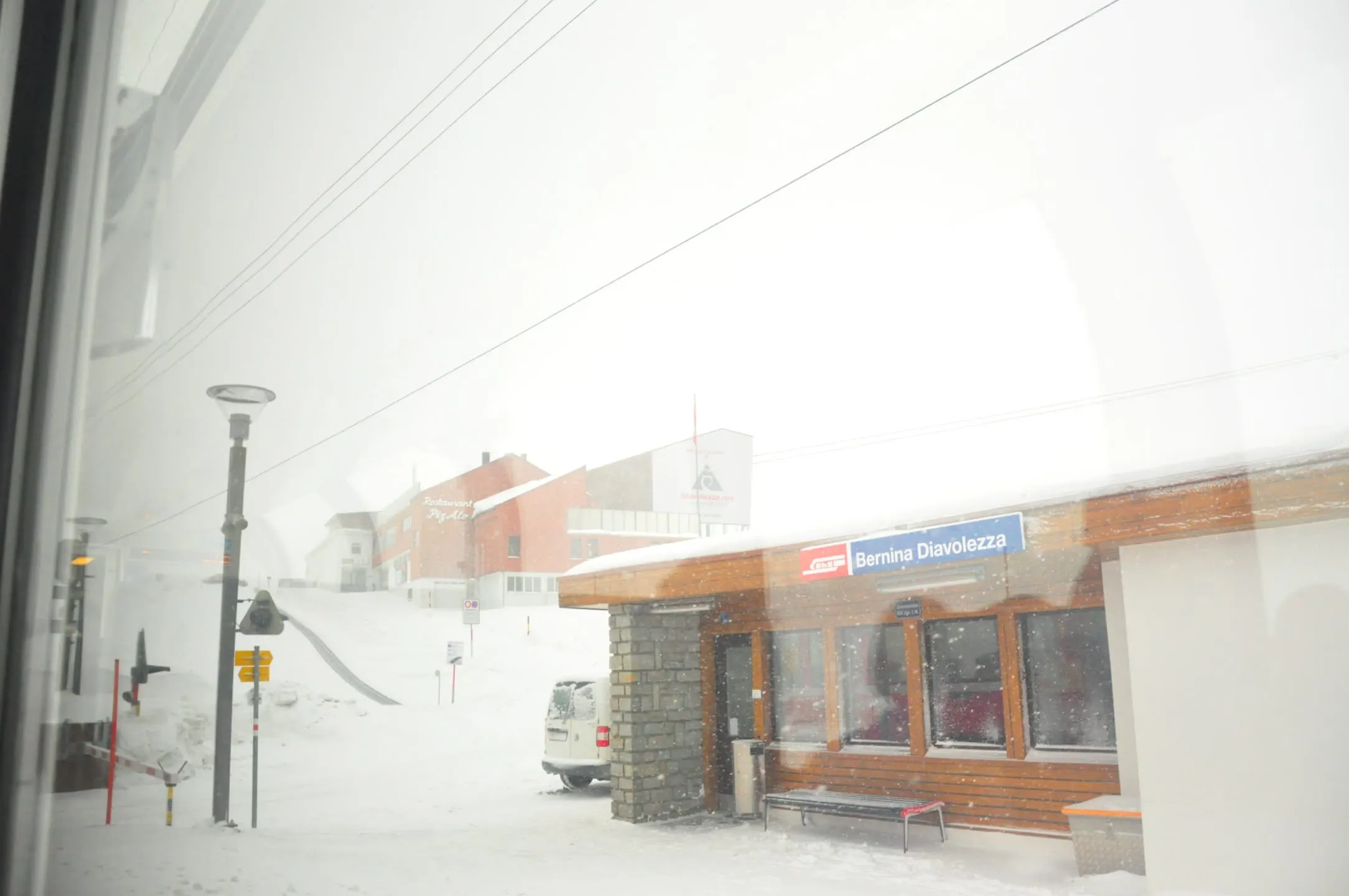
After the Engadin, the train climbed towards the Bernina Pass, and the weather closed in. By a quarter to eleven, everything outside was white. At Bernina Diavolezza station, the buildings were only just visible through the snow.
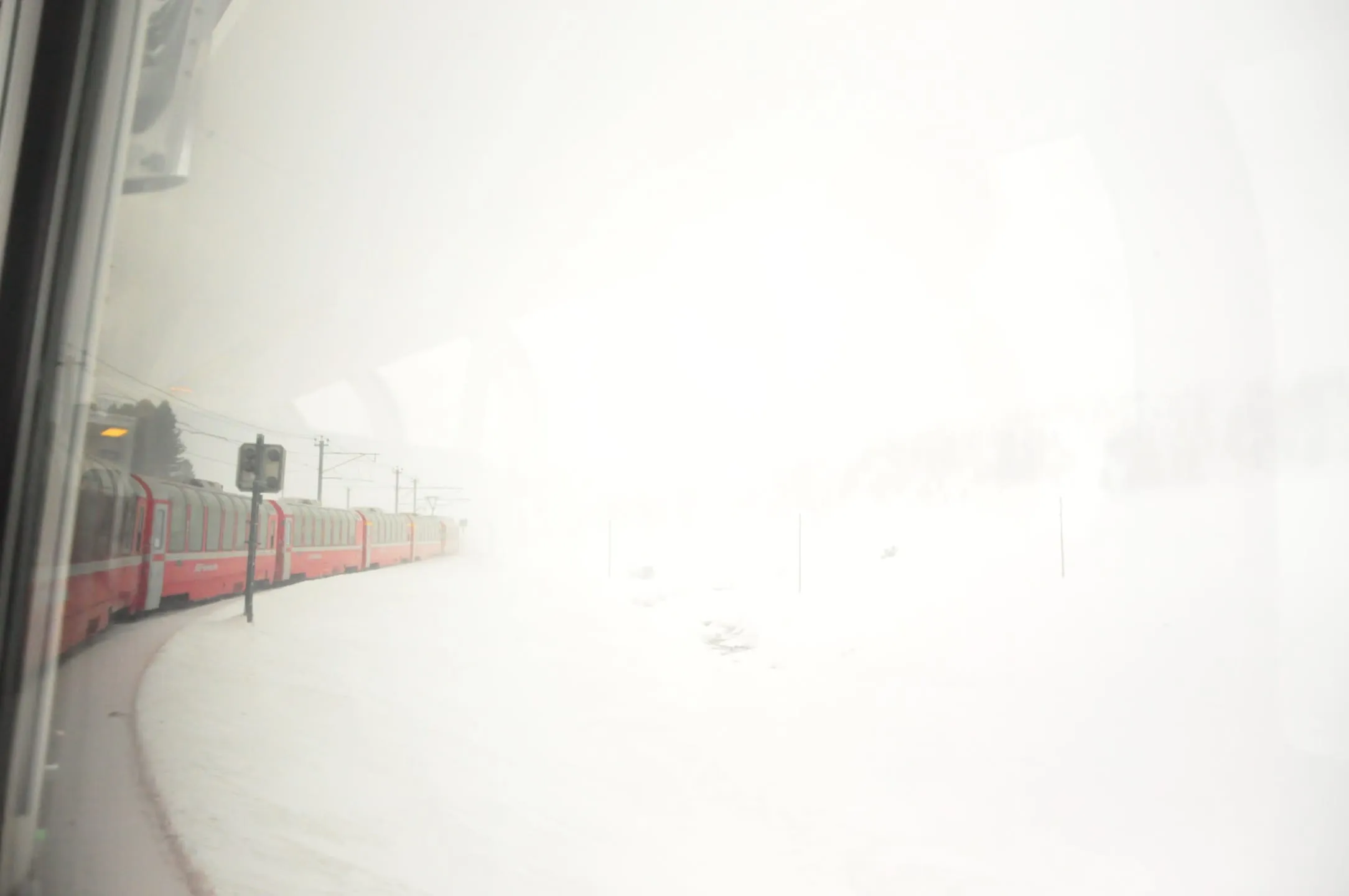
Near the top, I could see the front of the train curving away into the whiteout.
A little after eleven, the train stopped at a small station high in the snow, and some of the passengers stepped out onto the platform.
I owned waterproof boots, but I was not wearing them that day, and I did not want to get my shoes wet in the deep snow. Apart from a brief moment on the platform, I mostly stayed on the train. It was a lesson I remembered later, when I made sure my wife bought suitable waterproof boots before our days in the mountains together.
Then the train began the long descent towards Italy, through snow-covered forest and along ledges above the valley.
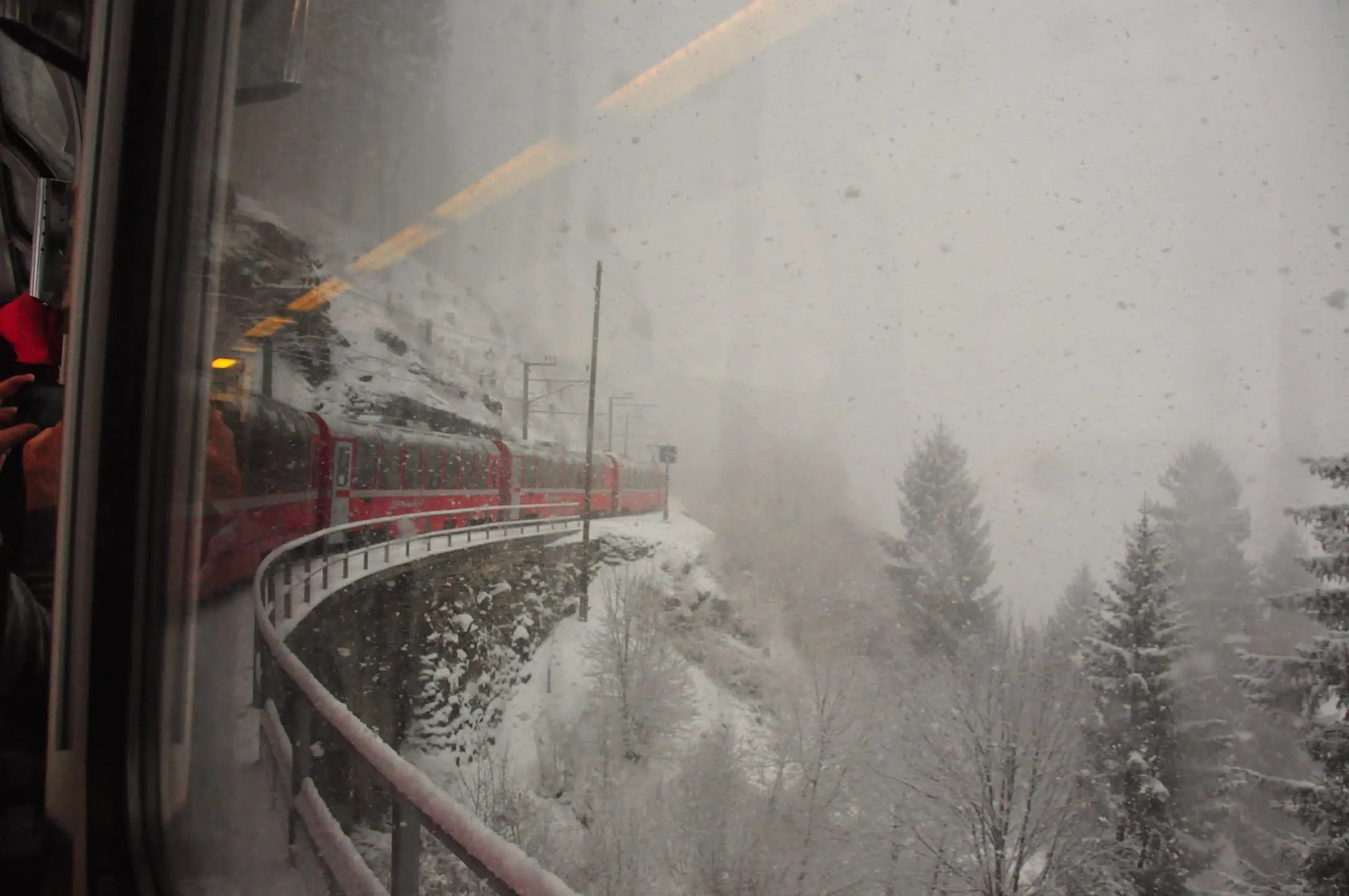
The spiral at Brusio
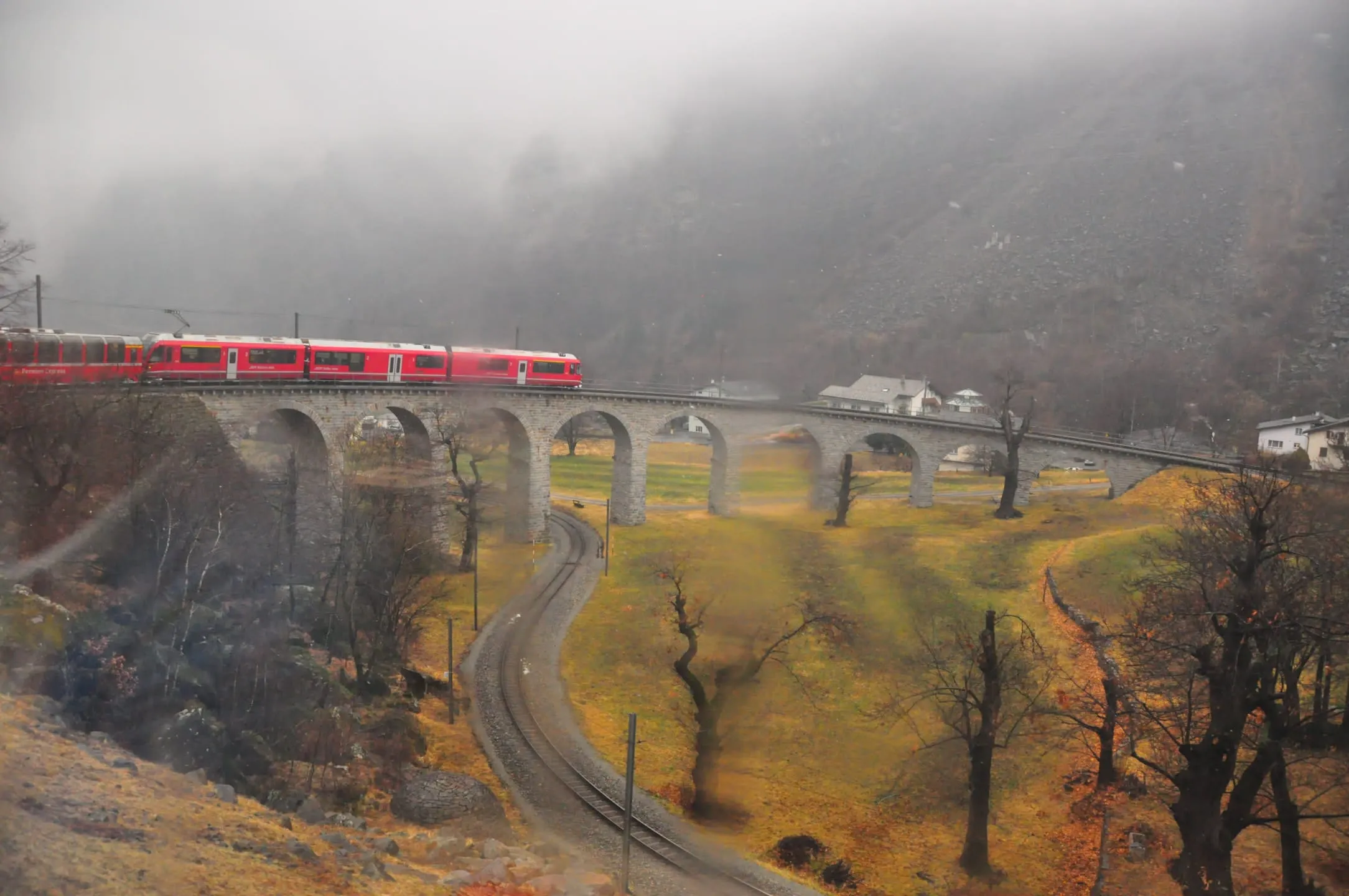
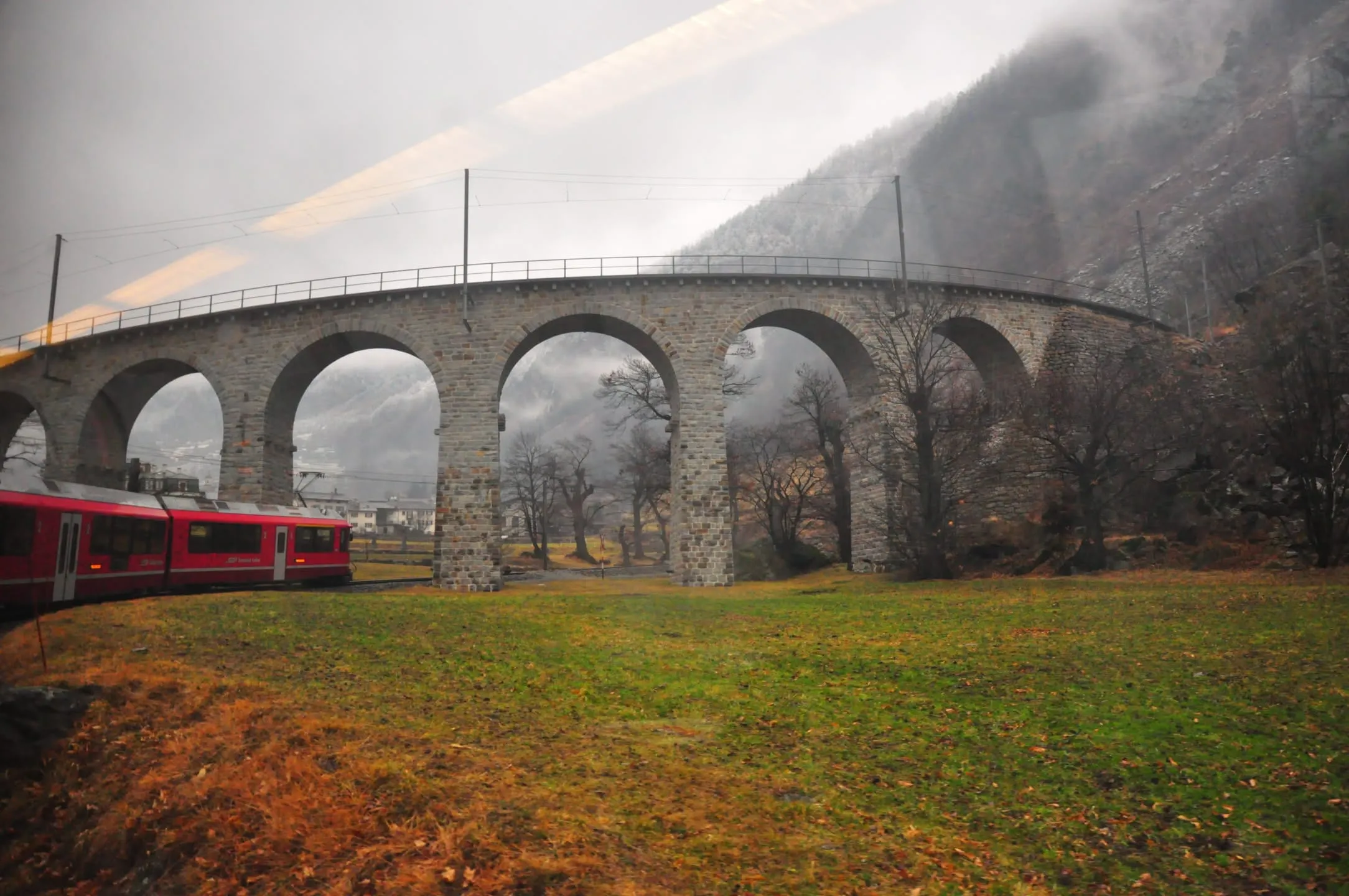
Lower down, the snow turned to rain and the fields turned green and brown. Just before half past twelve, near Brusio, the train ran through a loop and over a stone viaduct that curves round in a full circle, so that the line passes underneath itself.
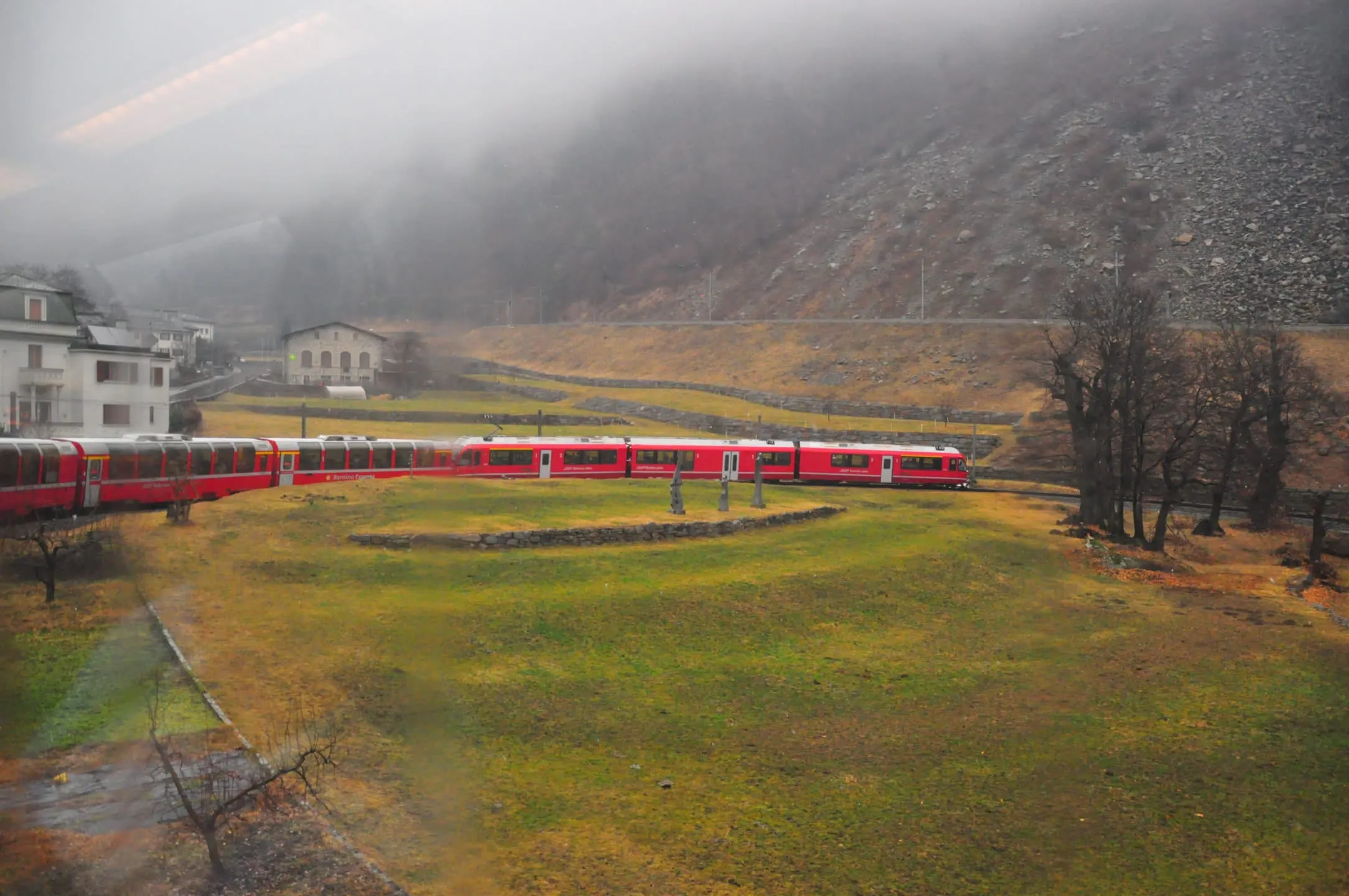
Tirano
The train arrived in Tirano at about ten to one. I had made it to Italy.
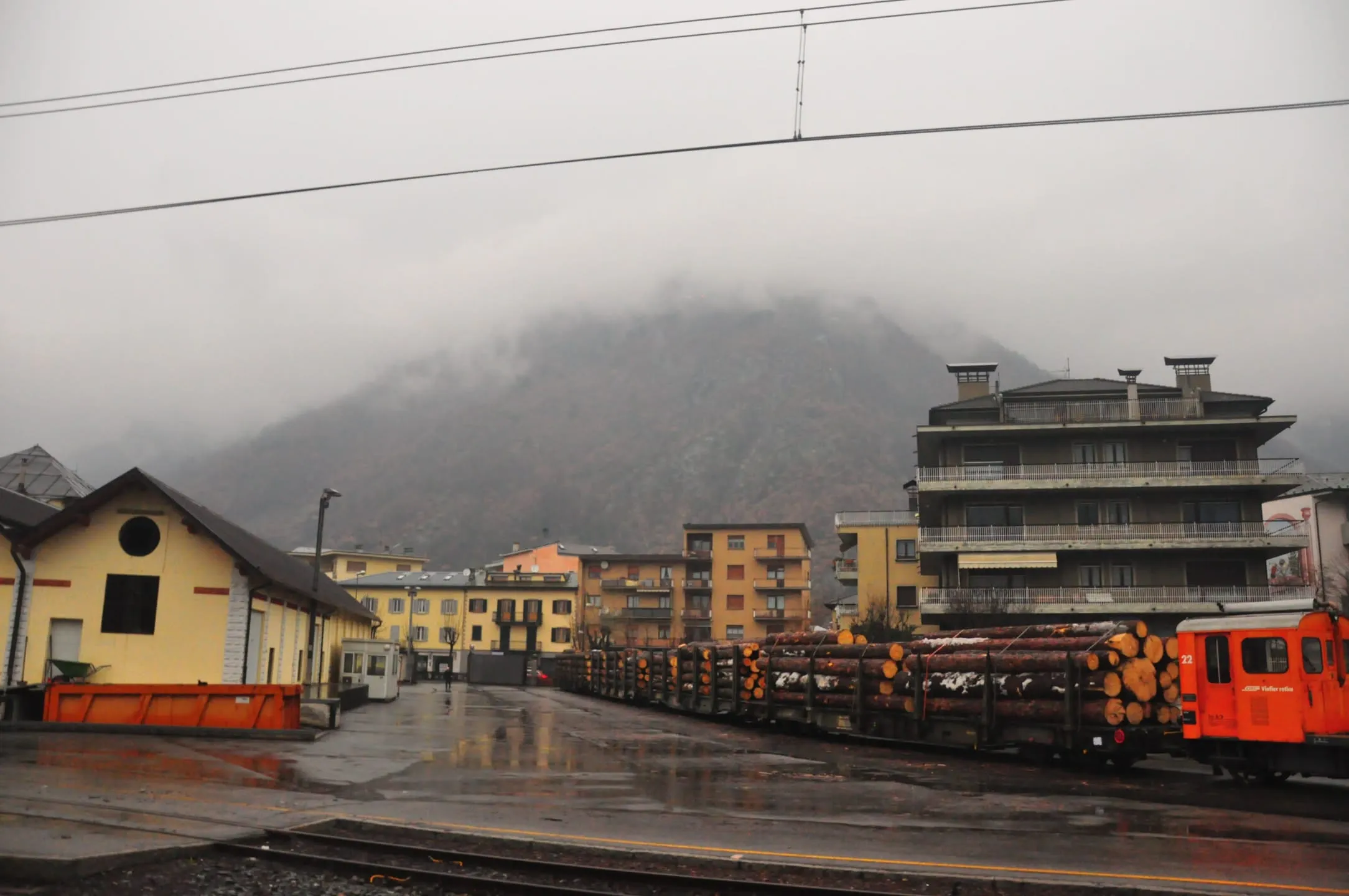
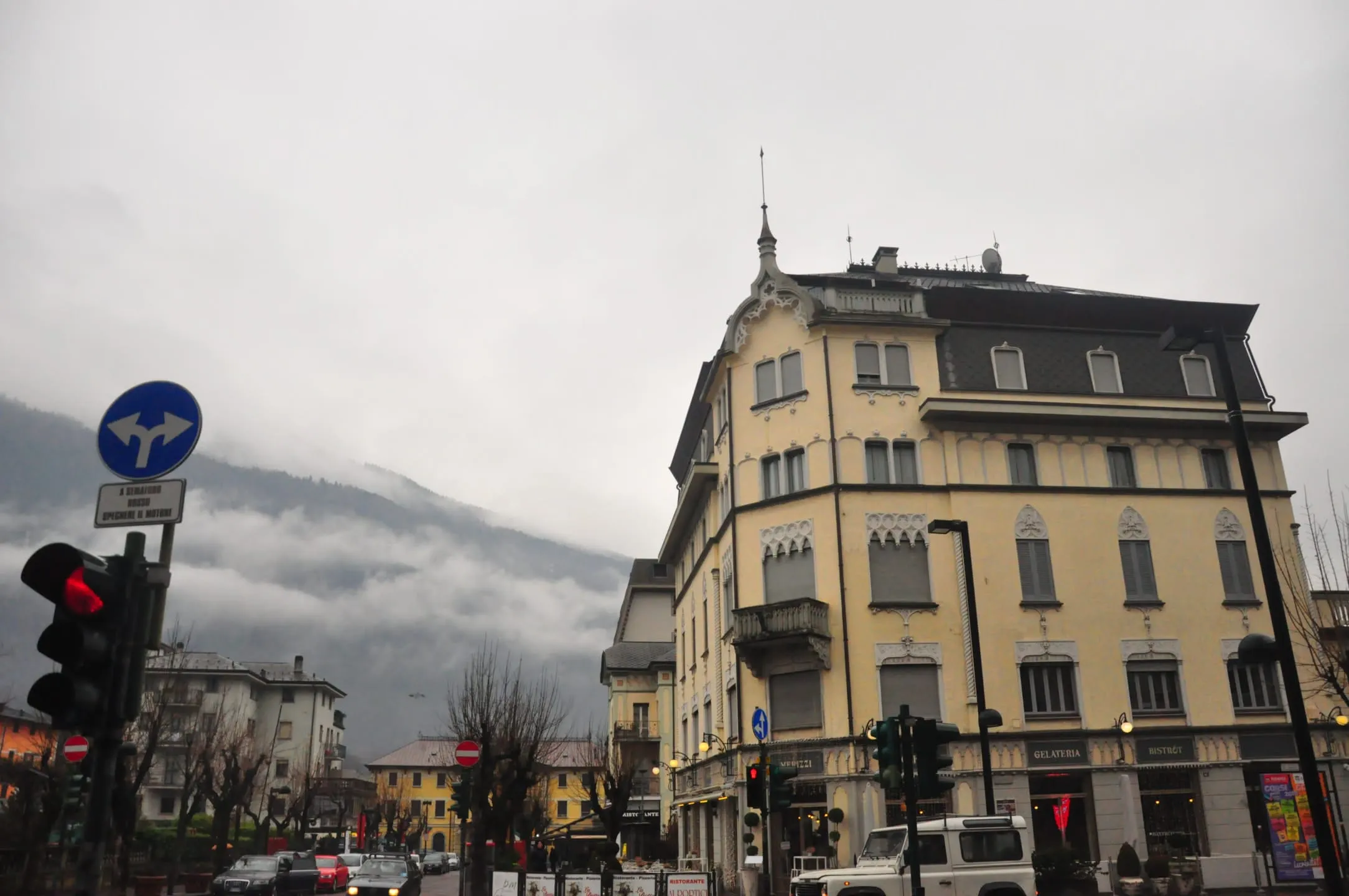
It was raining. Just outside was the station building, painted yellow.
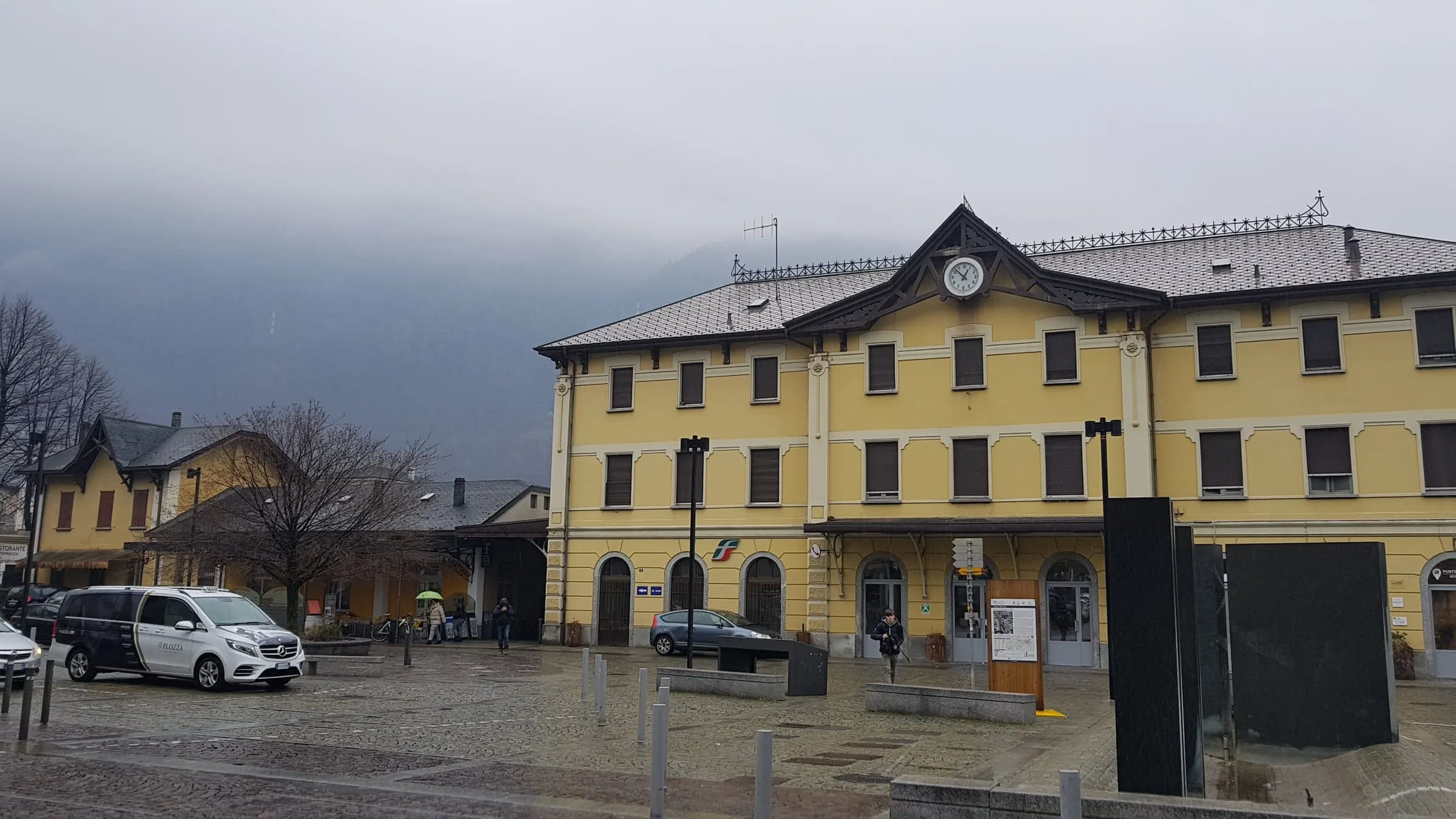
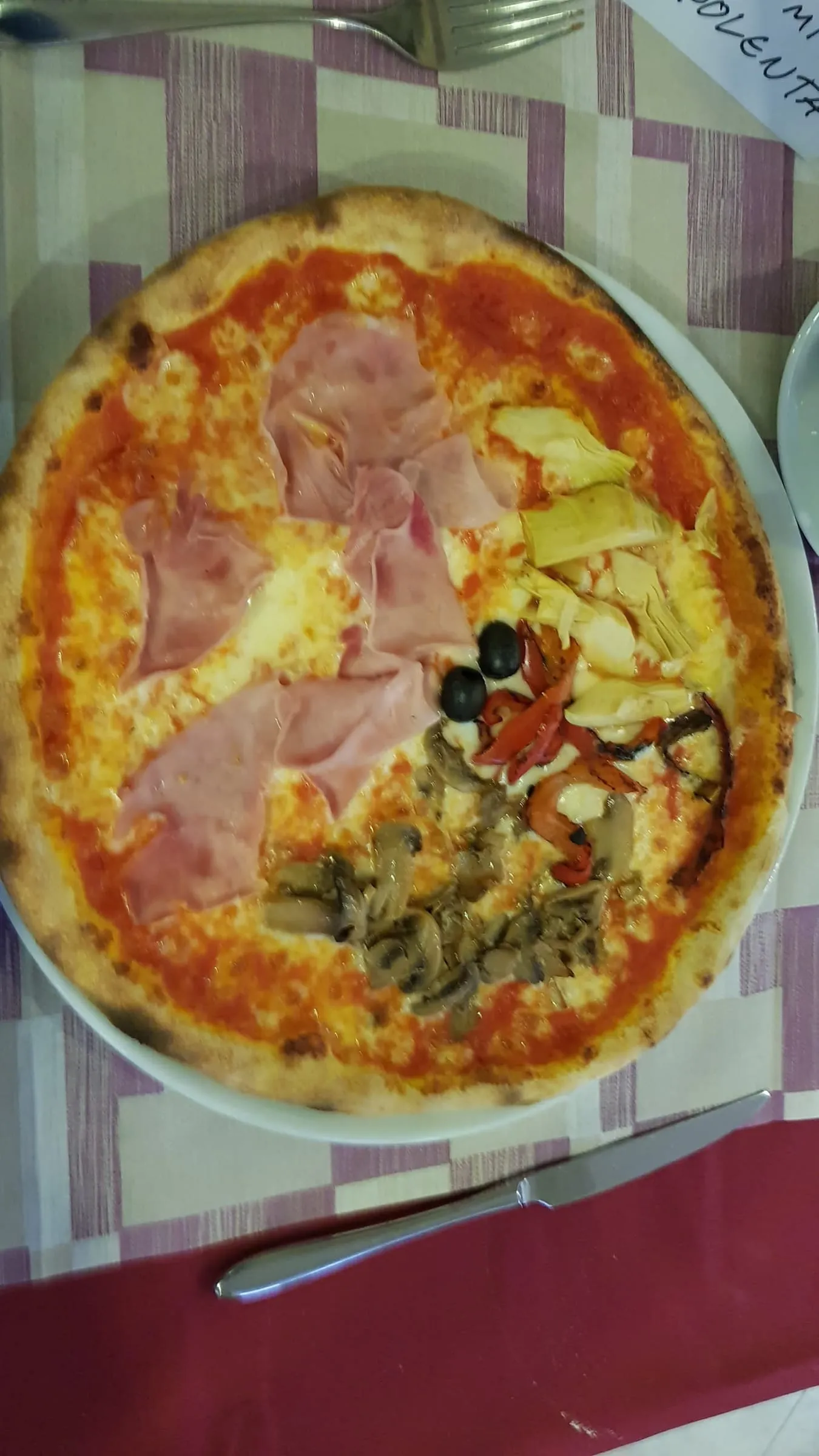
I had about an hour and a half before the train back. I had a pizza for lunch, with ham, olives and artichokes.
After lunch, I walked around the town for a while in the rain. The streets were quiet, and the mountains around the town were hidden in low cloud.
The way back
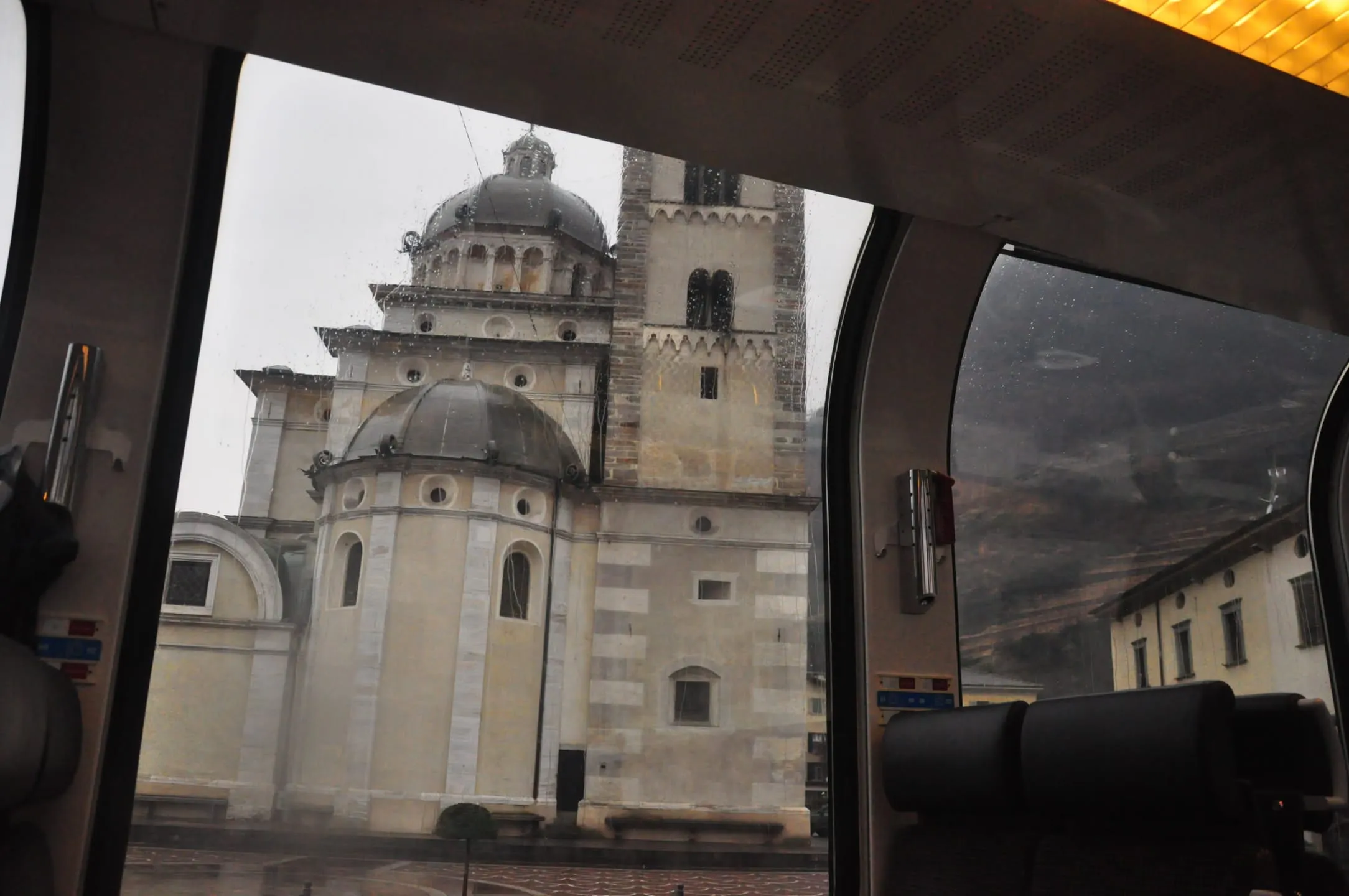
The return train left at 14:25. Not long after leaving, it passed close by a large church with a dome and a bell tower, right beside the line.
Then we were back in Switzerland, and passing the spiral viaduct at Brusio again, this time from below.
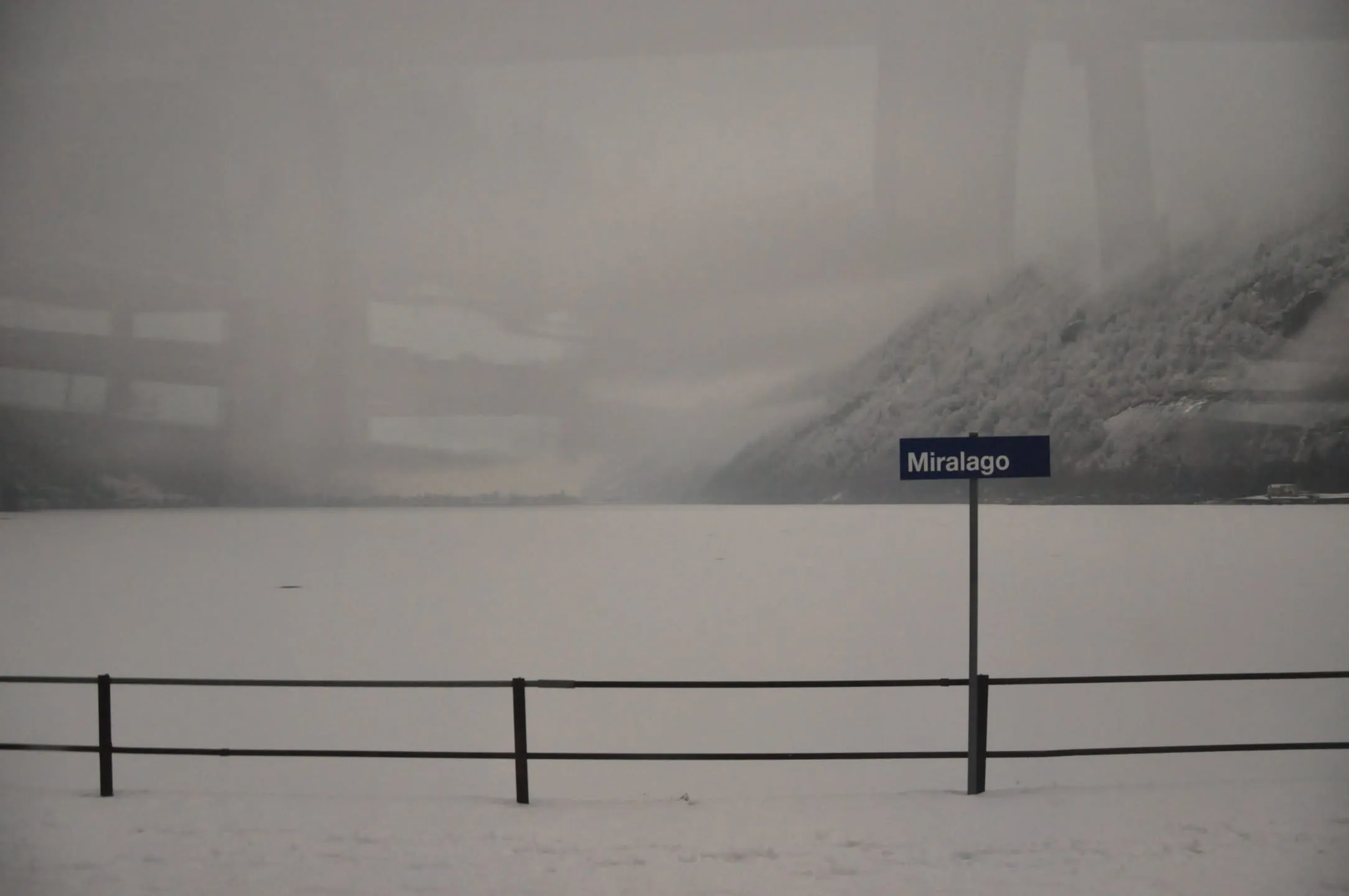
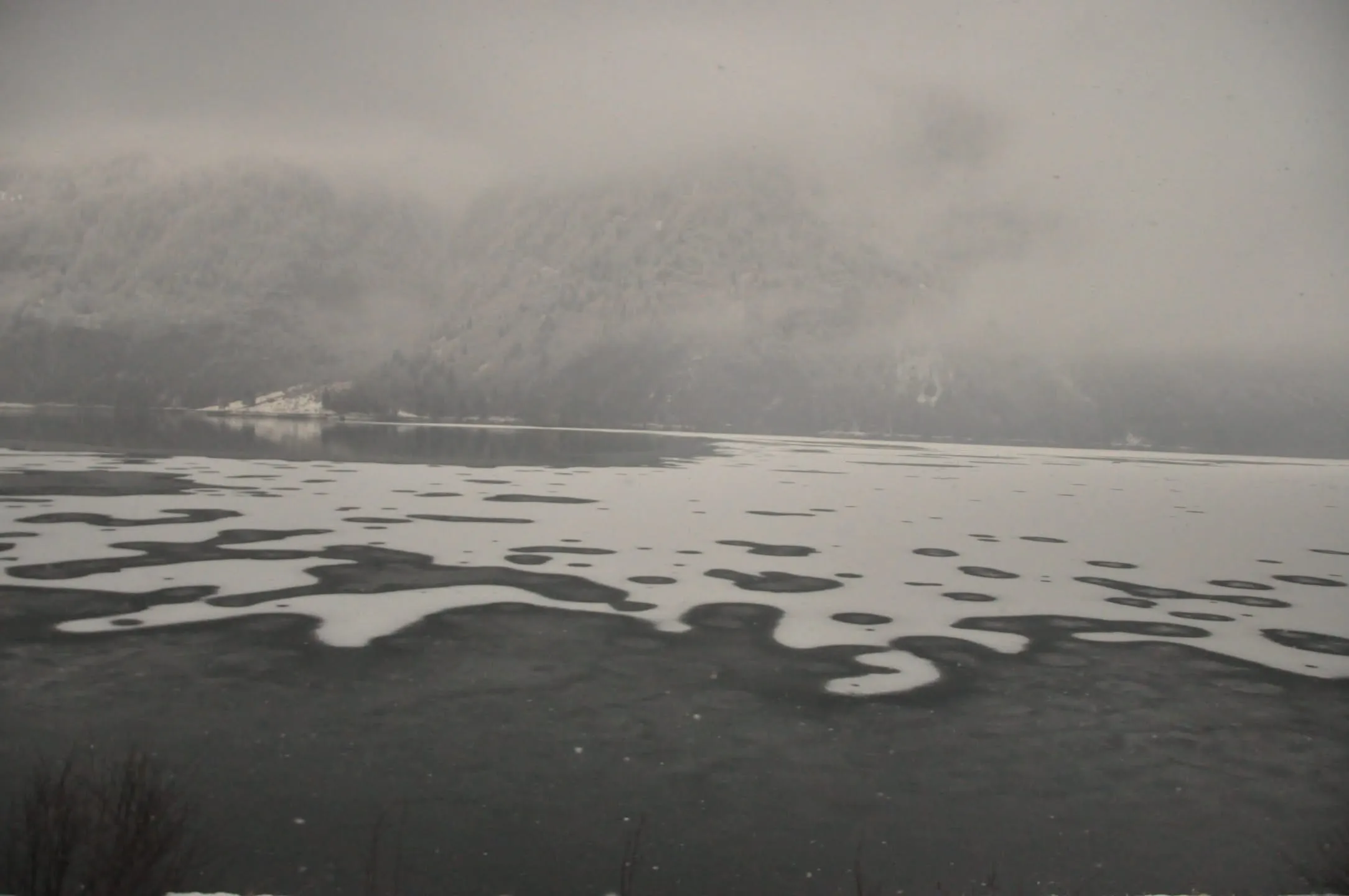
Further up, the train ran along the shore of a frozen lake. At the small station of Miralago, the ice stretched away into the mist.
In places, the ice had broken up into white patches on dark water.
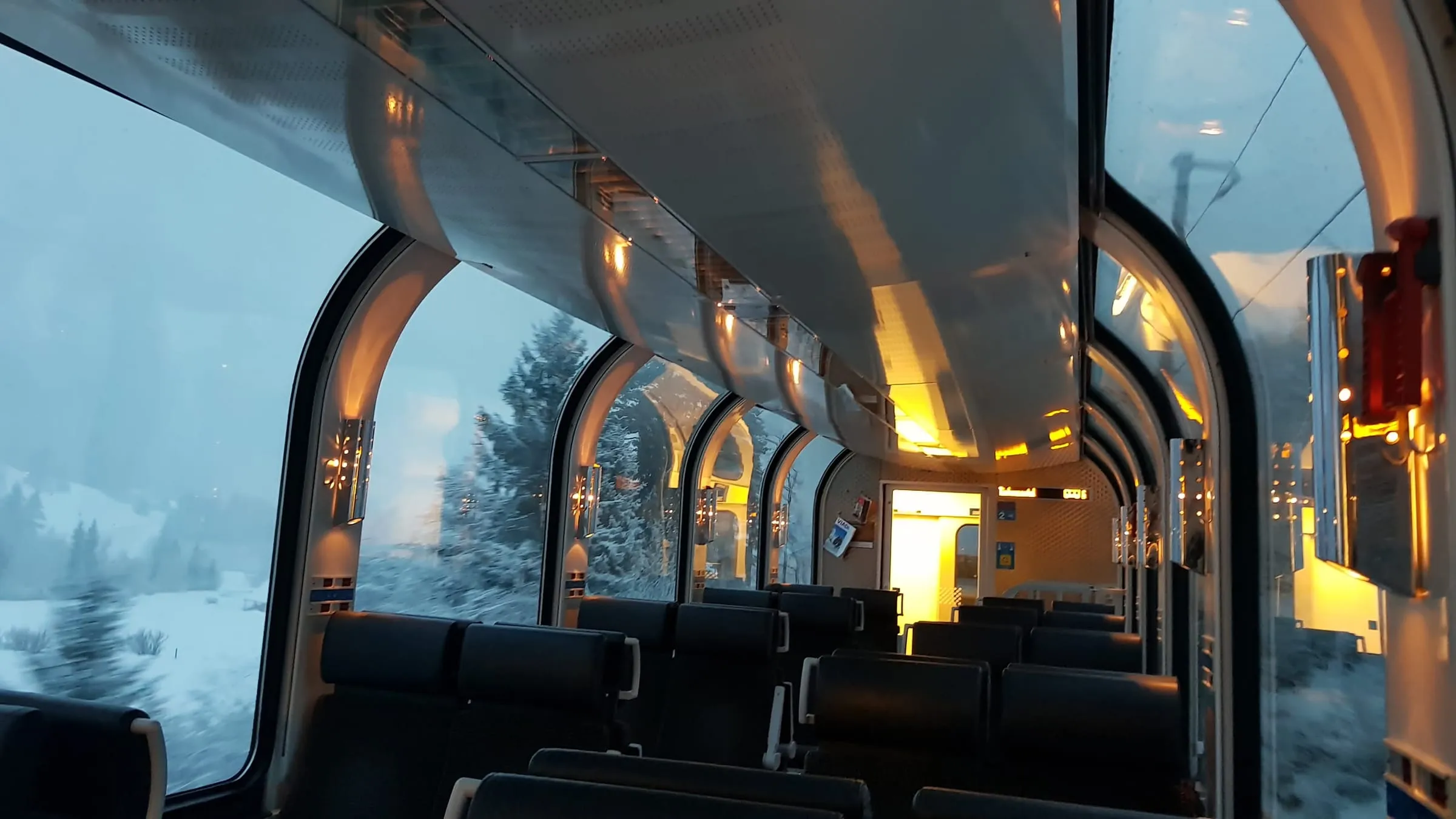
Over the pass and down through the Engadin, the snow was still falling. By about half past five, it was getting dark, and the panoramic carriage was almost empty.
From Chur, it was still a long way back to Basel. It had taken the whole day, but I had been to Italy, and I had crossed the Alps twice to do it.