Sunday, 4 February, was the second day of our Swiss Travel Passes. After the Schilthorn the day before, we were going up another mountain, and this time we would start the journey by boat.
Leaving Lucerne by boat
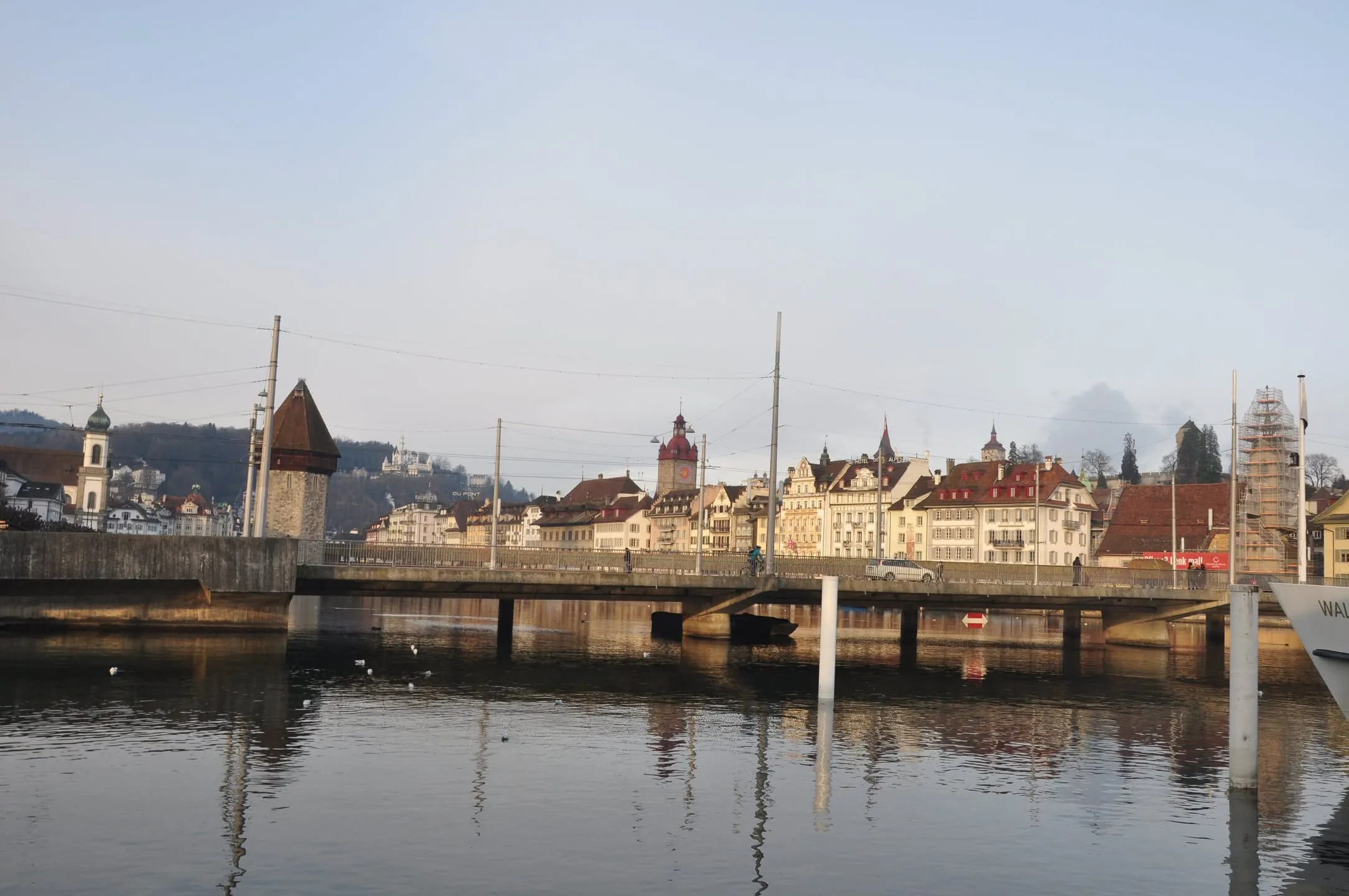
We were by the water in Lucerne before nine. The morning was calm and clear, and the old town and the water tower were reflected in the river.
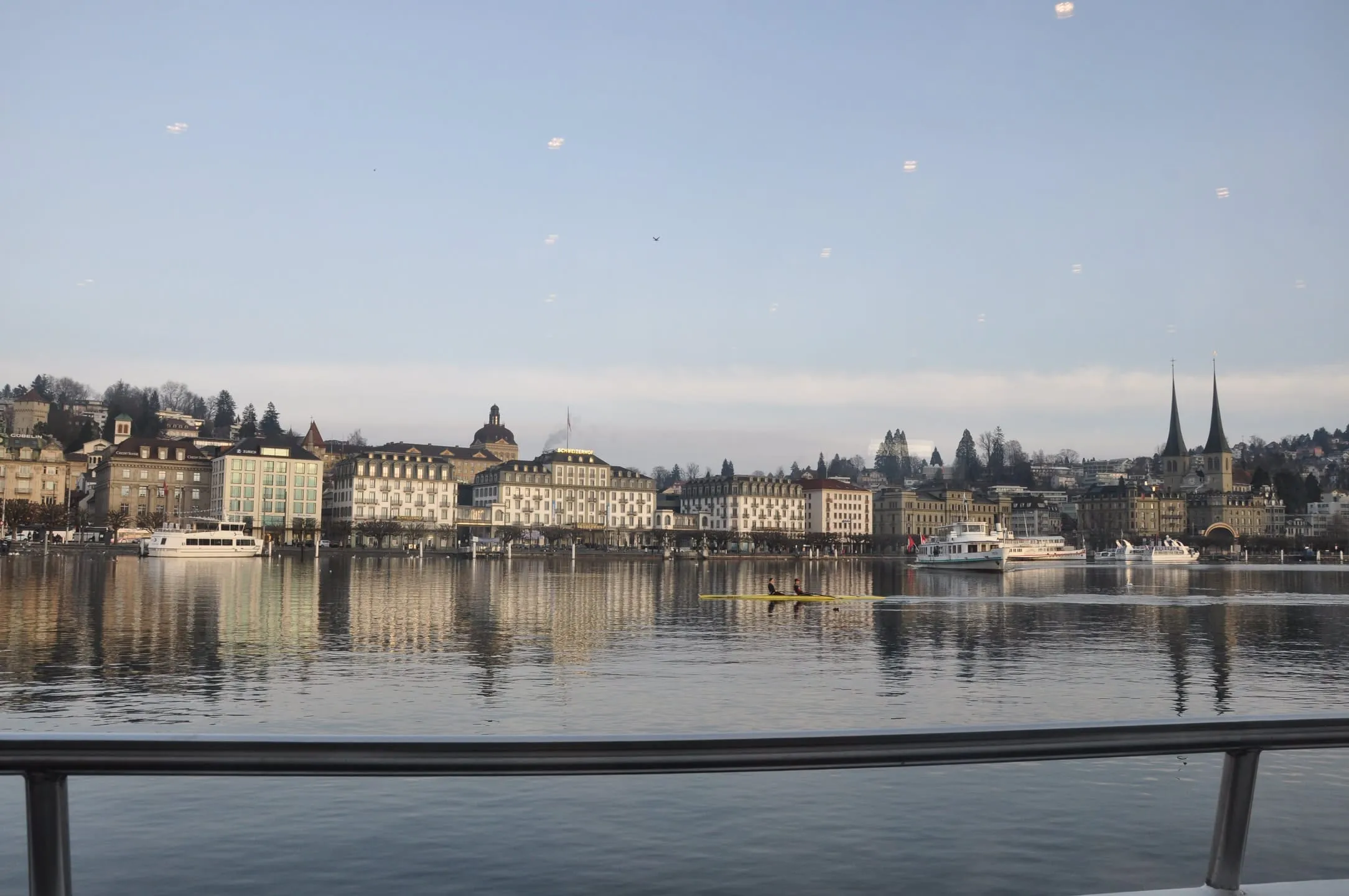
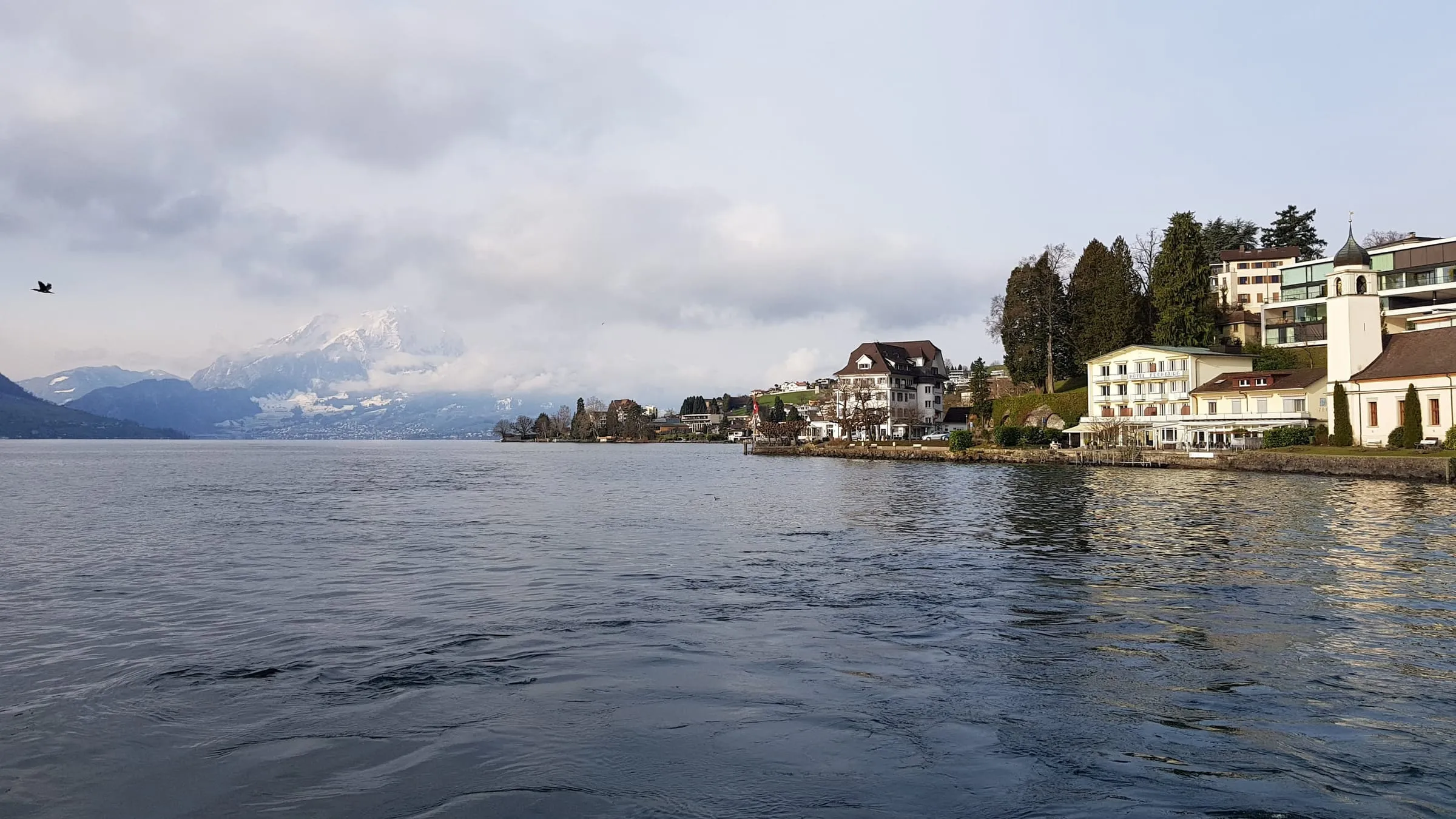
At about nine, our boat pulled away from the town. For the next hour, we crossed Lake Lucerne, past villages and old hotels along the shore, with snowy mountains at the far end of the lake.
Up the mountain by cogwheel train
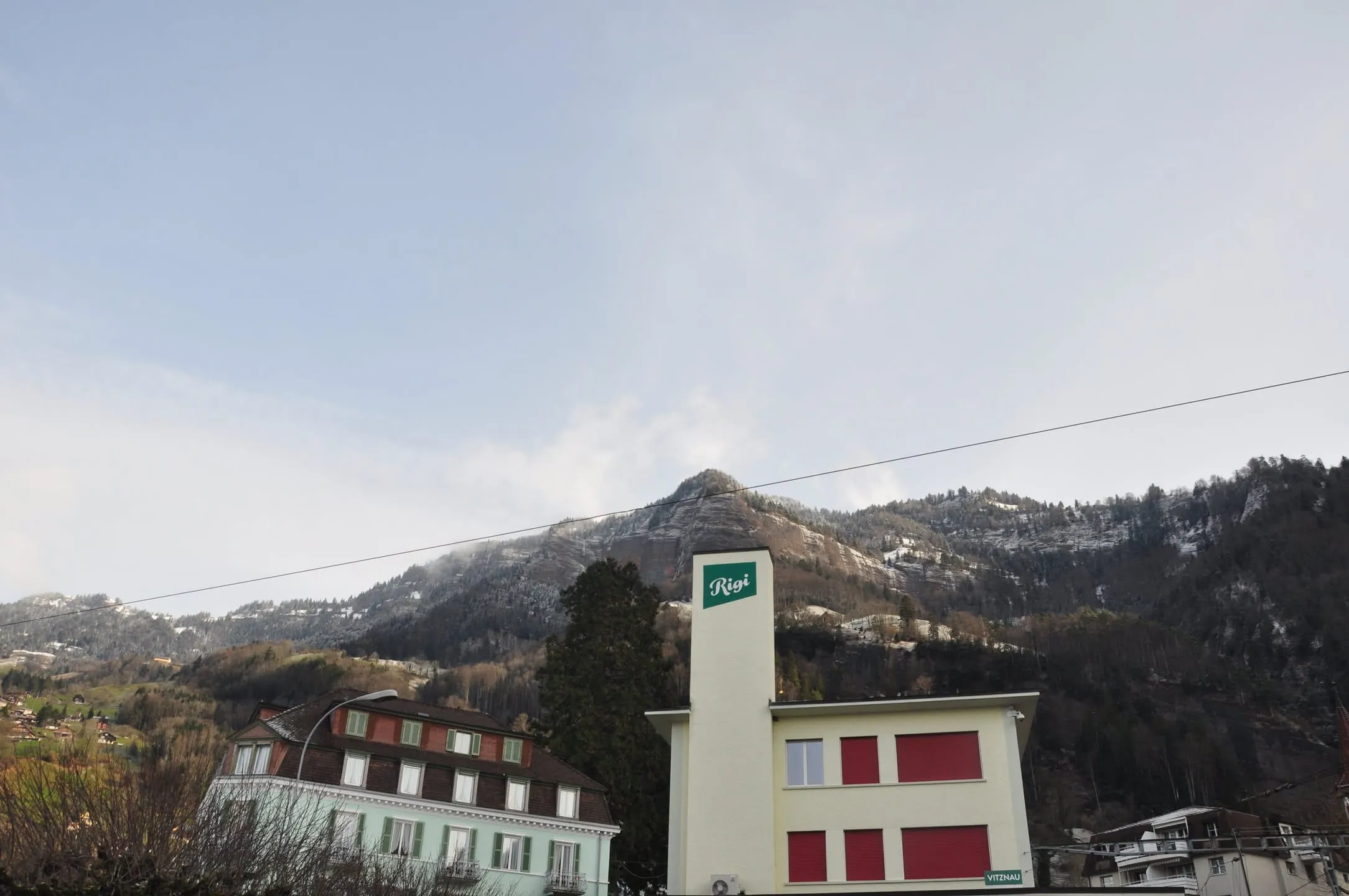
The boat brought us to Vitznau, at the foot of the Rigi. The station had a tall sign with the Rigi name on it, and the mountain rose straight up behind the village.
It was a Sunday, and the platform was crowded with people waiting for the little red cogwheel train. As it climbed, the slopes were green at first, but within half an hour we were among snow-covered trees, looking down over lakes and flat country far below.
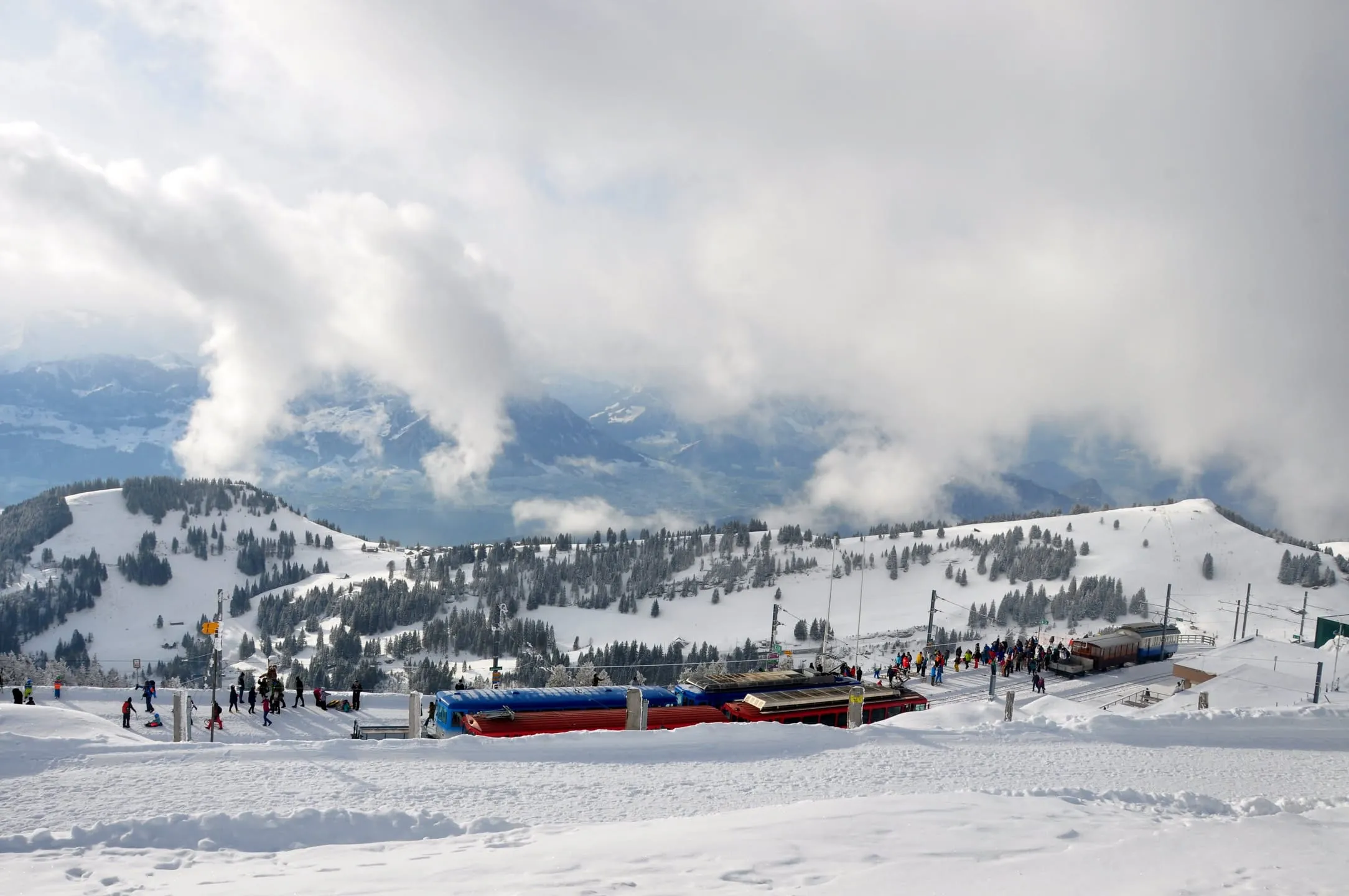
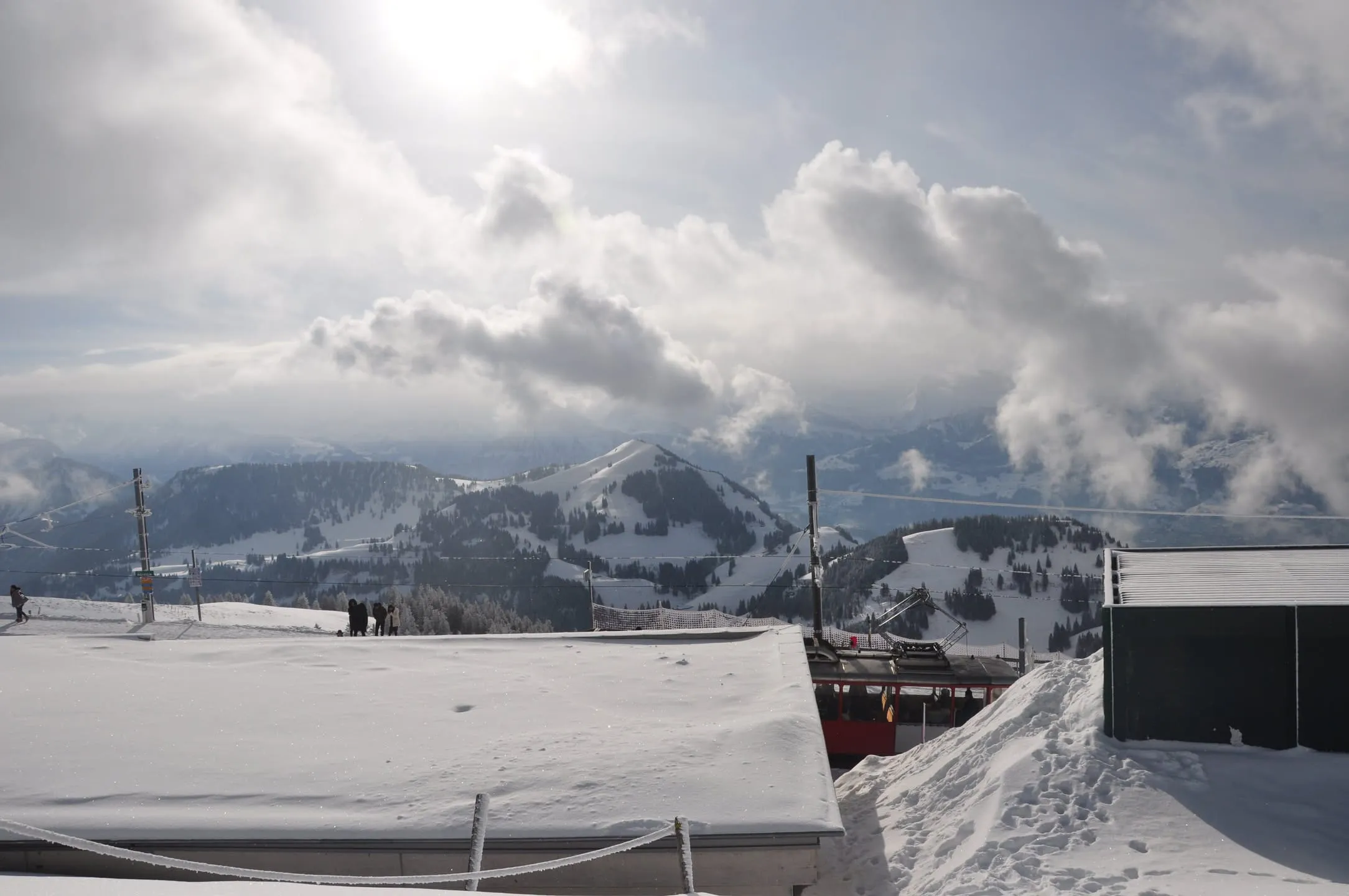
At the top, the snow was deep and the sun came and went between big clouds. Red and blue trains waited at the top station, and there were plenty of people about in the snow.
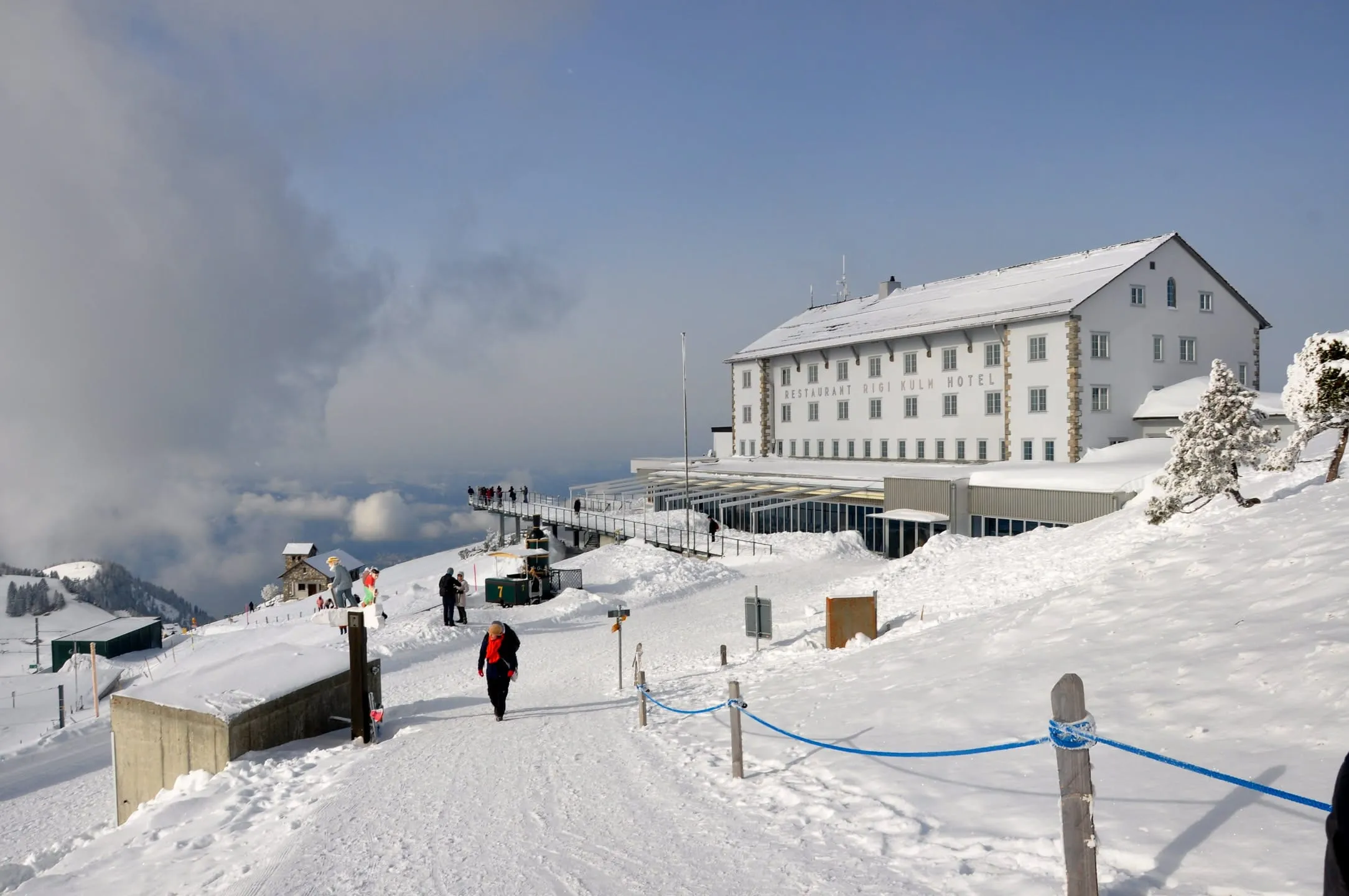
Above the station stood the Rigi Kulm Hotel. Nearby, an old green steam locomotive with the number 7 was on display in the snow.
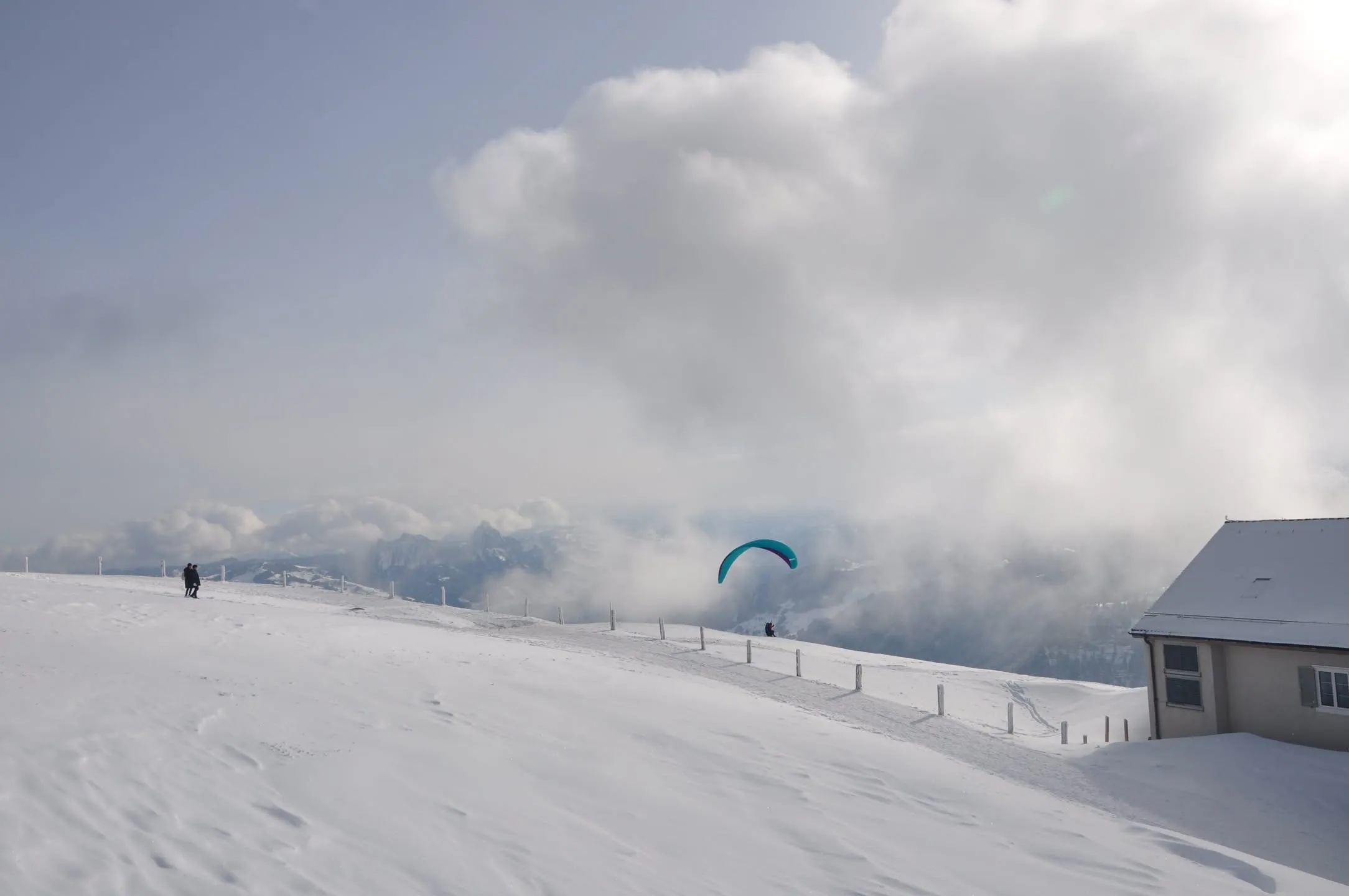
Near the top, a paraglider was taking off over the edge of the slope.
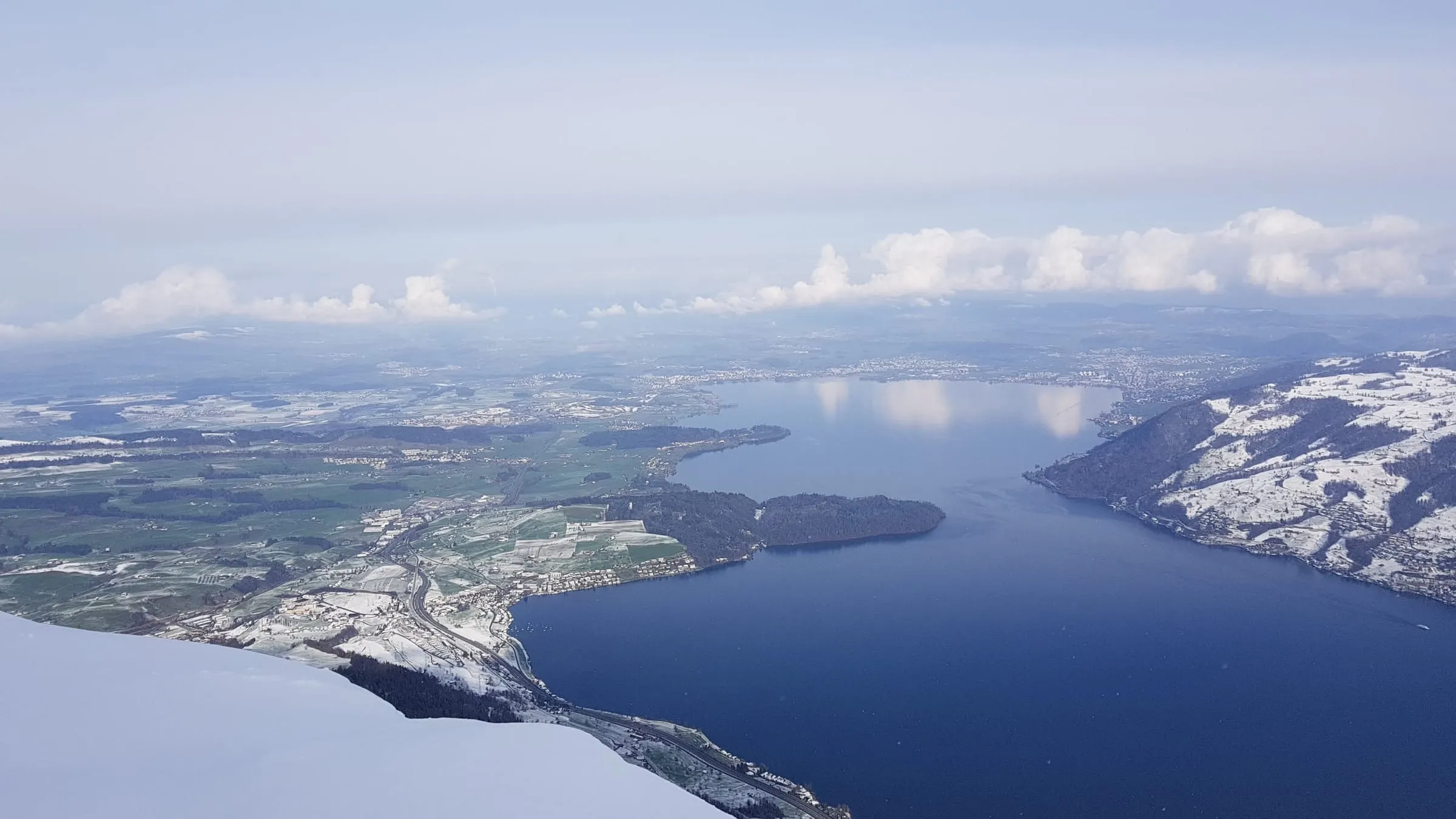
From the top, we could see straight down to a lake, a deep blue in the sunlight, with towns along its shores.
A stone from Mount Emei
Near the summit, there was something I had not expected to find on a Swiss mountain. A large stone stood in the snow, carved with three Chinese characters and the words “Mt. Emei, China”.
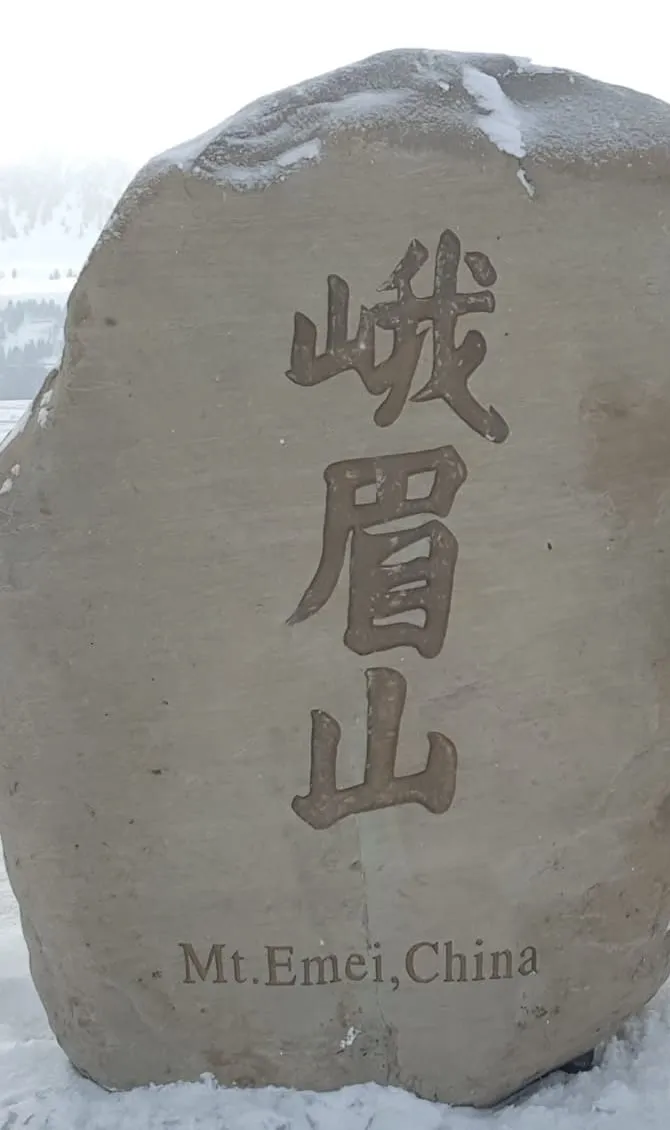
My wife and I had been to Mount Emei together years before, so it was a surprise to come across it here, so far away.
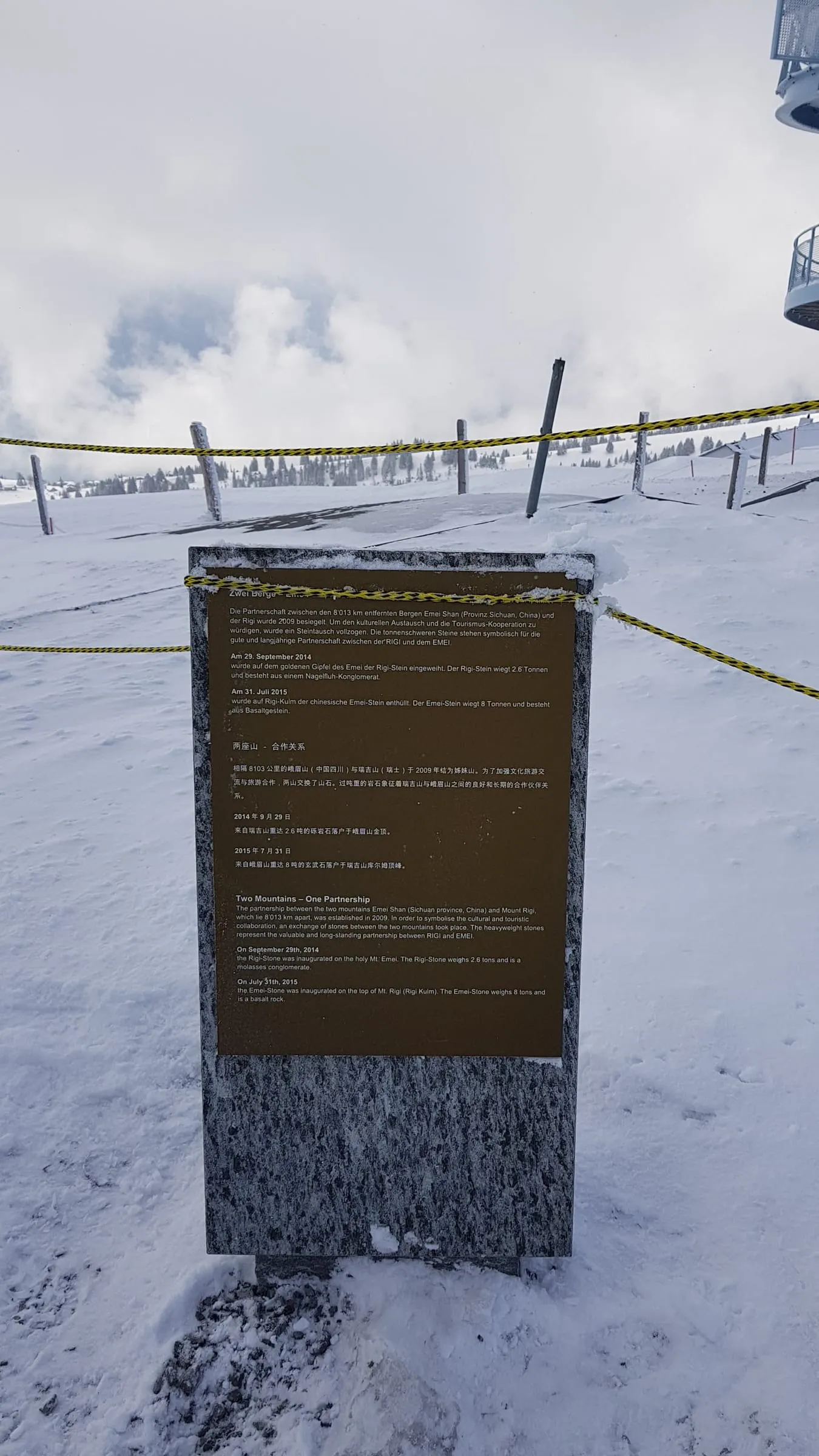
A board beside the stone explained the connection. Mount Rigi and Emei Shan, in Sichuan, have had a partnership since 2009. In 2014, a stone from the Rigi was placed on the summit of Emei, and in 2015 this stone from Emei was placed on the Rigi. According to the board, the two mountains are 8,013 kilometres apart.
Walking down in the cloud
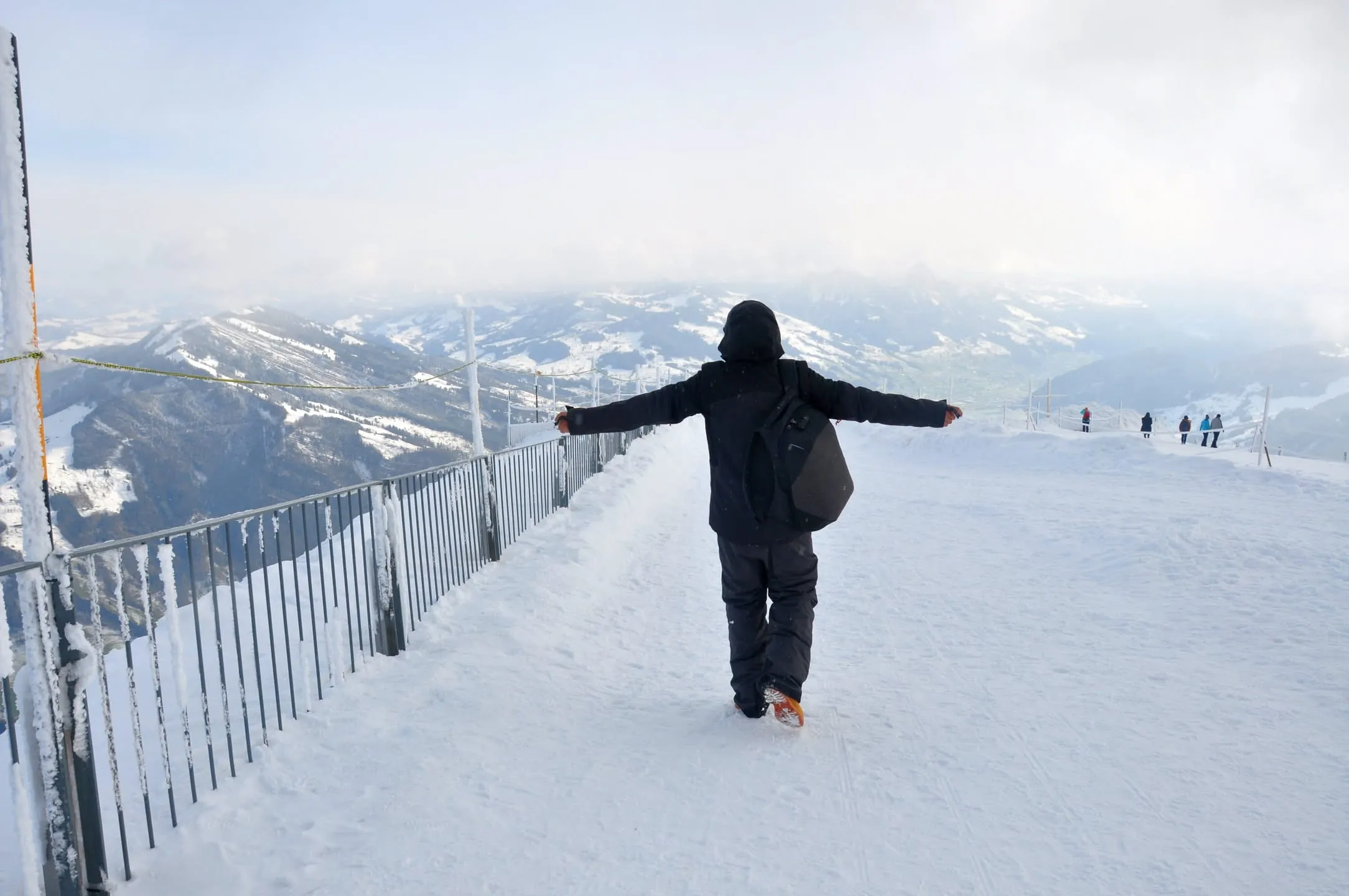
After that, we walked down from the summit along a path beside a fence. The cloud came in and out, and at times everything around us turned white.
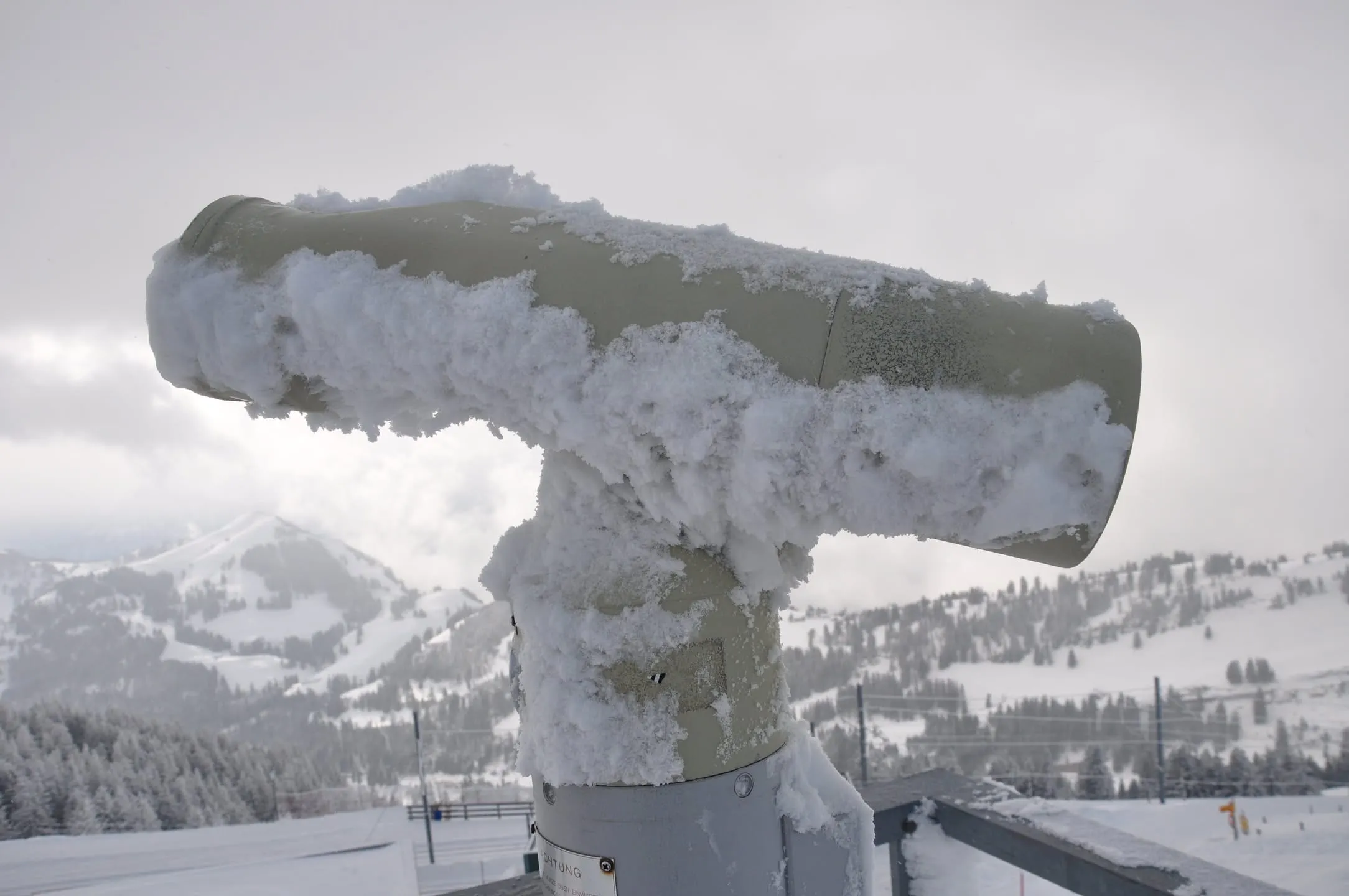
At one viewpoint, even the telescope was frozen over.
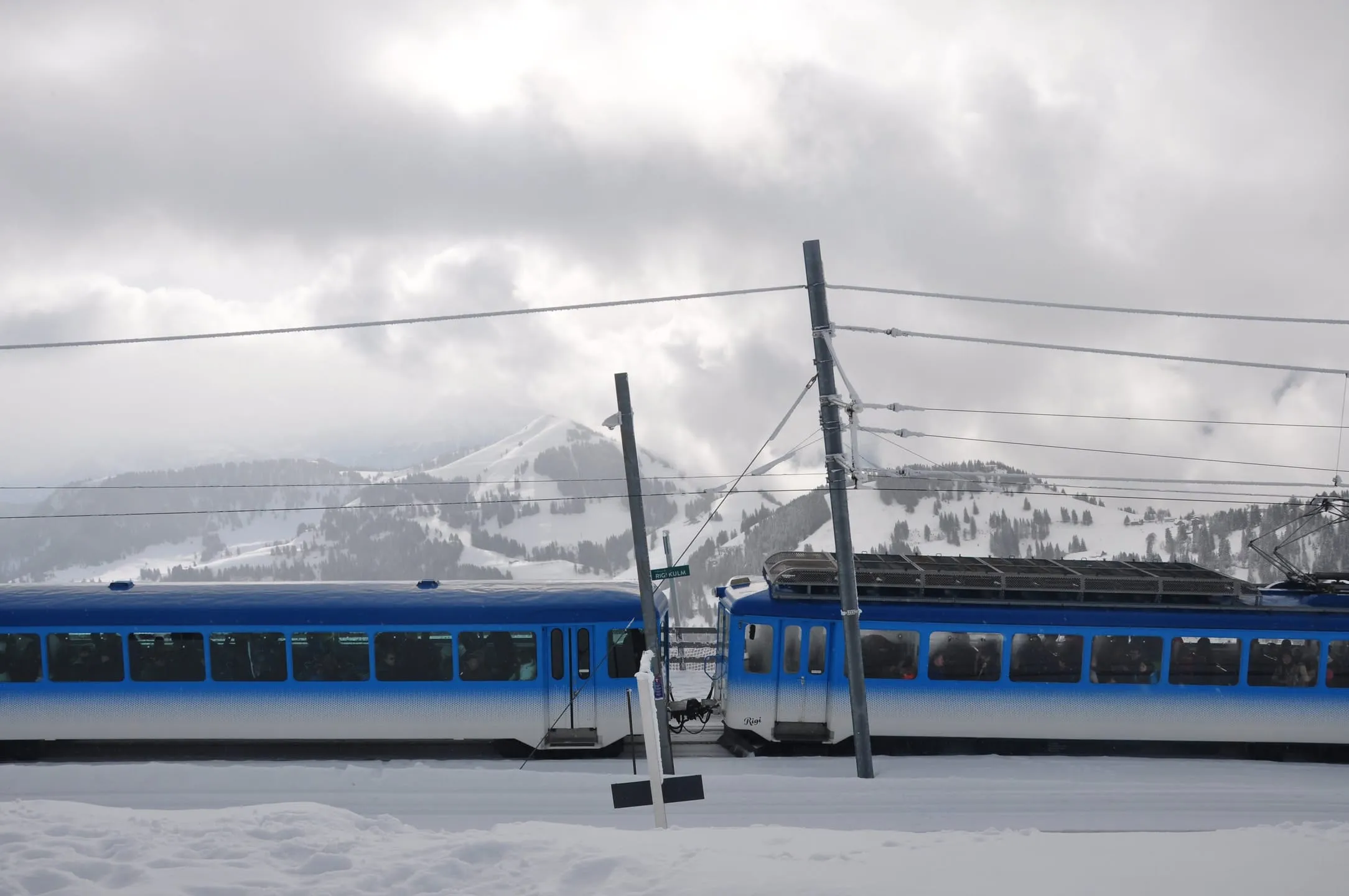
Further down, we saw one of the blue trains on the line.
A ride in the snow
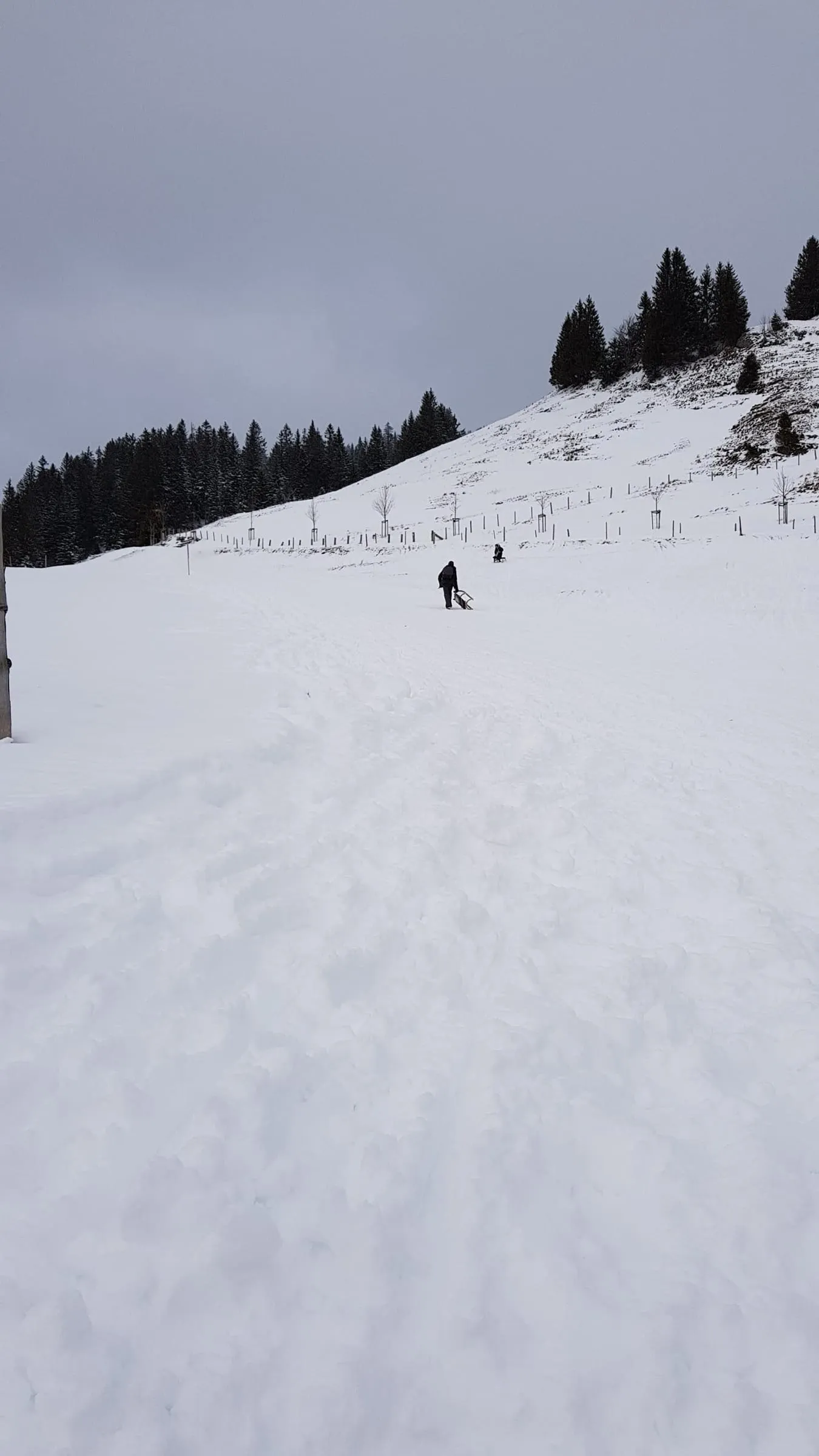
Before noon, we hired a sledge. A notice where we hired it listed sledges, snowshoes and walking sticks, and safety advice for winter sports in several languages, including Chinese and Korean.
Then we tried sledging together. We went along a snowy path through the fir trees, and later down an open slope where other people were sledging too.
Down to Weggis
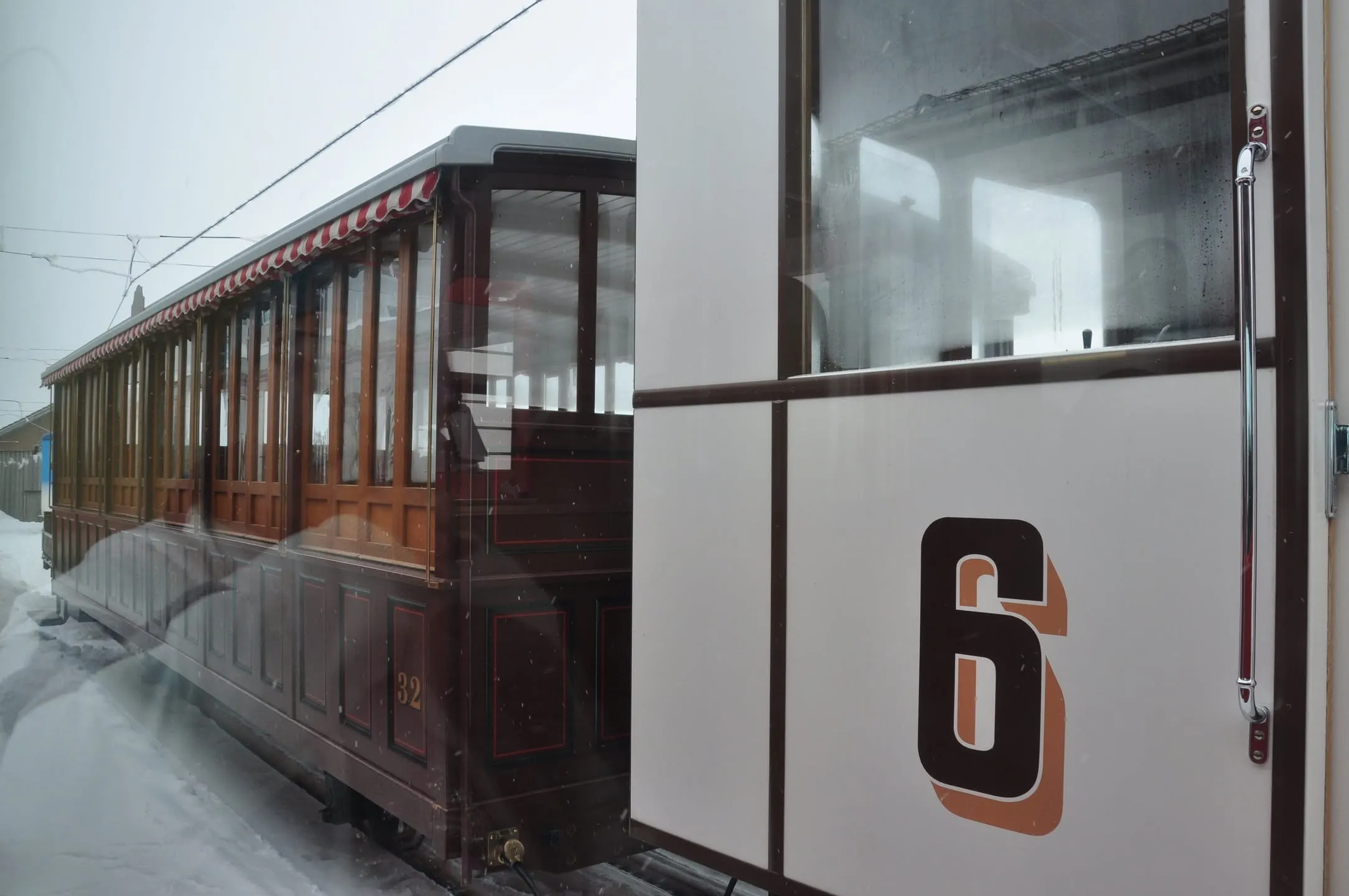
In the early afternoon, we took the train again. At one of the stations, an old wooden carriage with a striped awning stood beside a modern one.
By about twenty past two, we were at Rigi Kaltbad, partway down the mountain, where there were modern buildings with glass pavilions in the snow.
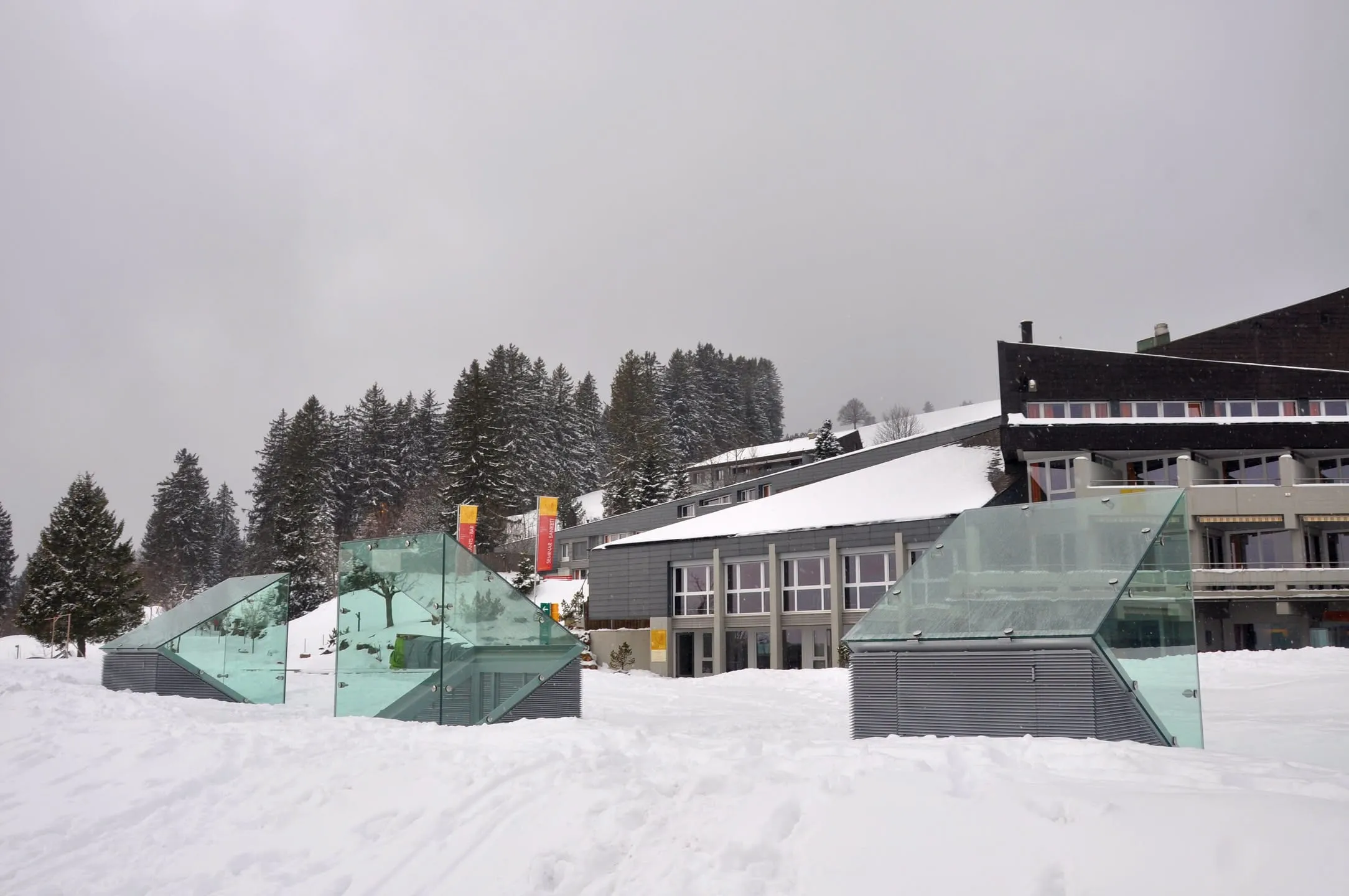
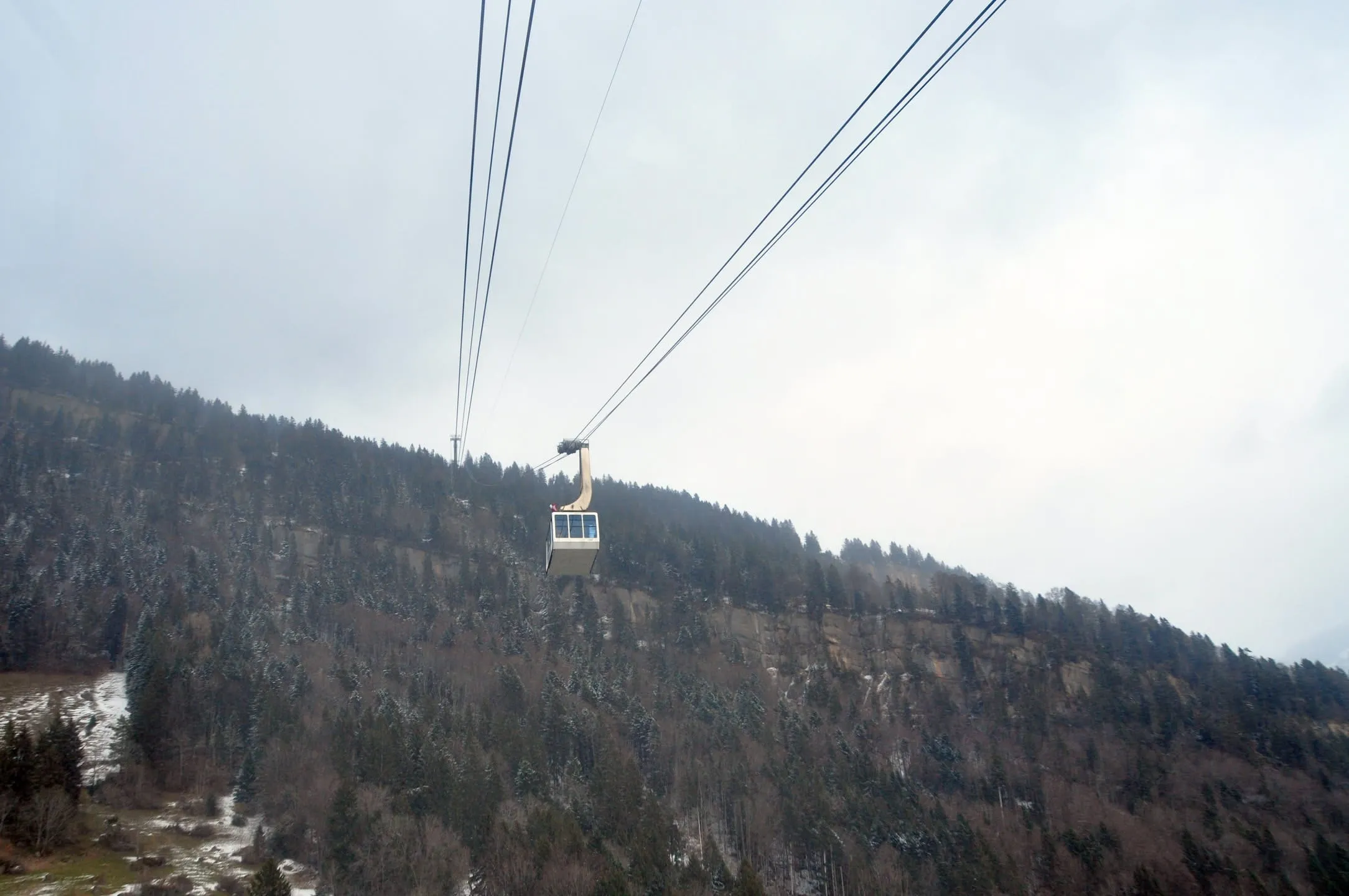
From there, we went down by cable car instead of the train. The snow thinned out as we dropped down the mountainside, until the slopes were green again.
Back across the lake
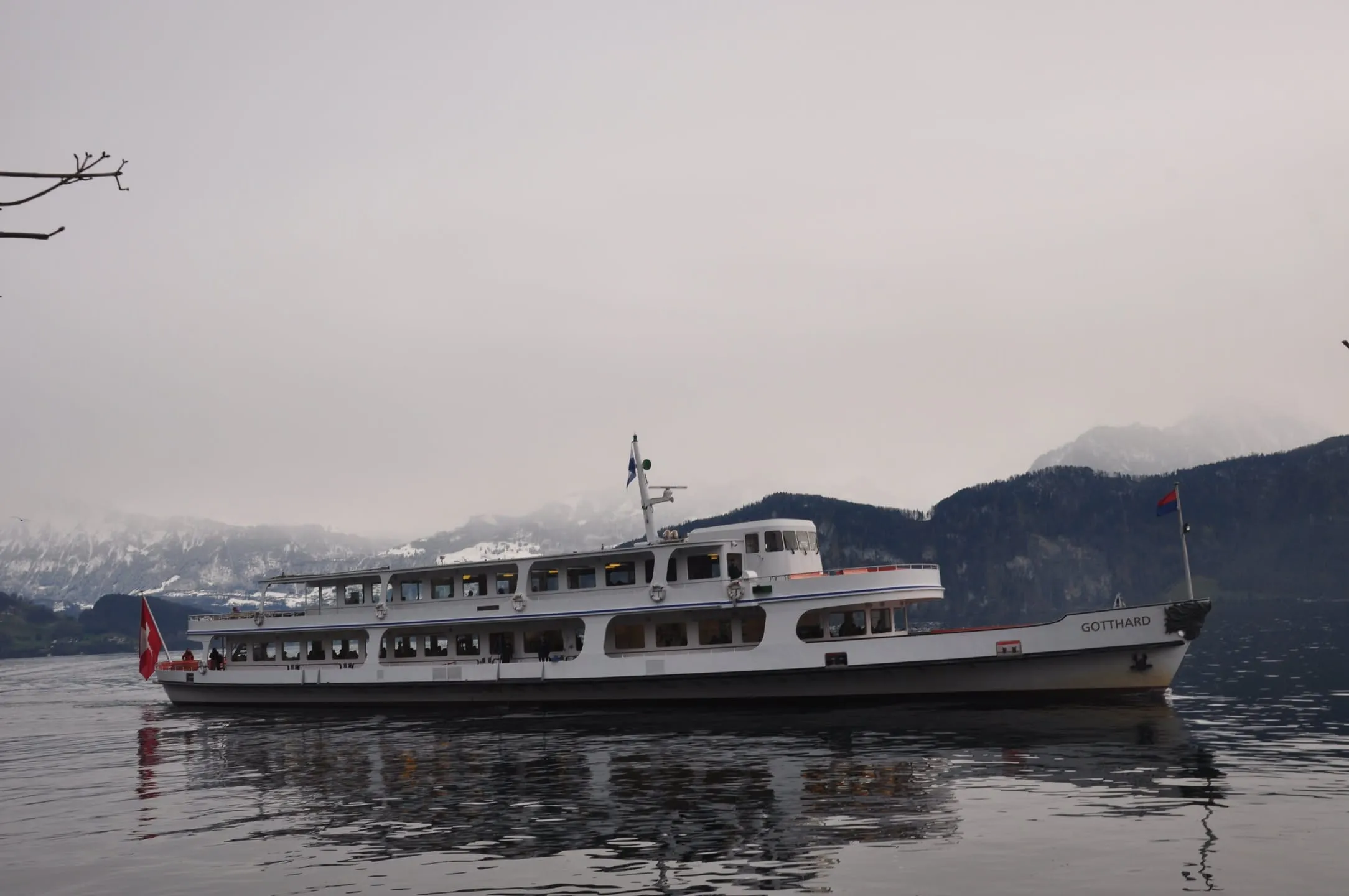
The cable car brought us down to Weggis, on the shore of the lake. We walked down through the village to the water, and a little after three, a large white lake boat came in to take us back to Lucerne.
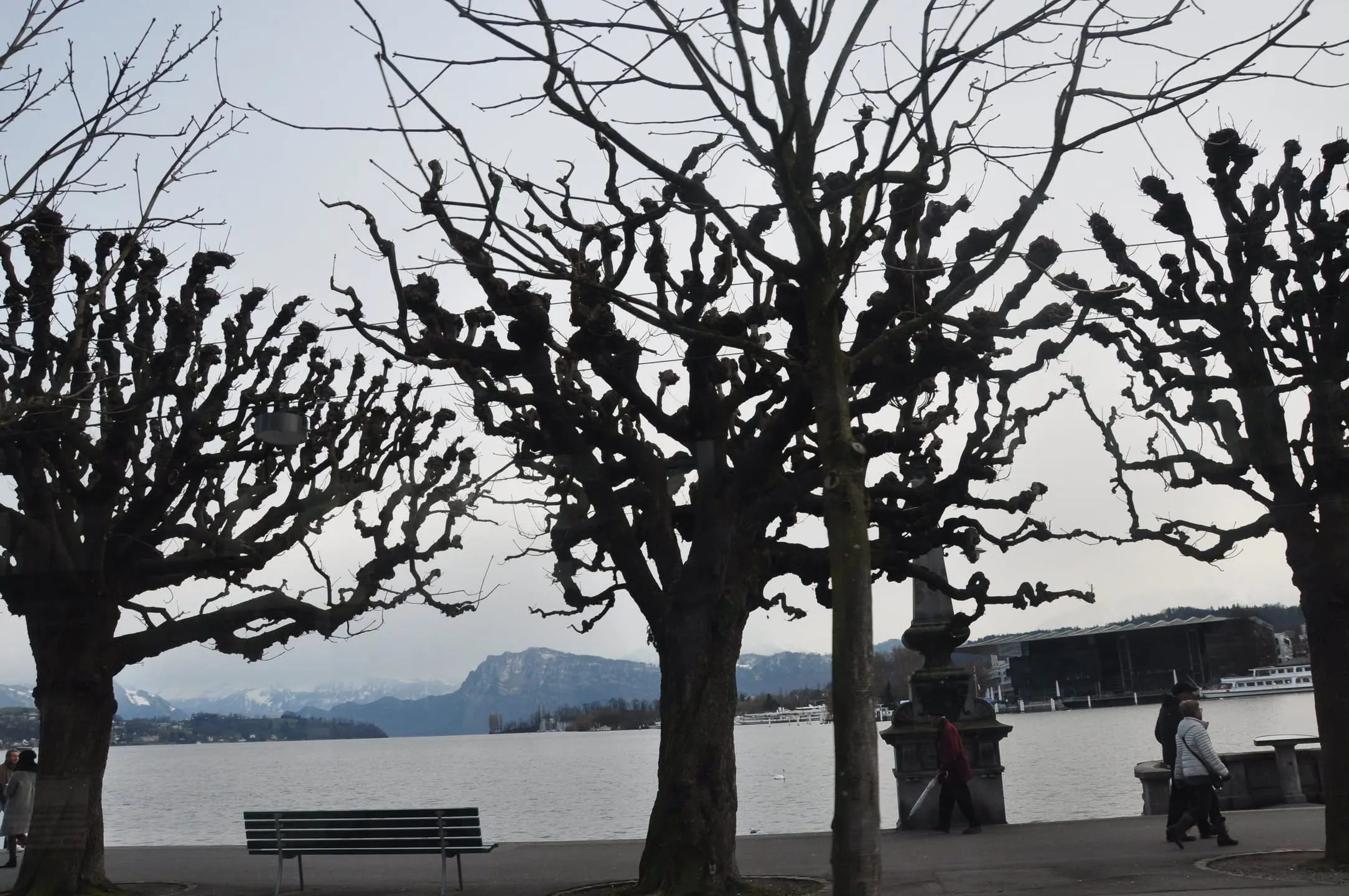
Back in Lucerne, it was a grey late afternoon on the lakefront, under the bare, pollarded trees.
Dinner at home
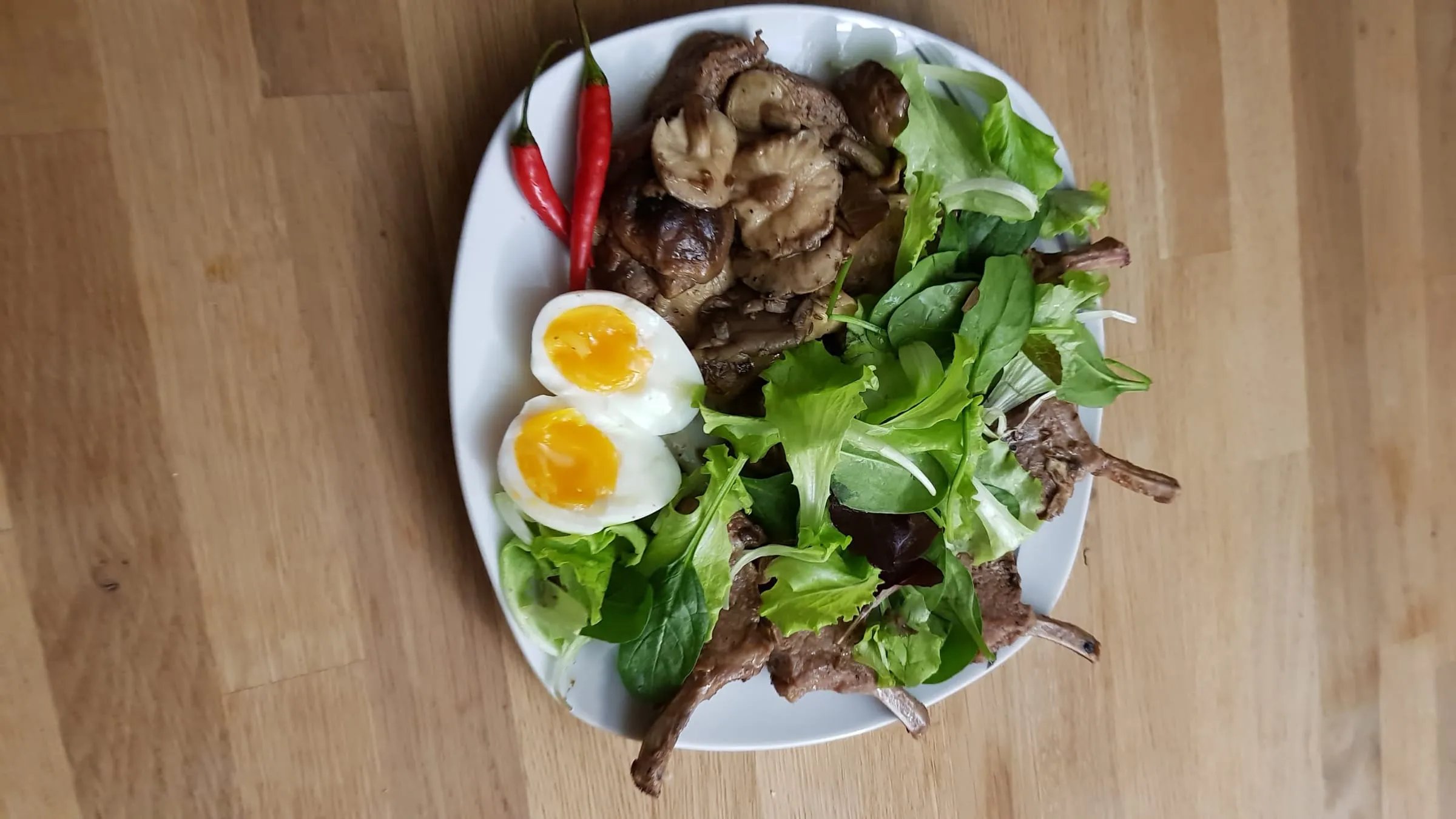
That evening, we cooked dinner where we were staying, with chops, mushrooms, boiled eggs and salad.
It had been a busy day, with a boat, two trains, a cable car, a sledge and another boat. Somewhere in the middle of it, on a snowy Swiss mountain, we had found a piece of Mount Emei.