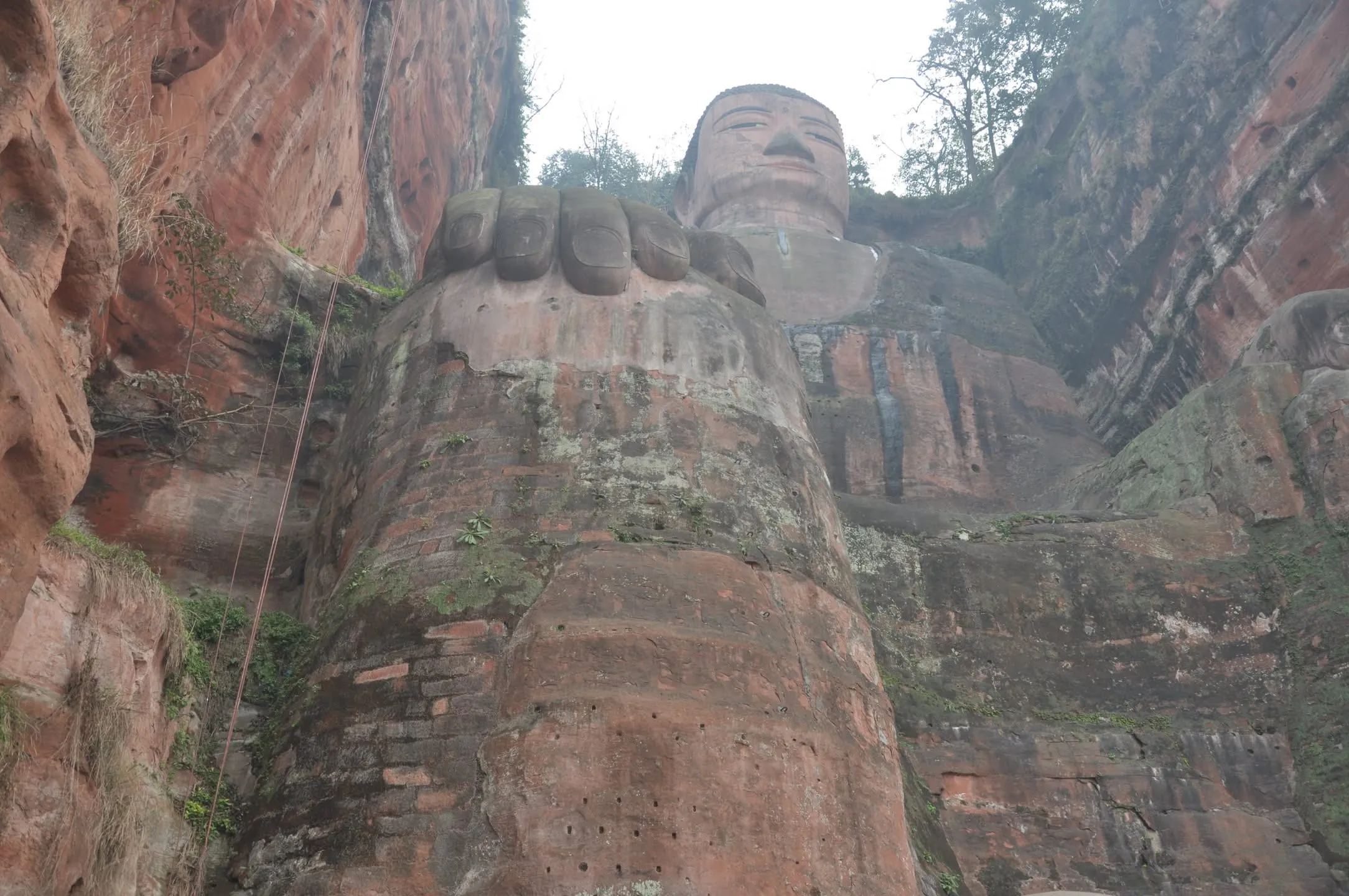
During my first trip to China, we also visited Leshan, home to the enormous Giant Buddha carved into the side of a cliff.
Of all the places we visited during that journey, Leshan is one I remember more through photographs than through the details of the day itself.
I remember seeing the Giant Buddha, but much of the rest of that visit has faded over the years.
A Buddha emerging from the mist
One of the photographs shows the Buddha’s head rising through the mist, with the surrounding cliff and greenery partly hidden behind it.
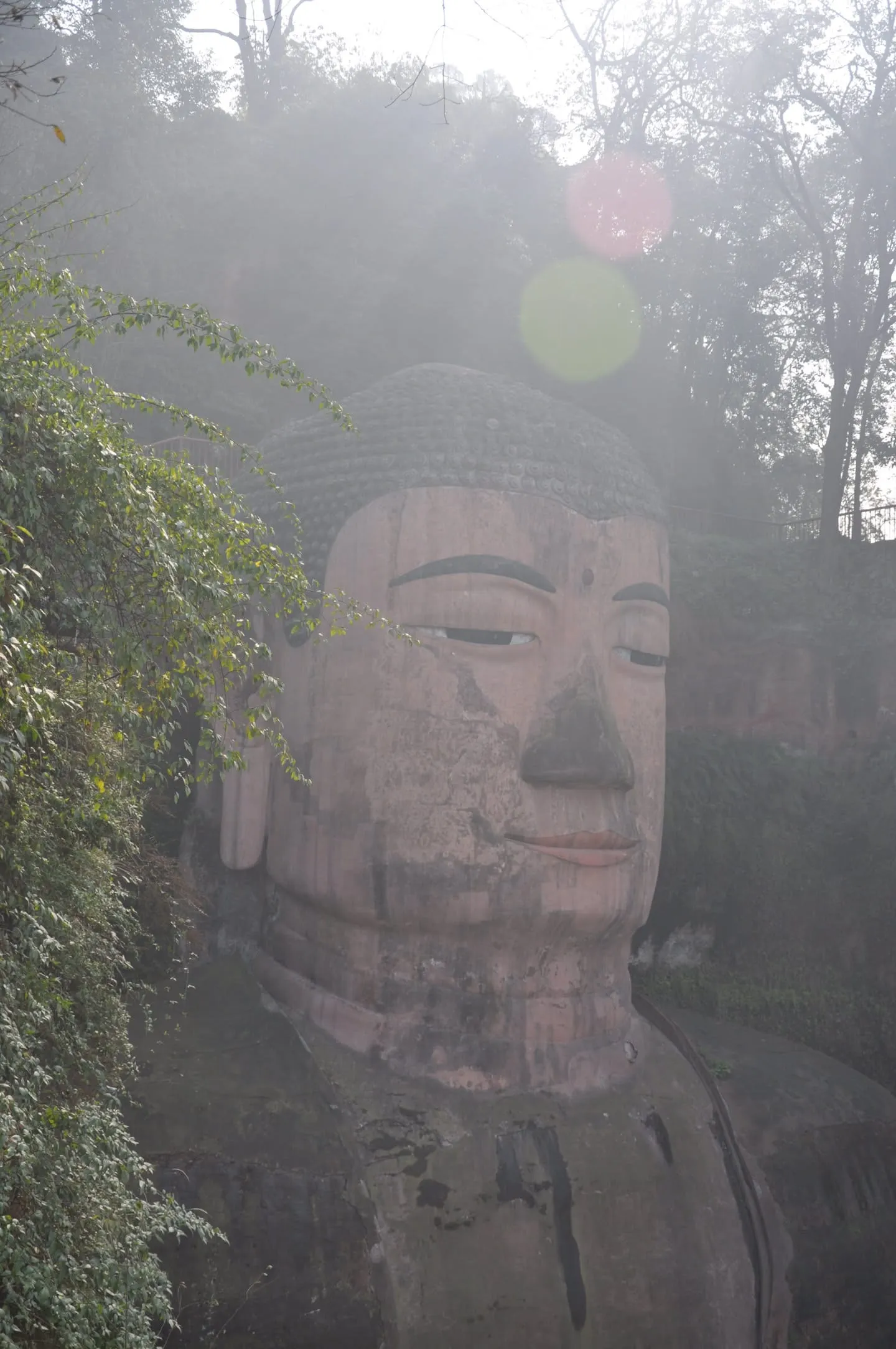
Looking at that picture now, what strikes me is how much of the statue is visible even from that angle. The head alone seems enormous.
Another photograph was taken from near the feet of the Buddha, looking upwards towards the rest of the figure.
It gives a completely different perspective.
The statue is so large that it is difficult to appreciate its full scale in a single photograph. Seeing the head and then the entire seated figure in separate pictures helps put its size into perspective.
Around the scenic area
The other photographs from Leshan show some of the surroundings.
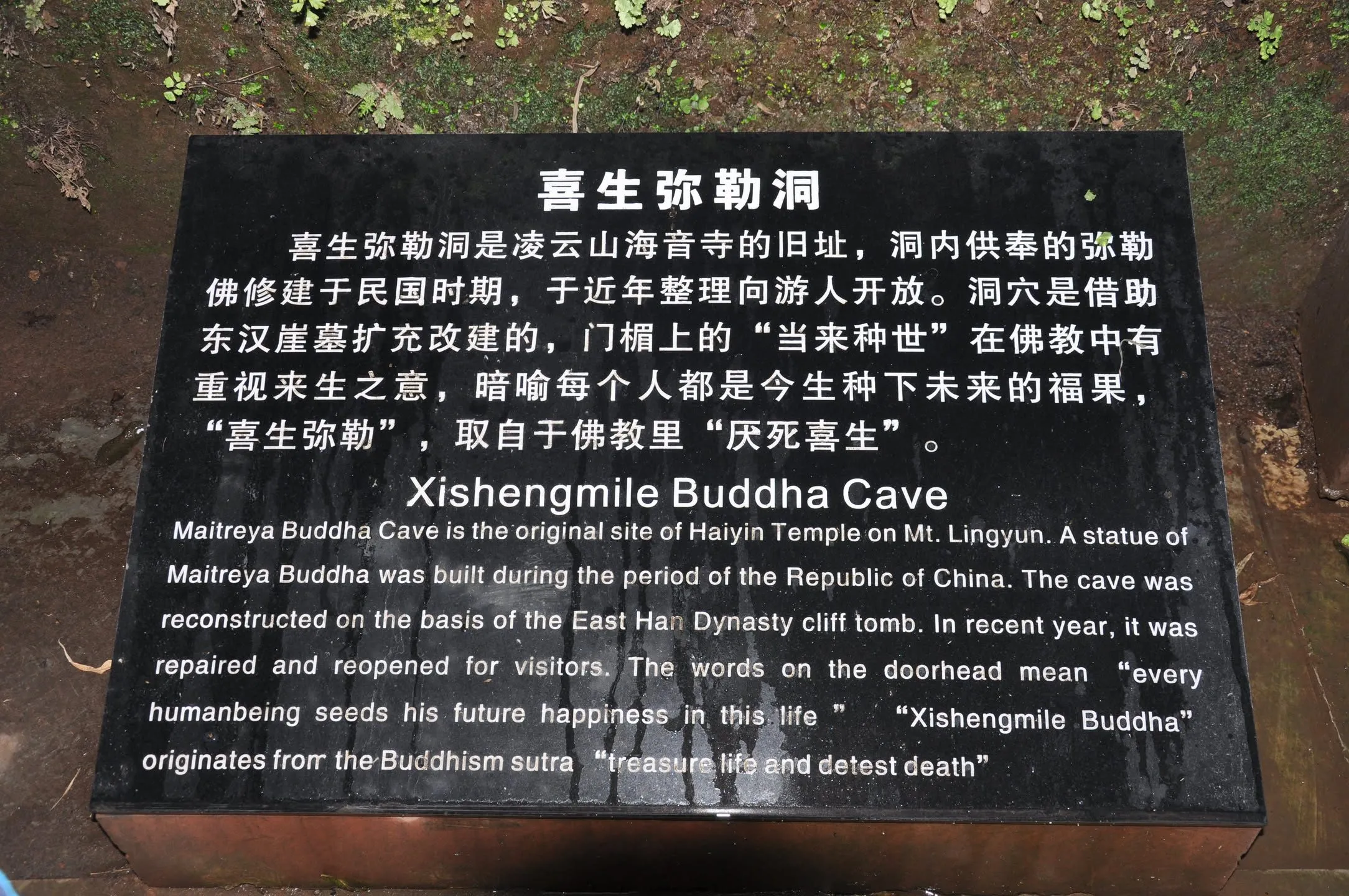
One includes a sign referring to the Xishengmile Buddha Cave and the former site of Haiyin Temple on Mount Lingyun.
There are also photographs of a koi pond and a carved cliff with red railings.
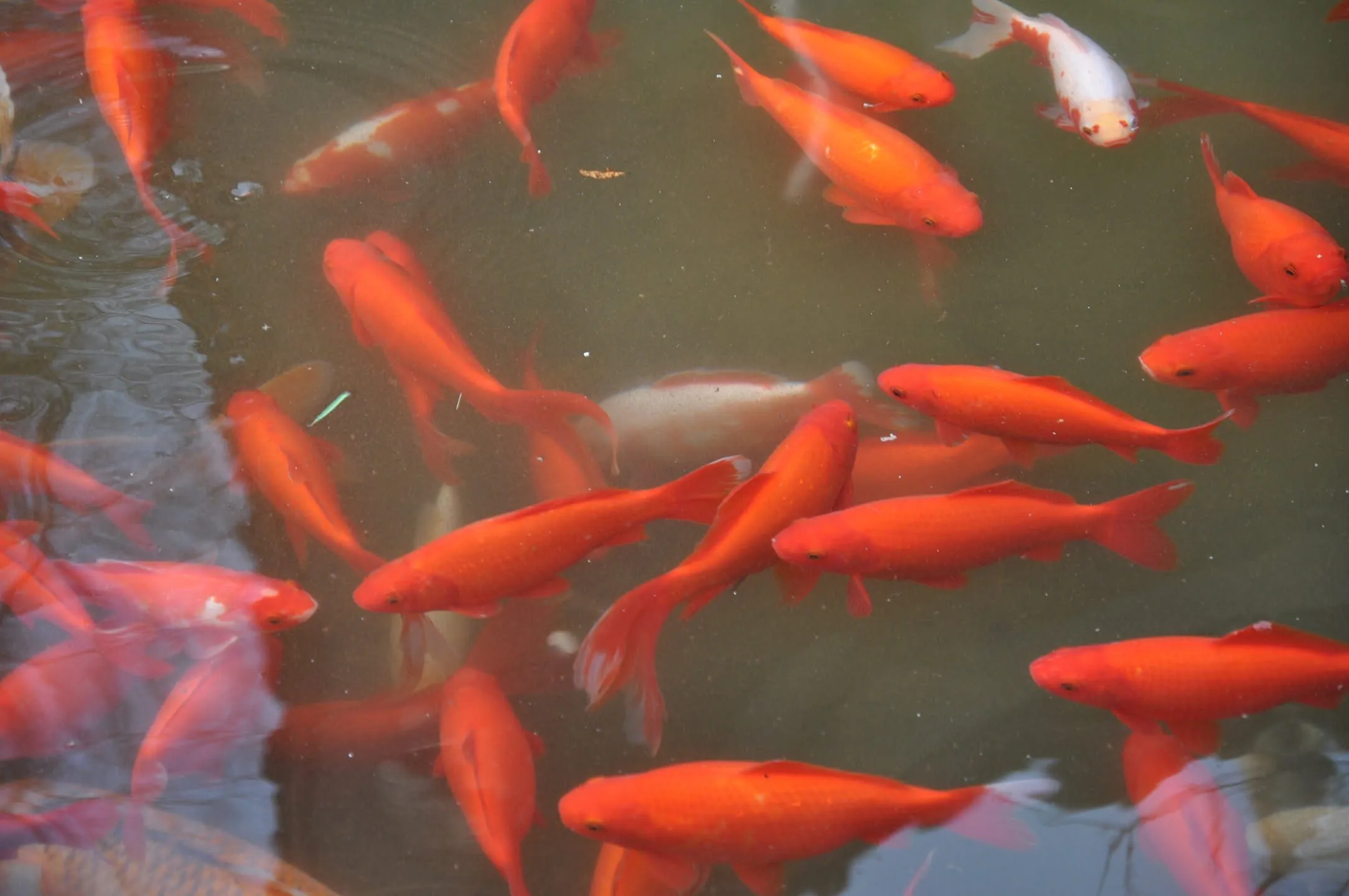
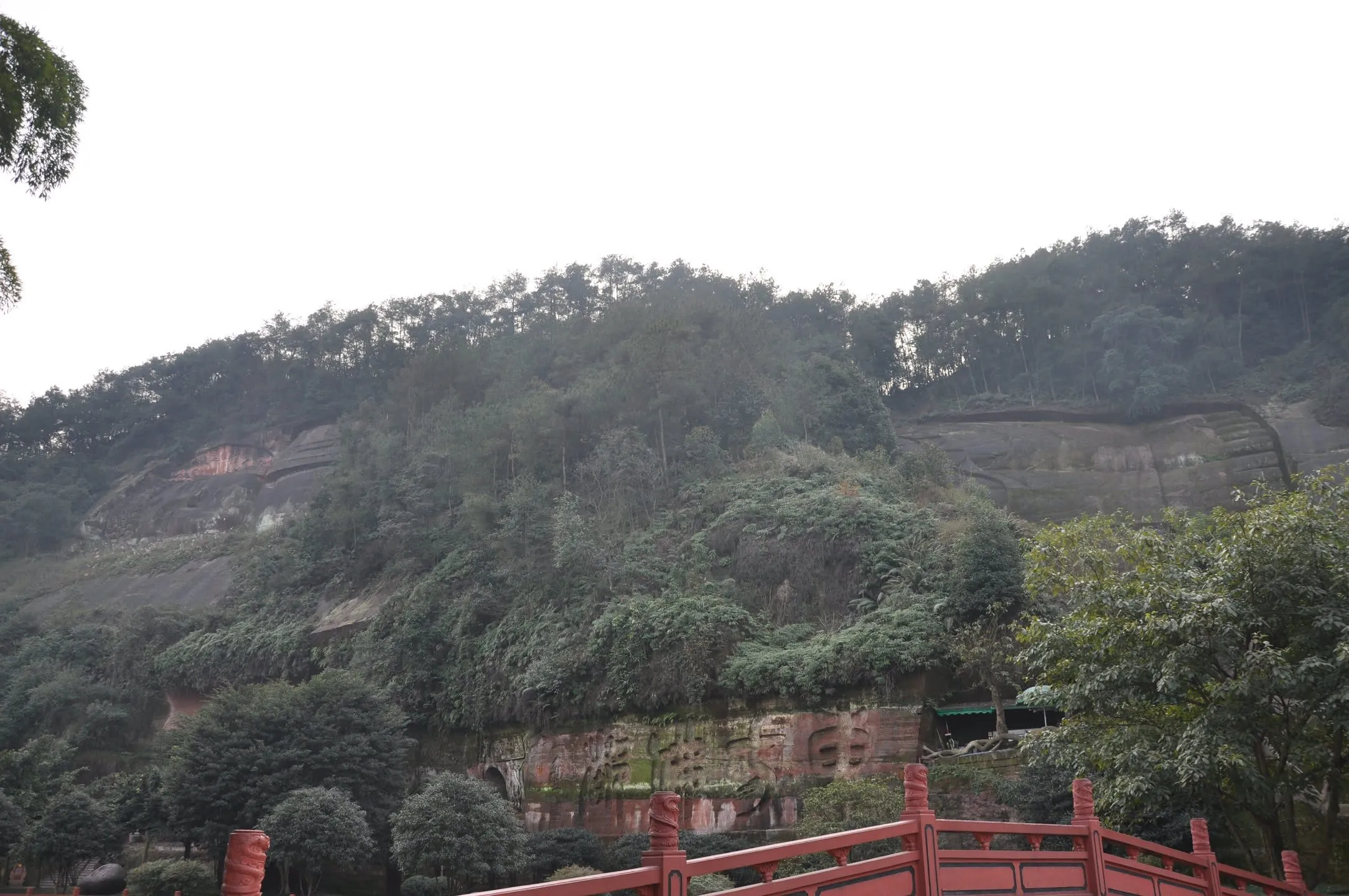
I wouldn’t have remembered the names of these smaller places without the photographs. They’re useful reminders that the visit involved more than simply looking at the Giant Buddha.
These are the kinds of details that can disappear from memory over time, even when the main attraction remains familiar.
Looking back at Leshan
I don’t have a dramatic story to tell about our day in Leshan.
What I have are a handful of photographs that still communicate the extraordinary scale of the place.
The mist around the Buddha’s head, the enormous seated figure and the smaller scenes around the scenic area are enough to bring back part of that visit.
Looking at them now, almost seventeen years later, I’m glad I kept those photographs.
Our journey would also take us to Mount Emei, where another remarkable sight was waiting, one that I remember much more clearly even today.