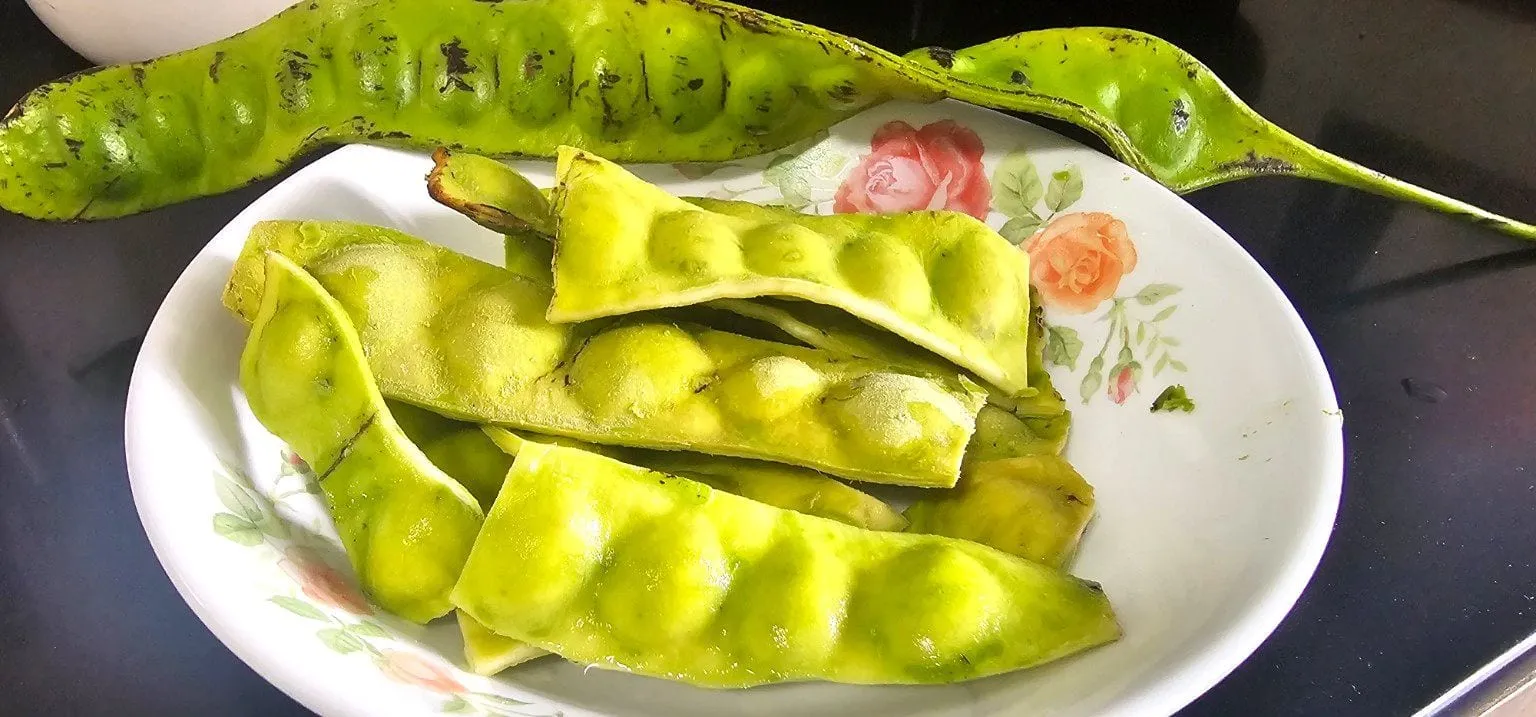
On 29 October 2026, I cooked two ordinary meals at home. Nothing particularly special, just the kind of food I grew up eating.
By the evening, though, a handful of petai seeds had reminded me of something I wanted to share: in Manipuri cooking, we don’t eat only the seeds of yongchak. We also prepare and eat the tender pod itself.
An ordinary day of cooking
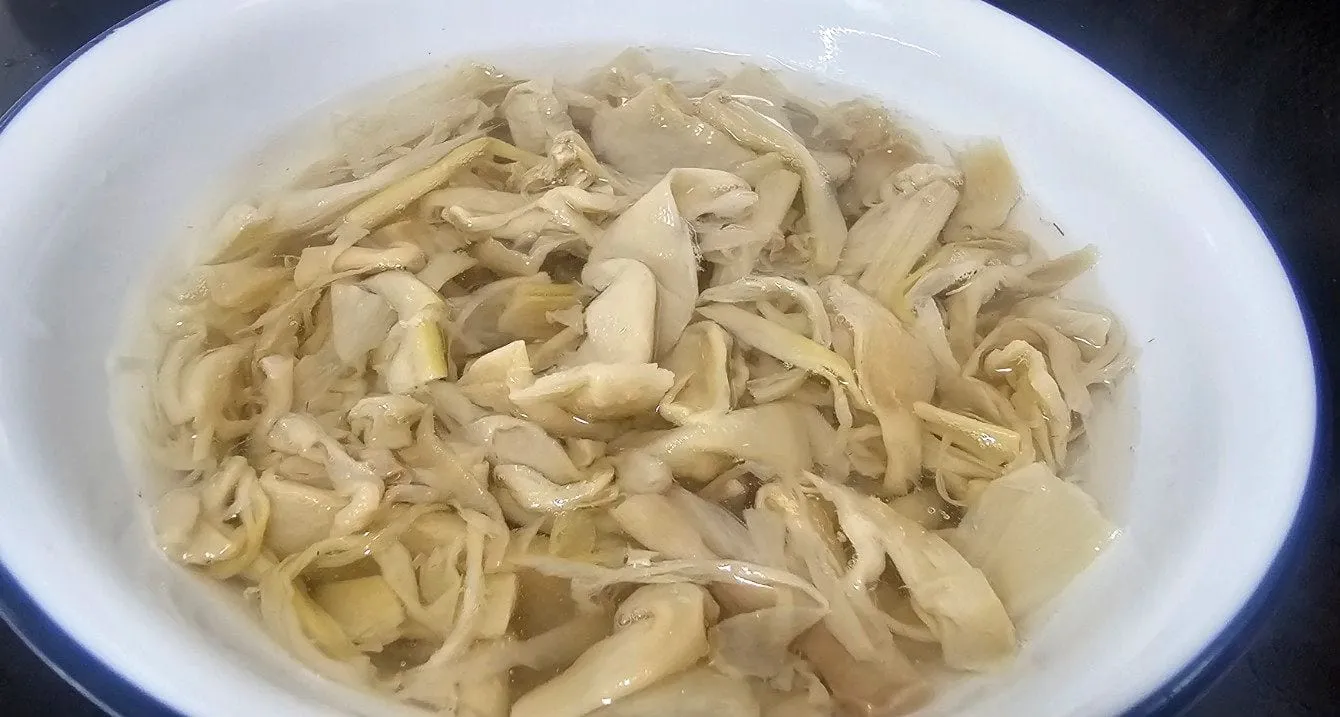
For lunch, I cooked fermented bamboo shoots with tilapia. When I was growing up, we ate this dish with ngakra, a catfish. Ngakra is difficult to find where I live now, so tilapia took its place.
If you have not seen fermented bamboo shoots before, they are the soft, pale strips in the bowl below.
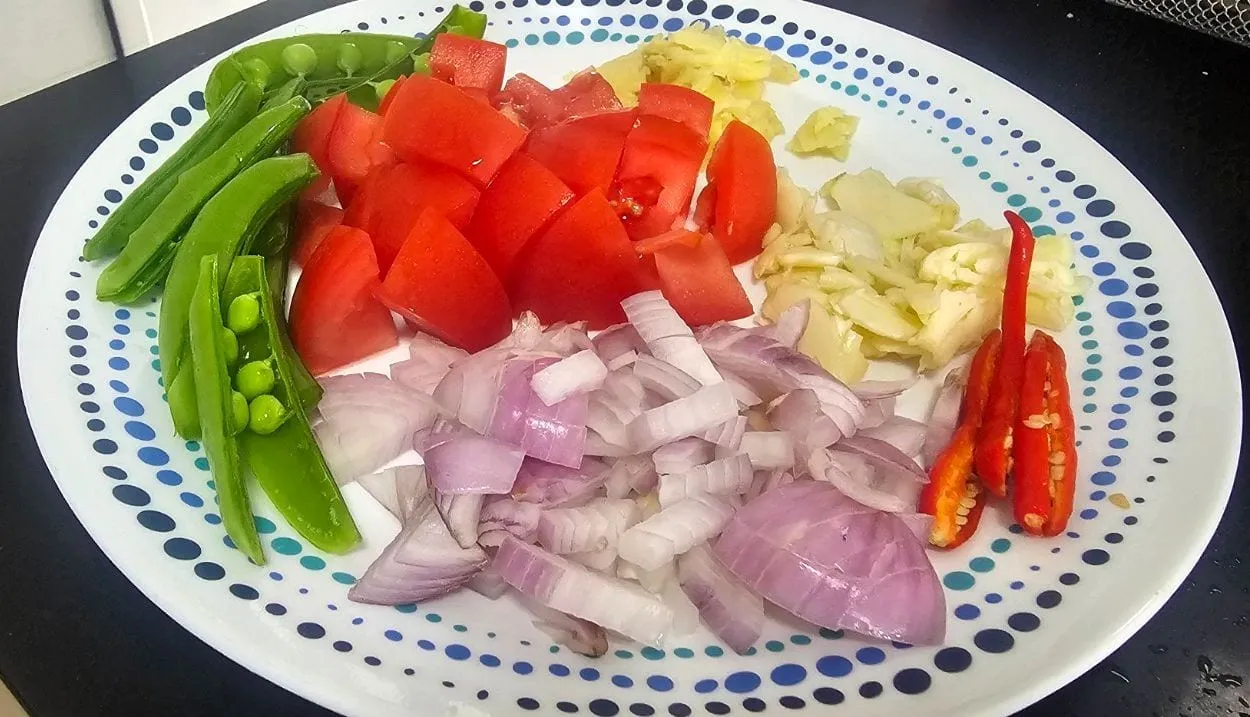
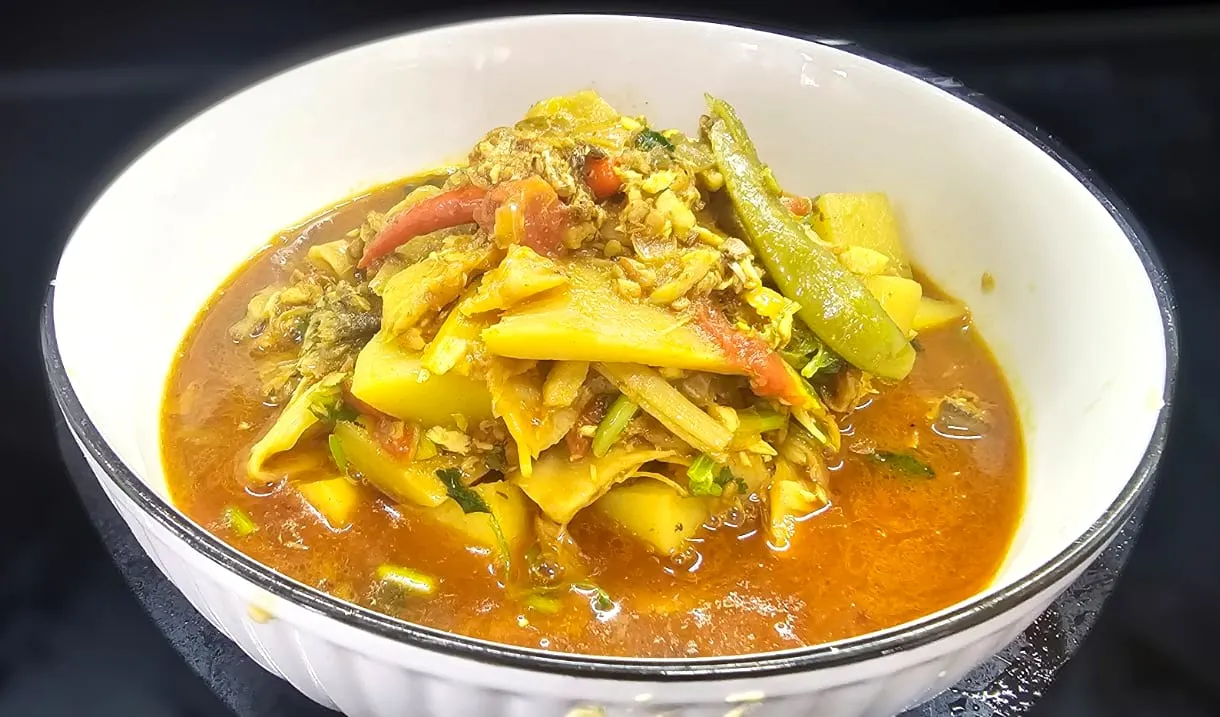
Dinner was a dish inspired by makok maru ngouba, which I remember being prepared with fish innards. I made mine with green petai seeds, bought already removed from their pods. Whole pods, of yongchak or petai, are much harder to find where I live.
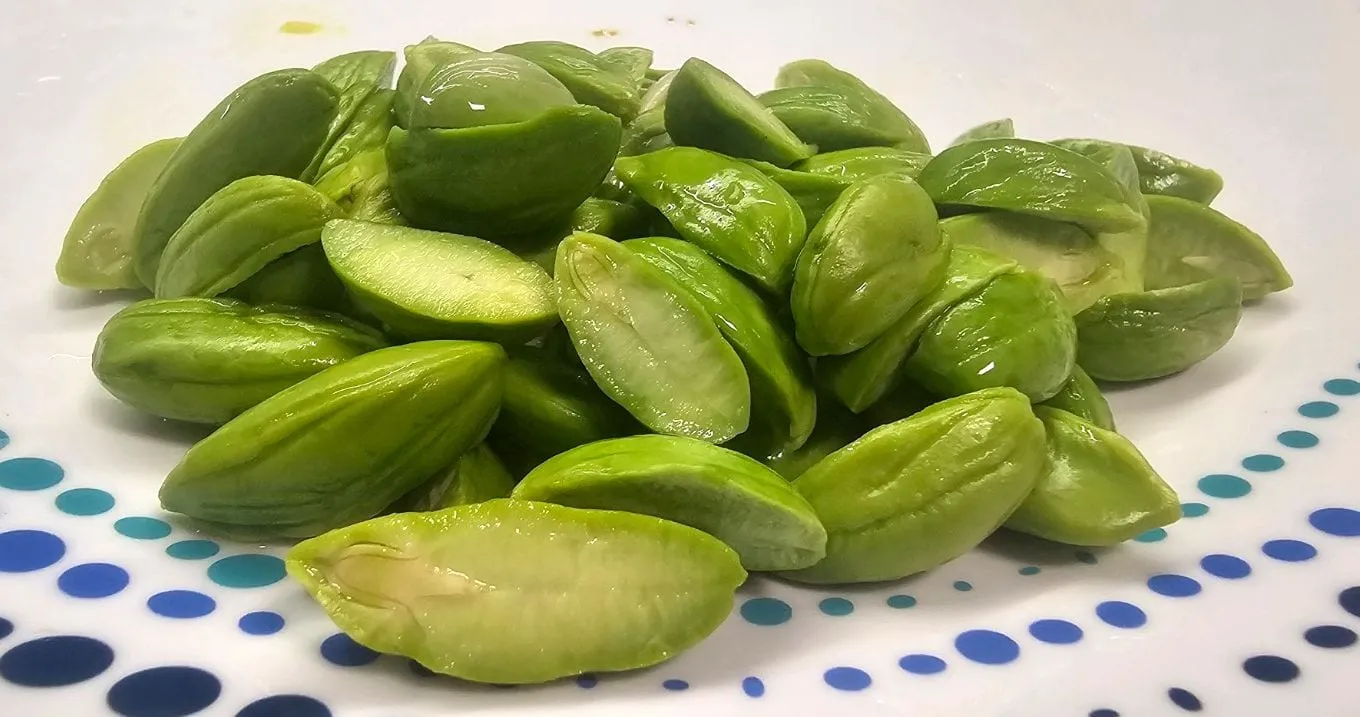
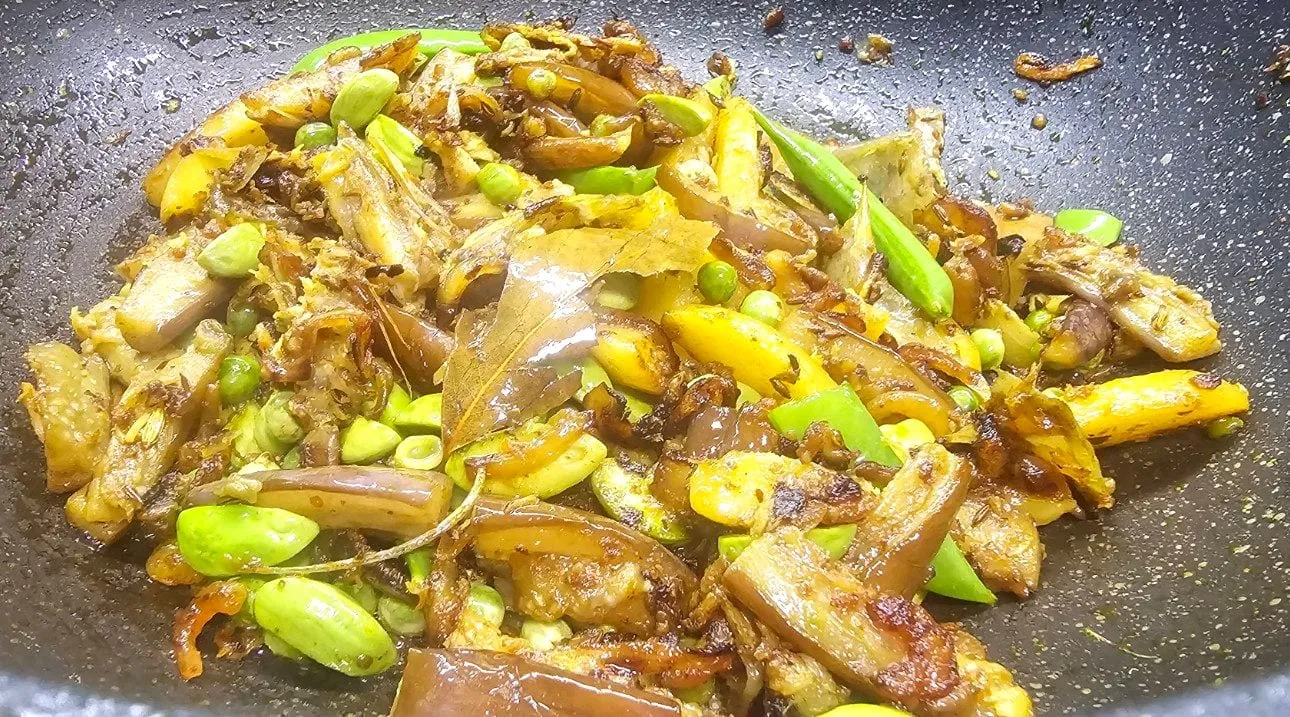
The petai seeds got me thinking about the pods I couldn’t find, and how we prepare them back home.
The part we don’t throw away
In many familiar petai dishes, it is mainly the seeds that are used. In Manipuri cooking, suitable tender yongchak pods are eaten too.
The outer skin of the pod is bitter, so it is scraped away first, using a small tool called a yongkhot that looks rather like a tongue scraper. You can see the difference in the photograph at the top of this page. The two whole pods at the back still have their darker, speckled skin. The pieces on the plate have been scraped down to a pale green, with the seeds still inside.
The scraped pod is then cooked together with its seeds. For eromba, it is boiled, and afterwards another thin film of skin is removed before it goes into the dish. Tender yongchak is also sliced thinly and eaten fresh in singju, a kind of salad.
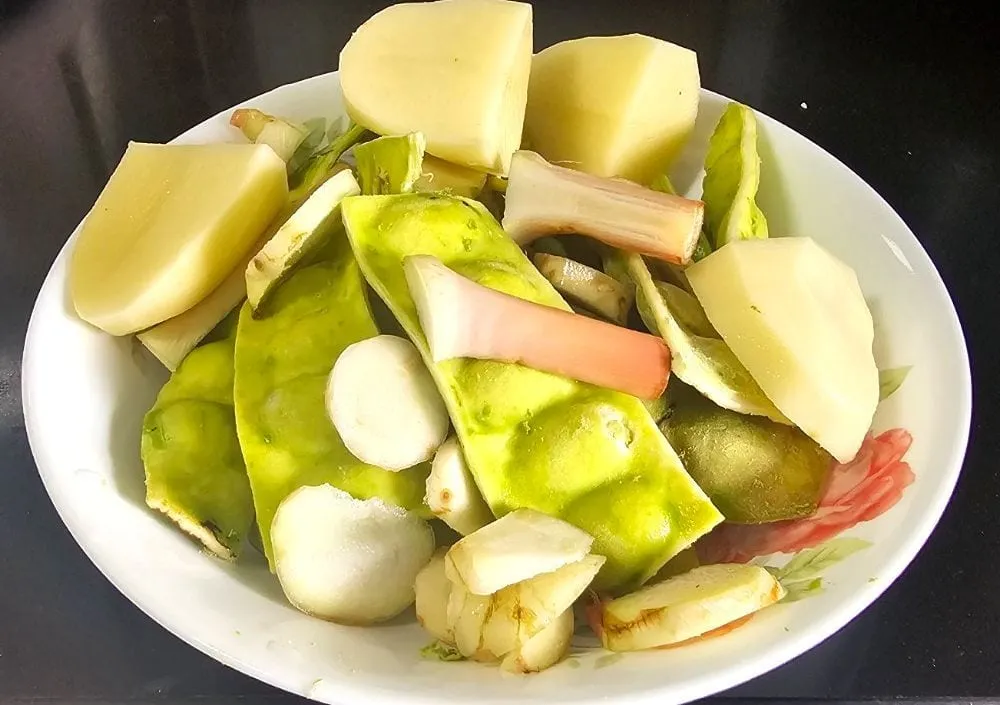
I make yongchak eromba quite often. Fresh yongchak for singju is harder to find where I live, and I remember having singju especially when my mother was staying with us.
I have also done this with Malaysian petai
I have done the same with petai pods available in Malaysia. On many occasions, I have scraped off the outer skin and eaten the prepared pods the way we eat yongchak in Manipur.
That experience is one reason I wanted to share this. It is not just a preparation I remember from childhood. It is something I have continued doing with petai available in Southeast Asia.
What has already been documented
None of this is my discovery. Dr N. Irabanta Singh, a former professor of life sciences at Manipur University, wrote about it in Bye bye Thangjing welcome for Yongchak in Manipuri households, published on E-Pao on 9 December 2017. He describes the yongkhot, scraping the skin, removing the further film after boiling, using both the pulp and the seeds in eromba, and yongchak singju. If you want to know more, I recommend reading it.
The two plants are related, but they are not the same. Petai in Malaysia is commonly identified as Parkia speciosa. Yongchak is generally identified as Parkia timoriana, and Kew treats Parkia roxburghii as a synonym of it. Older writing does not always use these names the same way; Dr Singh’s article, for example, calls yongchak Parkia speciosa. So the pods I have prepared tell me about those pods, not about every pod of either species.
Manipuri cooking is not the only tradition that uses more than the seeds. Singapore’s National Parks Board notes that semi-ripe petai pods are pickled in salt.
Researchers have looked at the pods too. A 2025 study in the Journal of Food Science compared different parts of Parkia timoriana pods, dried in several ways, and found the highest crude fibre in the outer pulp. That is a laboratory study of dried pod tissue, not of scraped pods cooked at home, but it shows that the pod is of interest in its own right.
Why I wanted to share this
Petai has its own rich cooking traditions in Malaysia, Indonesia and Thailand, and I’m not suggesting that one way of preparing it is better than another.
What interests me is the knowledge itself. Something that is often set aside in one kitchen may be a familiar ingredient in another.
I am not asking anyone to make eromba or singju. The pods prepared this way are tender ones; mature pods become tough and fibrous. I simply hope that sharing this way of preparing tender pods might encourage someone to look at a familiar ingredient differently, and perhaps discover another way to use it.
The seeds are what most people know. Sometimes the part we throw away has a story too.